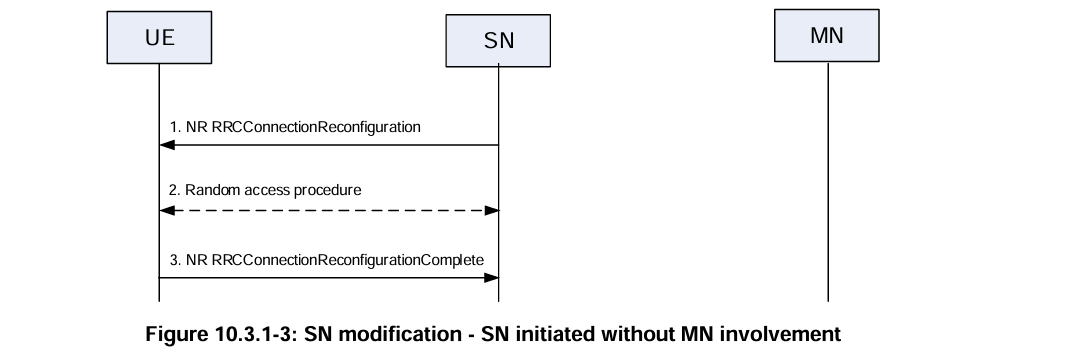
And what is the expected gain of enabling SRB3 in NR?
-
First, Let`s quickly recap the meaning of Signaling Radio Bearer.
- Signaling Radio Bearers (SRB) are used to transfer RRC messages between the UE and Base Station.
- RRC messages can encapsulate NAS messages, so SRBs are also responsible for transferring NAS messages between the UE and Base Station.
- The NG Application Protocol (NGAP) transfers NAS messages between the Base Station and AMF.
-
3GPP has specified 4 types of SRB for New Radio (NR):
- SRB 0 transfers RRC messages that use the Common Control Channel (CCCH) logical channel
- SRB 1,2 and 3 transfer RRC messages that use the Dedicated Control Channel (DCCH) logical channel.
- SRB 1 supports RRC signaling between the UE and Base Station but can also encapsulate NAS messages before the setup of SRB 2
- SRB 2 is always set after security activation and encapsulates NAS messages.
- SRB 2 messages are handled with lower priority than SRB 1 messages.
So, What is the SRB3?
-
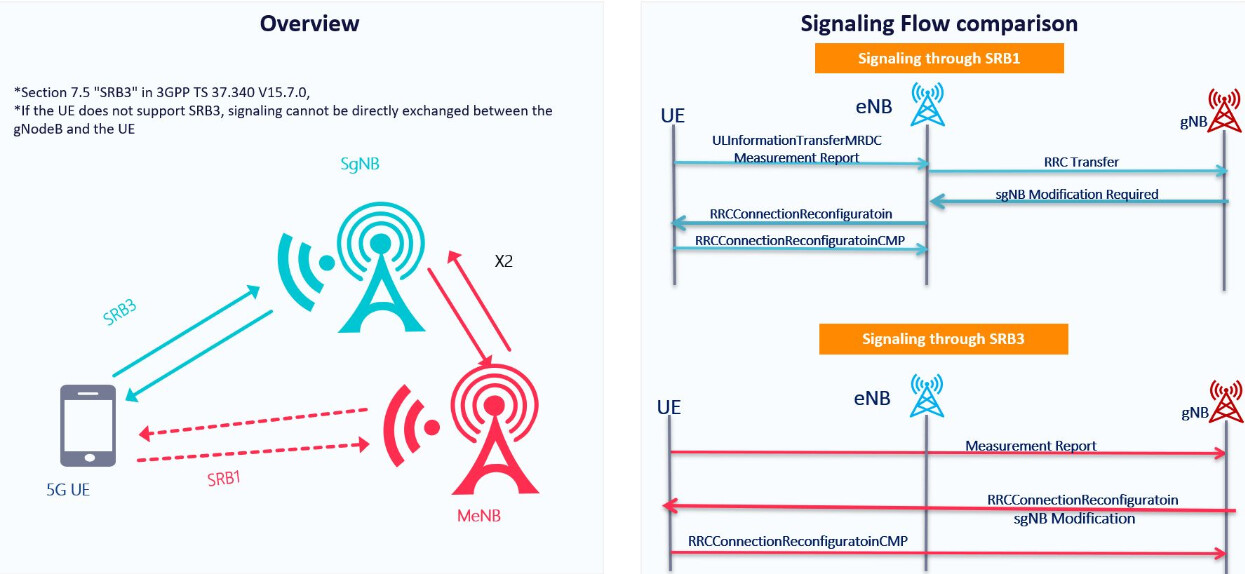
SRB 3 is applicable when using the ‘E-UTRAN New Radio Dual Connectivity’ (EN-DC) configuration
-
SRB3 is optional and provides a direct SRB between the Secondary RAN Node and the device.
-
RRC Signaling through using NR SRB3 might reduce the latency.
-
The following RRC messages will be handled through SRB3 For EN-DC operation:
- RRC Reconfiguration.
- RRC Reconfiguration Complete.
- Measurement Report.
LinkedIn: