Every time you use your smartphone, thousands of network elements work together behind the scenes.
But what actually exists inside a modern 5G tower?
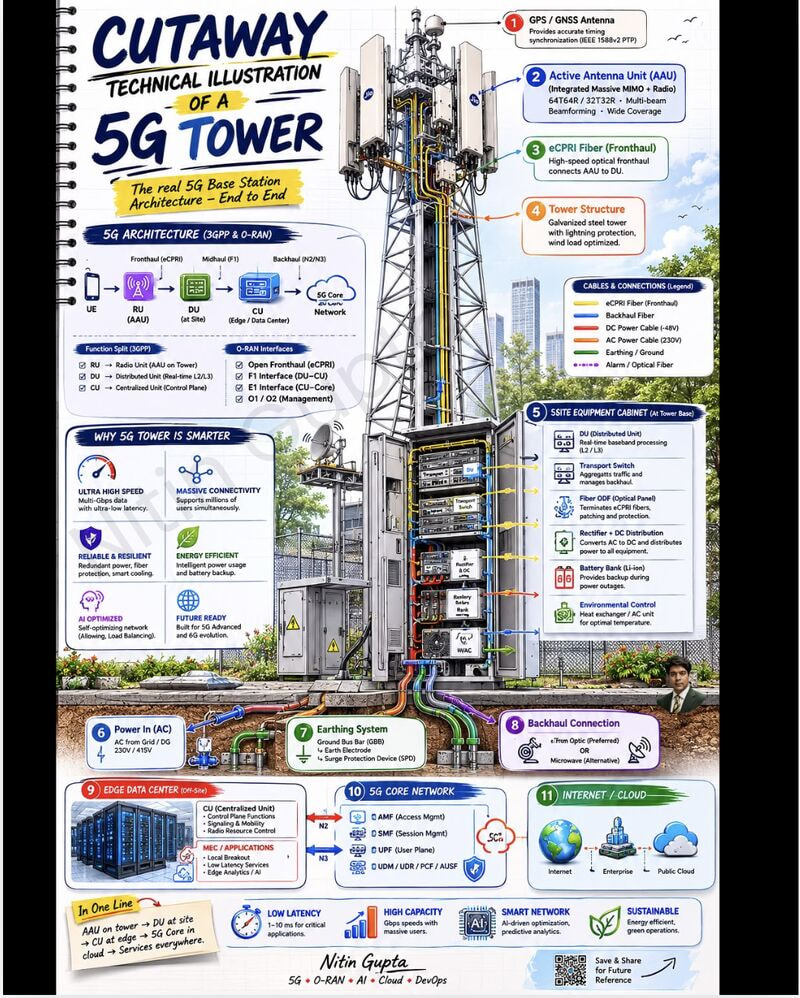
This cutaway illustration breaks down the complete end-to-end architecture of a real 5G base station—from the antenna on the tower to the 5G Core and cloud network.
Key components explained:
• GPS/GNSS Antenna for precise synchronization
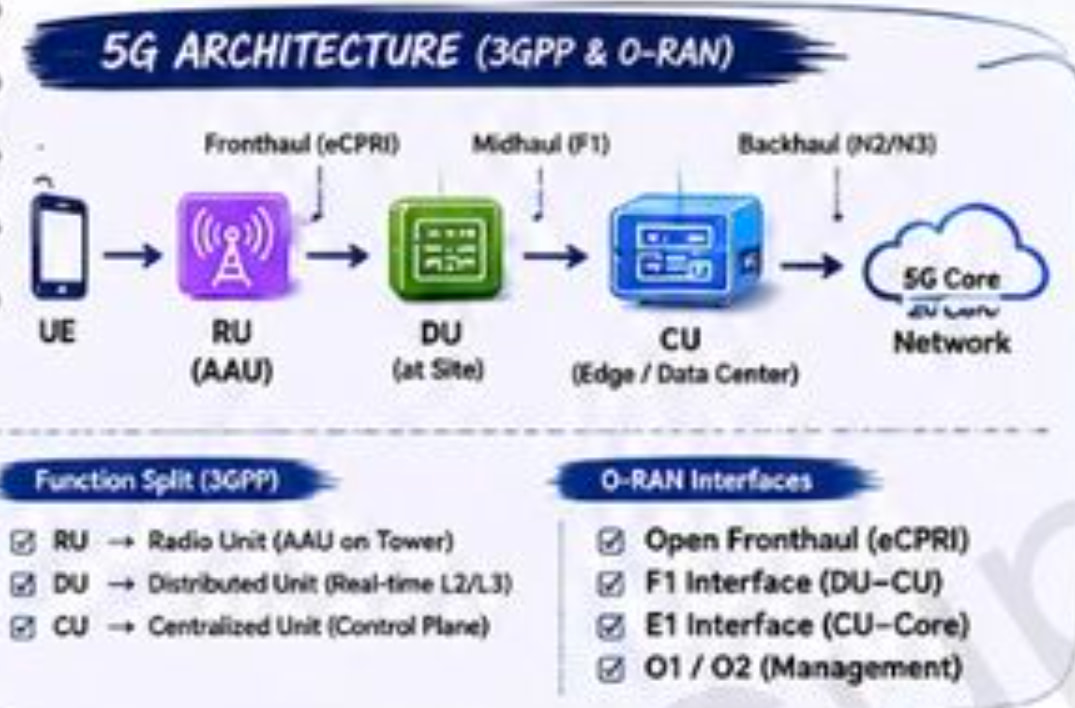
• Active Antenna Unit (AAU) with Massive MIMO and Beamforming
• eCPRI Fronthaul Fiber connecting AAU to the Distributed Unit
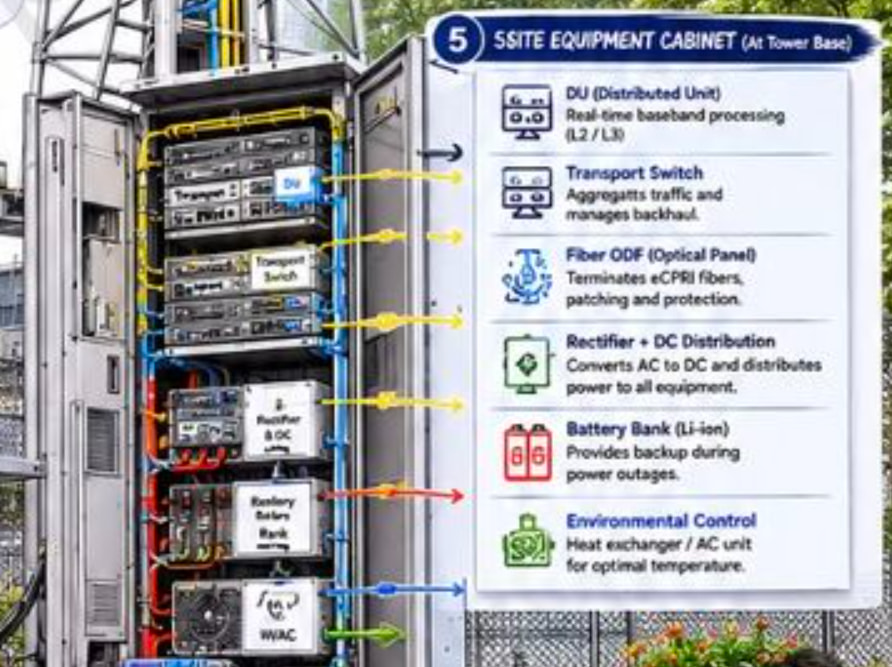
• DU for real-time Layer 2/3 baseband processing
• Transport Switch for traffic aggregation
• Fiber ODF for optical connectivity and protection
• Rectifier & DC Distribution for power conversion
• Battery Backup for uninterrupted operation
• Environmental Control to maintain optimal equipment temperature
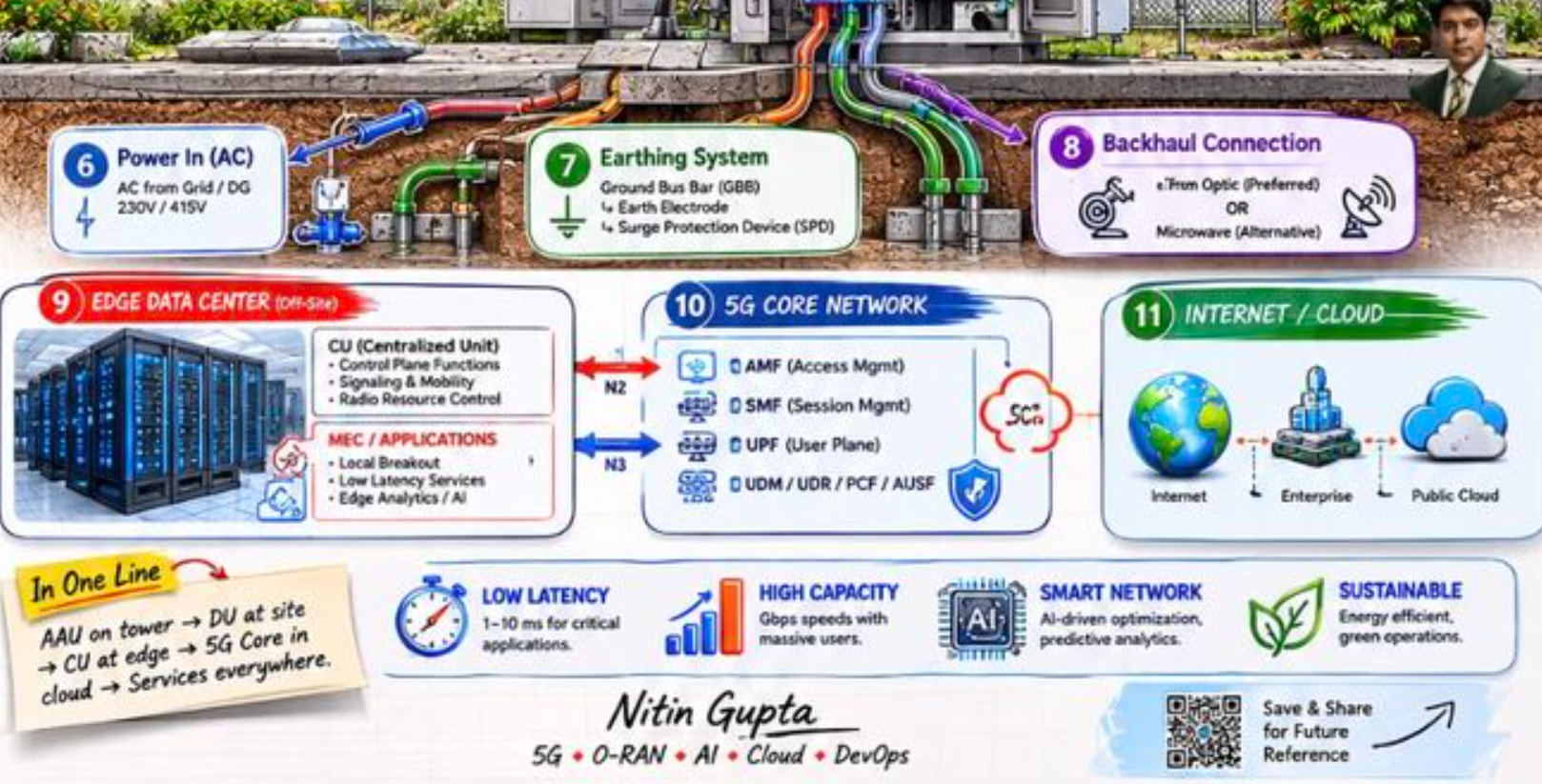
• High-capacity Backhaul connecting the site to the core network
• Edge Data Center hosting CU and MEC applications
• 5G Core functions including AMF, SMF, UPF, UDM, PCF, and AUSF
• Internet and Cloud services delivering applications to end users
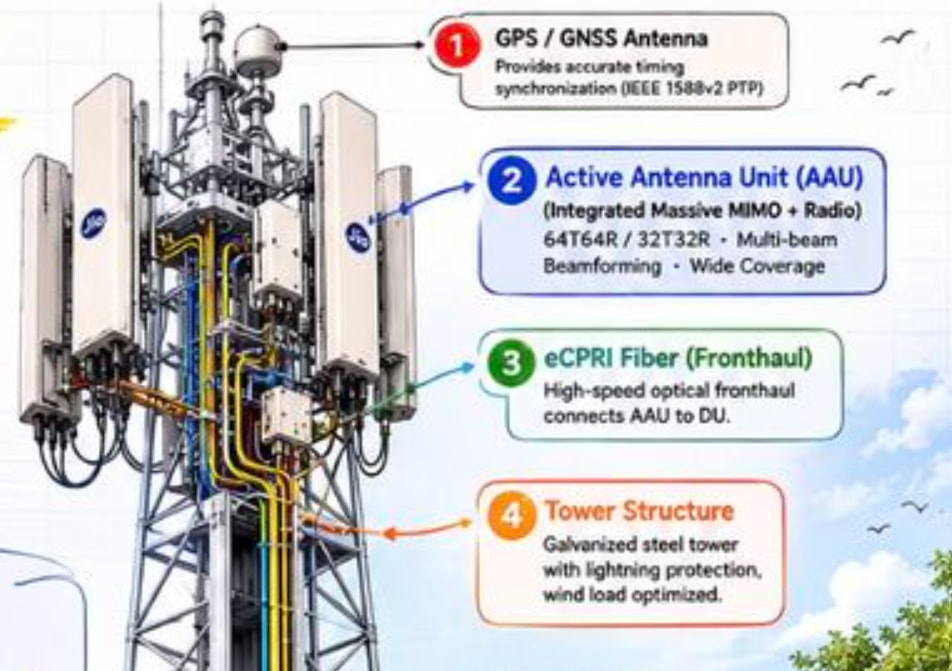
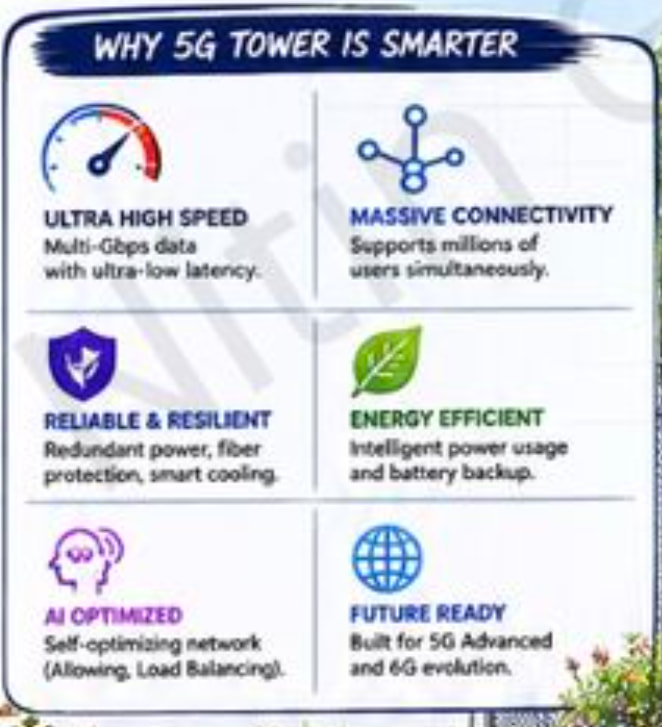
Understanding this architecture helps engineers see how every layer contributes to delivering reliable, low-latency, high-capacity 5G services.
Whether you’re preparing for telecom interviews, working in deployment, optimization, testing, O-RAN, or cloud-native networks, mastering the physical and logical architecture of a 5G site is essential.
Which part of the 5G tower would you like to explore in more detail next?
• AAU & Massive MIMO
• DU/CU Architecture
• eCPRI Fronthaul
• MEC (Multi-access Edge Computing)
• 5G Core
• Power & Site Infrastructure
• O-RAN Architecture
LinkedIn: 