Every time you make a phone call —
a decade of engineering
happens in milliseconds.
Most people have no idea
how voice actually works in 4G and 5G.
Here’s the evolution 
━━━━━━━━━━━━━━━━━━━━━━
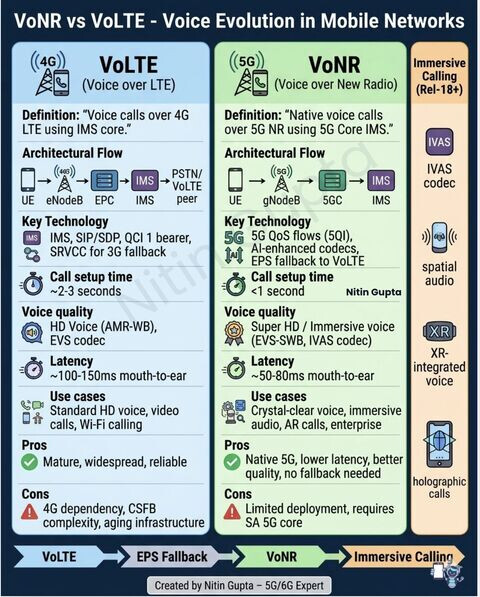
 VoLTE (Voice over LTE)
The 4G voice standard
Flow: UE → eNodeB → EPC → IMS
→ Call setup: ~2-3 seconds
→ Latency: 100-150ms mouth-to-ear
→ Quality: HD Voice (AMR-WB) + EVS
→ Fallback: SRVCC to 3G
→ Technology: QCI 1 bearer + SIP/SDP
Pros: Mature, widespread, reliable
Cons: 4G dependency, CSFB complexity,
aging infrastructure
━━━━━━━━━━━━━━━━━━━━━━
 VoNR (Voice over New Radio)
The 5G voice standard
Flow: UE → gNodeB → 5GC → IMS
→ Call setup: <1 second
→ Latency: 50-80ms mouth-to-ear
→ Quality: Super HD / EVS-SWB + IVAS
→ Fallback: EPS fallback to VoLTE
→ Technology: 5QI flows + AI codecs
Pros: Native 5G, lower latency,
crystal-clear quality
Cons: Limited deployment,
requires SA 5G core
━━━━━━━━━━━━━━━━━━━━━━
THE NUMBERS THAT MATTER:
Call setup: 2-3s (VoLTE) → <1s (VoNR)
Latency: 150ms (VoLTE) → 50ms (VoNR)
Quality: HD Voice → Super HD / Immersive
3x faster call setup.
3x lower latency.
Dramatically better voice quality.
━━━━━━━━━━━━━━━━━━━━━━
WHAT COMES AFTER VoNR?
Immersive Calling (3GPP Rel-18+):
 IVAS codec — spatial audio
 XR-integrated voice calls
 Holographic calls
Voice is evolving from
“can you hear me clearly?”
to
“can you feel like you’re there?”
━━━━━━━━━━━━━━━━━━━━━━
The evolution roadmap:
VoLTE → EPS Fallback
→ VoNR → Immersive Calling
We are somewhere between
VoNR and Immersive right now.
Most operators still on VoLTE.
VoNR deployments accelerating.
Immersive calling: 2027+ reality.
━━━━━━━━━━━━━━━━━━━━━━
 Quick poll:
Is your operator network
running VoLTE or VoNR today?
 VoLTE only
 VoNR launched
 Both running in parallel
 Still on 3G/CSFB
Drop operator + country below
LinkedIn: