𝗡𝗢𝗡𝗟𝗜𝗡𝗘𝗔𝗥 𝗜𝗠𝗣𝗔𝗜𝗥𝗠𝗘𝗡𝗧𝗦 (𝗡𝗟𝗜)
𝗧𝗵𝗲 𝗜𝗻𝘃𝗶𝘀𝗶𝗯𝗹𝗲 𝗞𝗶𝗹𝗹𝗲𝗿𝘀 𝗼𝗳 𝗖𝗼𝗵𝗲𝗿𝗲𝗻𝘁 𝗦𝗶𝗴𝗻𝗮𝗹𝘀
SPM • XPM • FWM
High baud 400G and 800G signals are incredibly sensitive to nonlinear noise especially on long APAC spans.
Modern coherent optics often fail long before OSNR does.
#BehindTheBandwidth | OpticRoute
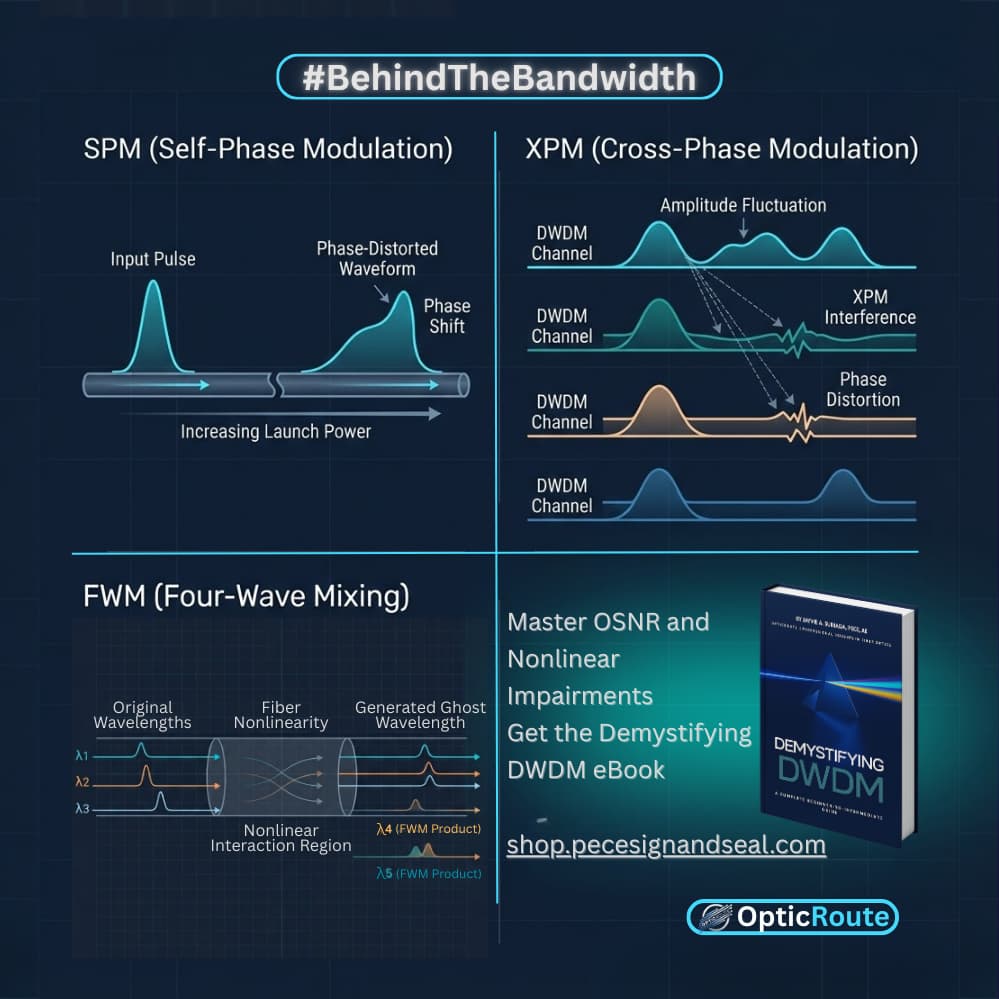
𝗦𝗣𝗠 (𝗦𝗲𝗹𝗳 𝗣𝗵𝗮𝘀𝗲 𝗠𝗼𝗱𝘂𝗹𝗮𝘁𝗶𝗼𝗻)
𝗬𝗼𝘂𝗿 𝘀𝗶𝗴𝗻𝗮𝗹 𝗱𝗶𝘀𝘁𝗼𝗿𝘁𝘀 𝗶𝘁𝘀𝗲𝗹𝗳.
When launch power is too high the signal’s own intensity alters its phase, causing:
• Constellation warping
• Shrinking phase margin
• Q factor collapse
• Shorter reach at high baud rates
Strategist Insight:
Increasing launch power to “fix” OSNR often creates SPM penalties that break the link.
𝗫𝗣𝗠 (𝗖𝗿𝗼𝘀𝘀 𝗣𝗵𝗮𝘀𝗲 𝗠𝗼𝗱𝘂𝗹𝗮𝘁𝗶𝗼𝗻)
𝗡𝗲𝗶𝗴𝗵𝗯𝗼𝗿𝗶𝗻𝗴 𝗰𝗵𝗮𝗻𝗻𝗲𝗹𝘀 𝗱𝗶𝘀𝘁𝗼𝗿𝘁 𝘆𝗼𝘂𝗿 𝘀𝗶𝗴𝗻𝗮𝗹.
Phase noise from adjacent wavelengths bleeds into your channel. Triggered by:
• Poor channel power equalization
• Adding new wavelengths
• ROADM tilt
• Uneven spectrum loading
Impact:
• Random phase rotation
• Fluctuating Q margin
• Performance degradation even when OSNR appears “fine”
Strategist Insight:
A stable DWDM system is one where all channels are equalized or XPM eats your margin alive.
𝗙𝗪𝗠 (𝗙𝗼𝘂𝗿 𝗪𝗮𝘃𝗲 𝗠𝗶𝘅𝗶𝗻𝗴)
𝗧𝗵𝗿𝗲𝗲 𝘄𝗮𝘃𝗲𝗹𝗲𝗻𝗴𝘁𝗵𝘀 𝗰𝗿𝗲𝗮𝘁𝗲 𝗮 𝗳𝗼𝘂𝗿𝘁𝗵 𝗴𝗵𝗼𝘀𝘁.
This ghost tone lands inside another channel’s spectrum.
Worst on:
• Older G.652 fiber
• Narrow spacing (50 GHz dense grids)
• Flat power profiles
• High launch power spans
Impact:
• Random interference
• Channels failing despite “good OSNR”
• Nonlinear noise the DSP cannot remove
Strategist Insight:
FWM is why power discipline and spacing strategy matter more than ever at 400G and 800G.
Modern coherent optics rarely fail because of distance.
They fail because of nonlinear noise.
SPM → self distortion
XPM → neighbor distortion
FWM → ghost tones created inside the spectrum
High power does not improve performance.
High power increases nonlinear penalties.
Coherent design is about controlling launch power spectrum loading and grid strategy not pushing them harder.
 Want a deeper dive into OSNR nonlinear impairments coherent modulation and DWDM design?
Get my Demystifying DWDM eBook - a clear practical guide to understanding modern optical transport systems from fundamentals to advanced concepts.
#BehindTheBandwidth | OpticRoute