When Theory Becomes Troubleshooting
At some point in every telecom engineer’s career, reference signals stop being “just theory”
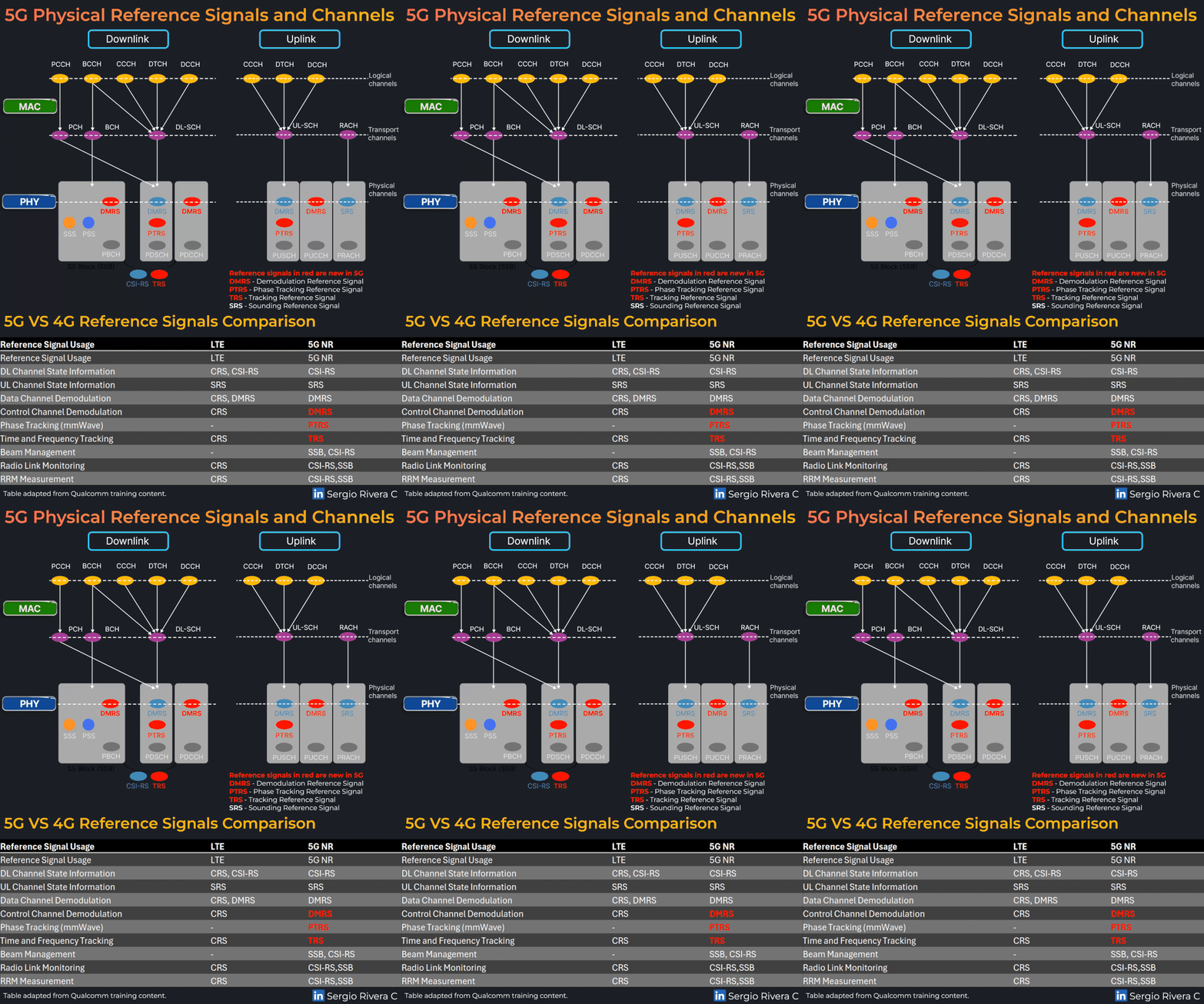
I used to see 5G reference signals and channels as diagrams to memorize.
DMRS. PTRS. TRS. SSBs.
Logical channels. Transport channels. Physical channels.
PHY layer. MAC layer.
A lot of acronyms.
A lot of architecture.
A lot of standards.
But after working with real networks, you realize something important:
These concepts are not just academic.
It’s how the network communicates what is happening internally.
If you come from an LTE background, 5G NR initially feels familiar because many principles still align with 3GPP foundations:
• Downlink and Uplink separation
• Logical, transport, and physical channels
• PHY and MAC interaction
• Synchronization and scheduling mechanisms
But then the differences start appearing.
DMRS became far more prevalent in 5G.
PTRS was introduced for phase tracking, especially at higher frequencies.
TRS added new tracking capabilities.
Meanwhile, some LTE mechanisms disappeared as 5G redesigned how those functions are handled.
At first, this may look like pure theory. Until you enter a real troubleshooting session. That is when these diagrams become maps.
Maps that help you:
• Follow traces with clarity
• Understand synchronization failures
• Identify throughput degradation
• Predict interference or coverage issues
• Optimize power at the correct point
• Read vendor documentation from Ericsson, Huawei, or ZTE while staying grounded in familiar 3GPP concepts
The deeper you understand the radio interface structure, the less you rely on guessing.
I’ve had moments during troubleshooting where a single reference signal explained what hours of KPI analysis could not.
Theory is important. But the moment you connect that theory to real network behavior, it starts turning into answers, solutions and optimization.
LinkedIn: 