Impedance matching is the most fundamental concept in RF engineering. Get it wrong and nothing works.
Here is what you need to know.
 What Is Impedance Matching?
Making source impedance equal to load impedance. Usually 50 ohms in RF systems.
Why? Maximum power transfer occurs when impedances match.
Reflections happen when they do not. Reflected power travels back to source. Heating. Distortion. Reduced range.
 Key Parameters
Return loss: ratio of reflected to incident power. 20dB means 1% reflected. Good. 10dB means 10% reflected. Marginal.
VSWR (Voltage Standing Wave Ratio): 1.0 is perfect. 1.5 is typical. 2.0 is poor.
Reflection coefficient (Γ): 0 is perfect. 0.5 is 50% reflected.
 Why 50 Ohms?
Historical choice. 50 ohms balances power handling and loss for coax cables.
75 ohms exists for cable TV (lower loss). 600 ohms for audio.
In RF, 50 ohms is the default.
 How to Match
L network: two reactive components. Simple. Narrowband.
Pi and T networks: three components. Wider bandwidth. More tuning.
Quarter wave transformer: single section at specific frequency. Bandwidth limited.
Stub matching: shunt or series transmission line segment. Common in microwave.
 Tools for Matching
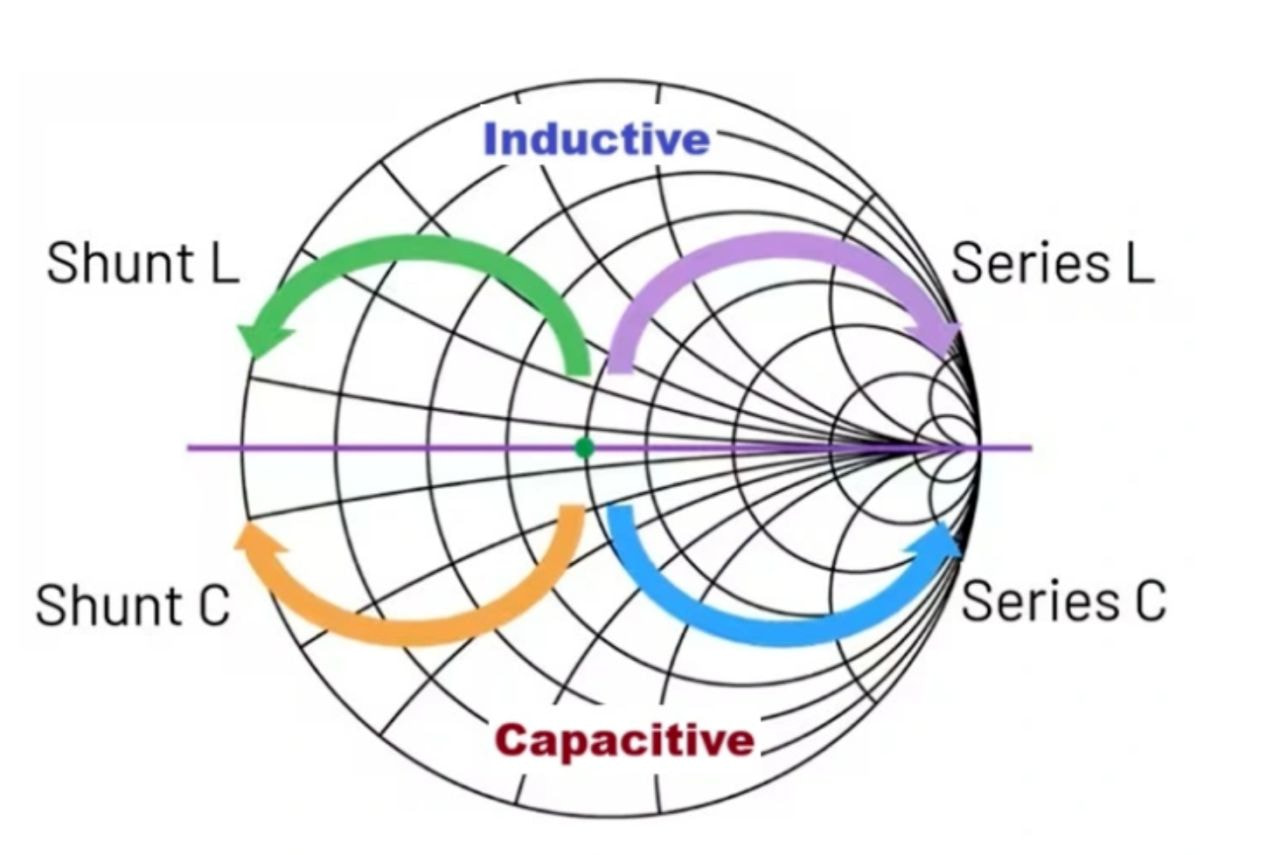
Smith Chart: visual impedance manipulation. Still essential.
Simulation: ADS, MWO, HFSS. Optimize matching networks digitally.
Vector Network Analyzer (VNA): measure S11. Tune in real time.
 Common Pitfalls
Parasitics from components and layout. Add capacitance and inductance you did not plan for.
PCB traces add length. Trace inductance shifts impedance. Use short, controlled impedance lines.
Simulation vs reality. Material Dk varies. Copper thickness varies. Expect tuning.
 Bottom Line
Impedance matching determines how much power reaches your load and how much bounces back.
Learn the basics. Use the tools. Expect to tune.
What is your matching method? Share below 
LinkedIn: