Hello Experts,
How does UE do PLMN selection in 5G/NR?
Is it the same as 4G?
How does it choose Operator?
Thanks
The UE shall scan all RF channels in the NR bands according to its capabilities to find available PLMNs.
On each carrier, the UE shall search for the strongest cell and read its system information, in order to find out which PLMN(s).
If the UE can read one or several PLMN identities in the strongest cell, each found PLMN shall be reported to the NAS as a high-quality PLMN (but without the RSRP value), provided that the following high-quality criterion is fulfilled.
The search for PLMNs may be stopped on request from the NAS.
The UE may optimise PLMN search by using stored information e.g. frequencies and optionally also information on cell parameters from previously received measurement control information elements
Once the UE has selected a PLMN, the cell selection procedure shall be performed in order to select a suitable cell of that PLMN to camp on.
The UE select (decides) for a particular PLMN after reading SIB1 and getting PLMN information.
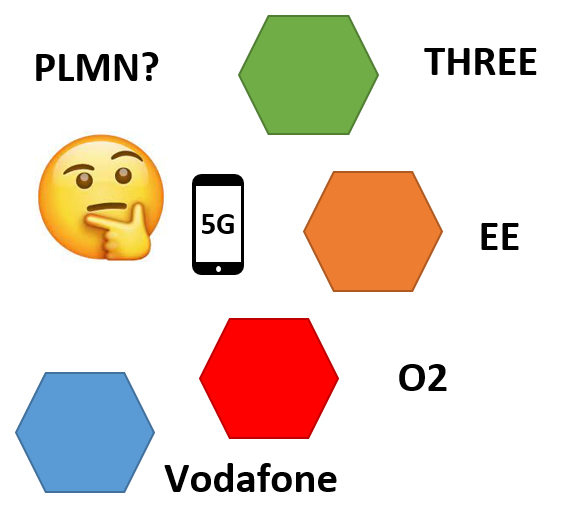
In SIB 1 UE read PLMN information for each available MNO like EE, O2, Vodafone or Three (i.e. for UK).
This information can be found in plmn-IndentityList : MCC and MNC
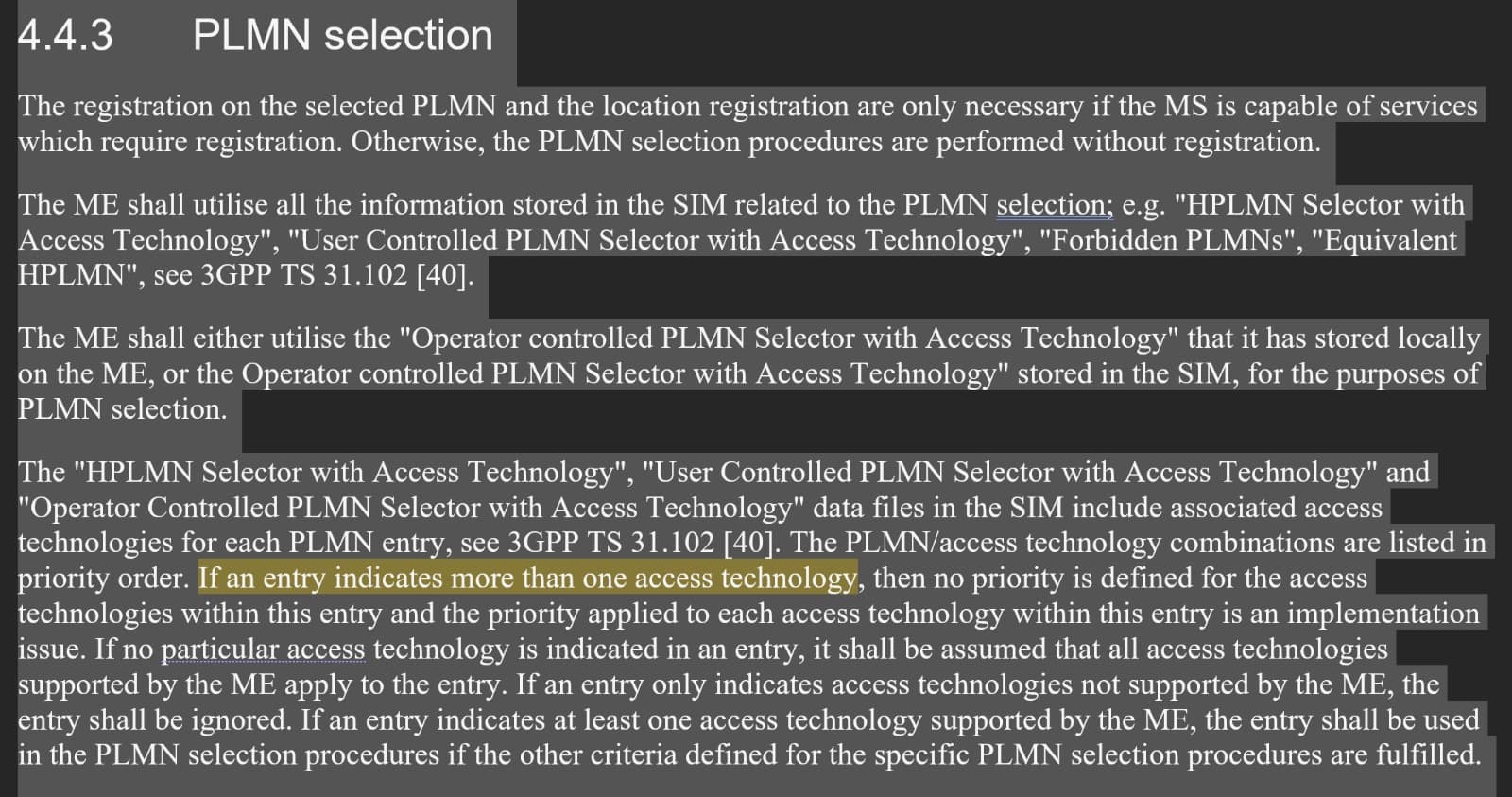
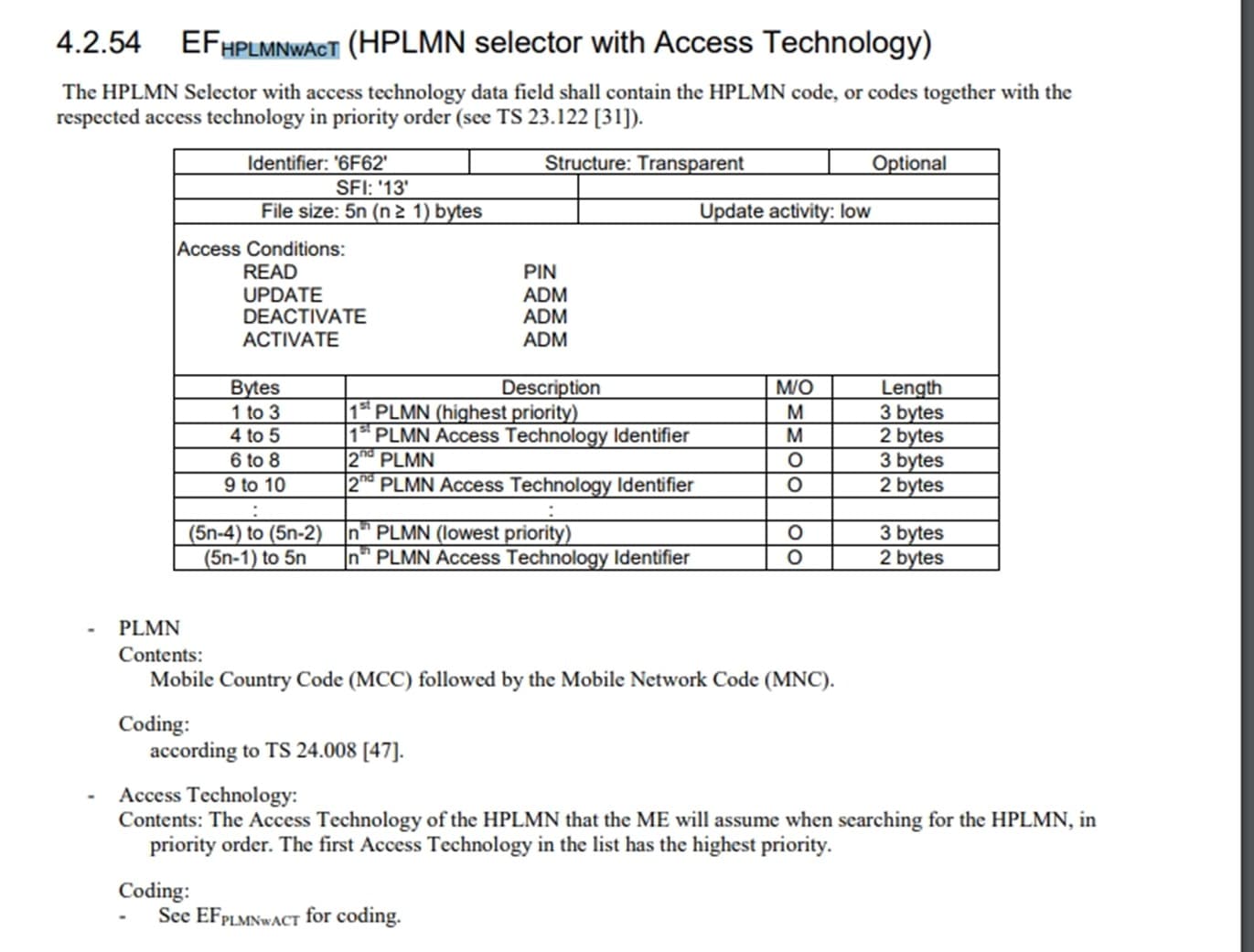
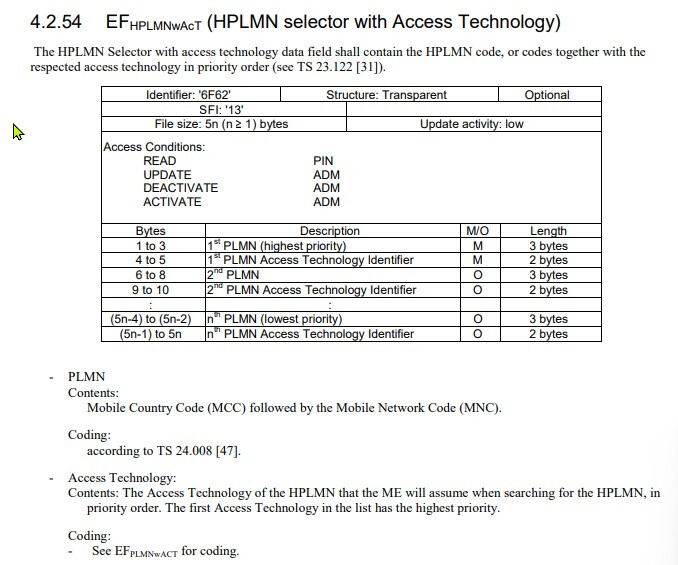
Almost the same, it still follows the same 23.122 procedure. Only difference might be PLMNwact , RAT priority in SIM card with an extra entry for 5G.
HPLMN is a prioritized list of PLMN/Access Tech items
So with this list:
There is no priority between 2G and 3G on PLMN X - but 4G on PLMN Y will have lower priority.
Thanks for comment!
We have only 1 entry for all RATs under same PLMN, so the all RATs should have same priority then.
Agreed!
I have changed 1st plmn as NGRAN and 2nd others.
Phone directly goes to SA 
Just wondering when SA is not available, whether UE will have some delay to camp on LTE pLMN.
Any comments?
Also at LTE option there is rel 13&above and rel14&above options when selecting plmn order, anybodu knows what it is actually?
Seems to me rel13 and 14 is quite old.
Hello
from several experience, the delay is really small if it exist and difficult to measure
I have myself a question related to the modem strategy of frequency scan :
do you know how is managed the logic at the AS level of frequency scanning?
Especially when it comes to mobility between countries => network reselection doesn’t take a full band rescan of few minutes however the freq of 2 countries can be really different (different band / different operator / different technology)
when it comes to mobility between tactical bubble in 5G SA to commercial network, i also wonder how does the modem do to select the frequency
Tactical bubble or commerical network doesn’t share the frequency to be scanned…
What do you think?
In 5G NIB solution, I have multiple PLMN configuration available.
UE always sends different PLMN as part of User location information. Is this correct ?
Because after mobility registration is done, ue is failed during PDU Establishment procedure as PLMN is not supported. / roaming is not allowed.
When your phone powers on or loses coverage, it needs to figure out which operator’s network to connect to. In 5G NR, this happens almost the same way as 4G, just with a few extra steps because of SA (Standalone) vs NSA differences.
Here’s the basic flow:
The core difference from 4G is that in 5G, the SIM/USIM now also carries RAT priority information specific to NR — so the network can tell the UE “prefer 5G-SA over 4G” or vice versa, using the same underlying selection procedure (3GPP 23.122), just extended to include NR as an access technology option.
@Rohit_Kumar — on your multi-PLMN case: yes, the UE can legitimately signal a different PLMN than the one you consider “primary,” but that alone shouldn’t break PDU session establishment. Registration succeeding while PDU establishment fails points at the serving-network PLMN, not at selection.
In a shared/multi-PLMN cell the gNB broadcasts a PLMN list in SIB1 and the UE picks one. The AMF then passes that selected PLMN as servingNetwork into Nsmf_PDUSession_CreateSMContext, and the SMF validates it against the subscription it fetches from UDM. If the selected PLMN isn’t provisioned as allowed in that subscriber’s data, you get exactly your symptom — registration passes at AMF, then the session is rejected as PLMN not supported / roaming not allowed.
Three things to check, in order:
The servingNetwork PLMN in the Nsmf_PDUSession_CreateSMContext the AMF sends — is it the PLMN you expect, or the UE’s selected one?
The UDM subscription for that IMSI — is that PLMN listed as allowed (and is it being treated as HPLMN or as a roaming PLMN)?
The gNB NGAP PLMN Support List per TAC, and the order of the broadcast PLMN list in SIB1 — if the intended PLMN isn’t first, UEs will select another one.
Also worth separating NR-CGI/TAI in the ULI from the selected PLMN — they’re distinct, and a gNB reporting the common PLMN in NR-CGI while the UE selected a different one will make the mismatch look like a UE problem when it’s a configuration one.
If you post the exact reject cause value and the servingNetwork IE from the CreateSMContext, it’ll pin down which of the three it is.