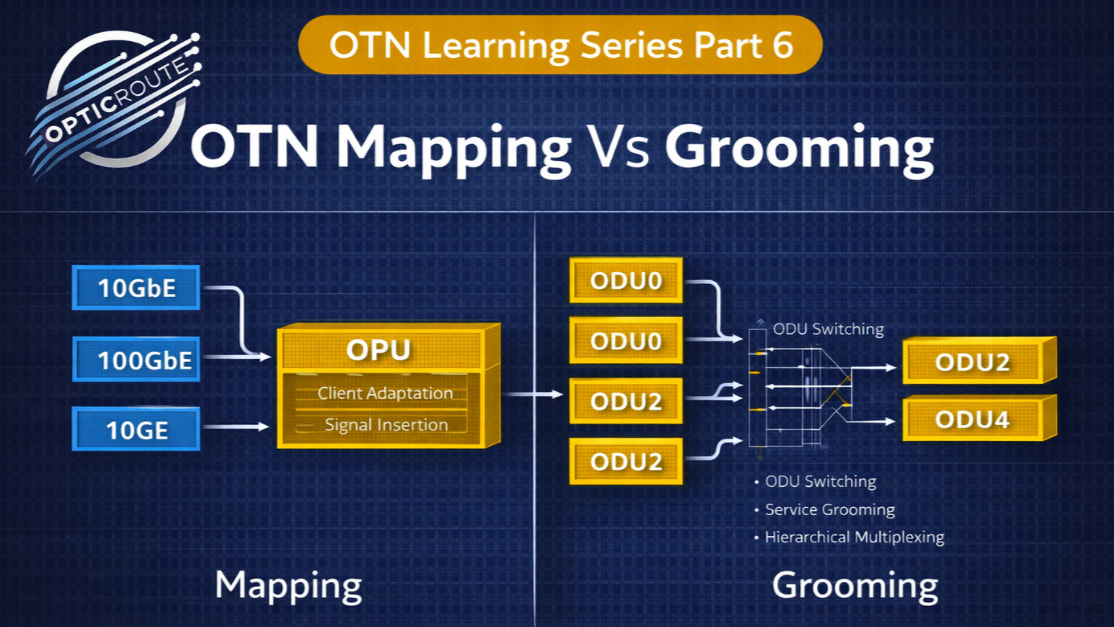
𝗧𝗵𝗲 𝗗𝗶𝗳𝗳𝗲𝗿𝗲𝗻𝗰𝗲 𝗠𝗼𝘀𝘁 𝗘𝗻𝗴𝗶𝗻𝗲𝗲𝗿𝘀 𝗠𝗶𝘀𝘀
Many engineers use the words 𝗺𝗮𝗽𝗽𝗶𝗻𝗴 and 𝗴𝗿𝗼𝗼𝗺𝗶𝗻𝗴 interchangeably.
They are not the same.
If you confuse them, you misunderstand how OTN actually works.
𝗪𝗵𝗮𝘁 𝗢𝗧𝗡 𝗠𝗮𝗽𝗽𝗶𝗻𝗴 𝗥𝗲𝗮𝗹𝗹𝘆 𝗜𝘀
𝗠𝗮𝗽𝗽𝗶𝗻𝗴 is the act of placing a client signal into an OTN container.
It happens at the 𝗢𝗣𝗨 layer.
You take:
10GbE 100GbE SONET OC 192
And you adapt it into structured payload.
Mapping answers one question:
Where does this signal live inside OTN?
It does not combine services. It does not switch containers. It does not optimize capacity.
It simply adapts and inserts.
Figure 6.1
Client signal entering OPU and becoming structured OTN payload.
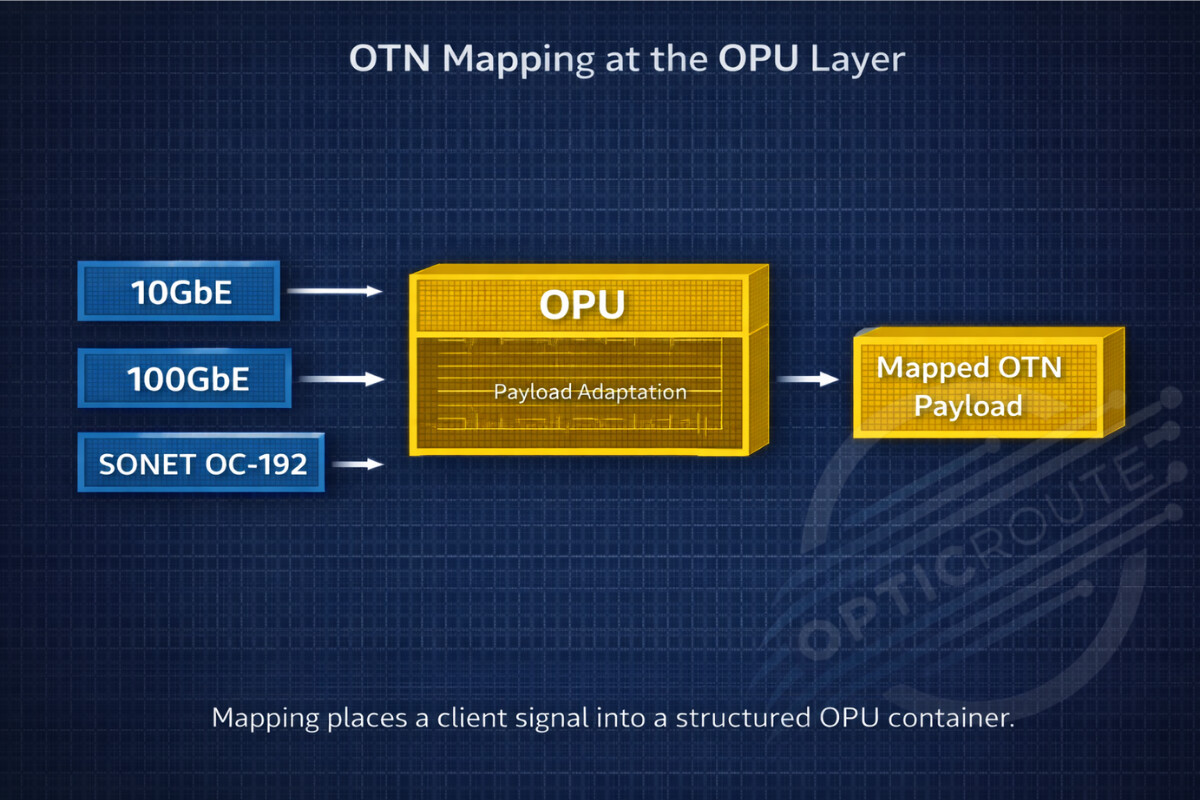
Figure 6.1
𝗪𝗵𝗮𝘁 𝗢𝗧𝗡 𝗚𝗿𝗼𝗼𝗺𝗶𝗻𝗴 𝗥𝗲𝗮𝗹𝗹𝘆 𝗜𝘀
𝗚𝗿𝗼𝗼𝗺𝗶𝗻𝗴 happens at the 𝗢𝗗𝗨 layer.
It is switching and aggregation of containers.
Example:
10 x ODU0 services Mapped into 1 x ODU2
Or
Multiple ODU2 Aggregated into ODU4
Grooming answers a different question:
How do we efficiently transport multiple services across the backbone?
It involves:
𝗢𝗗𝗨 𝘀𝘄𝗶𝘁𝗰𝗵𝗶𝗻𝗴 𝗛𝗶𝗲𝗿𝗮𝗿𝗰𝗵𝗶𝗰𝗮𝗹 𝗺𝘂𝗹𝘁𝗶𝗽𝗹𝗲𝘅𝗶𝗻𝗴 𝗦𝗲𝗿𝘃𝗶𝗰𝗲 𝗮𝗴𝗴𝗿𝗲𝗴𝗮𝘁𝗶𝗼𝗻
This is where transport engineering becomes architectural.
Figure 6.2
Multiple ODU containers entering an OTN cross connect and merging into higher rate container.
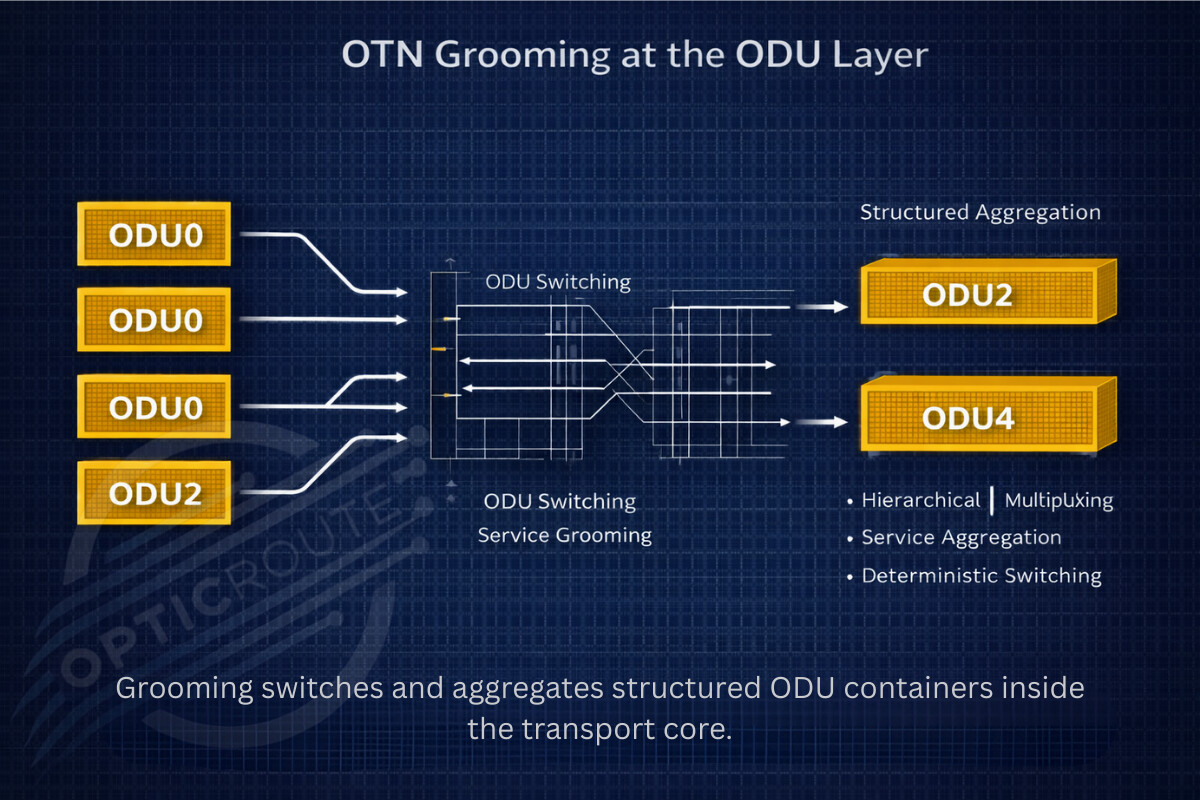
Figure 6.2
𝗠𝗮𝗽𝗽𝗶𝗻𝗴 𝗩𝘀 𝗚𝗿𝗼𝗼𝗺𝗶𝗻𝗴 𝗦𝗶𝗺𝗽𝗹𝗶𝗳𝗶𝗲𝗱
Here is the clean distinction:

Mapping is vertical. Client into container.
Grooming is horizontal. Container to container.
One prepares the signal. The other optimizes the network.
Figure 6.3
Side by side comparison showing mapping flow versus grooming flow.
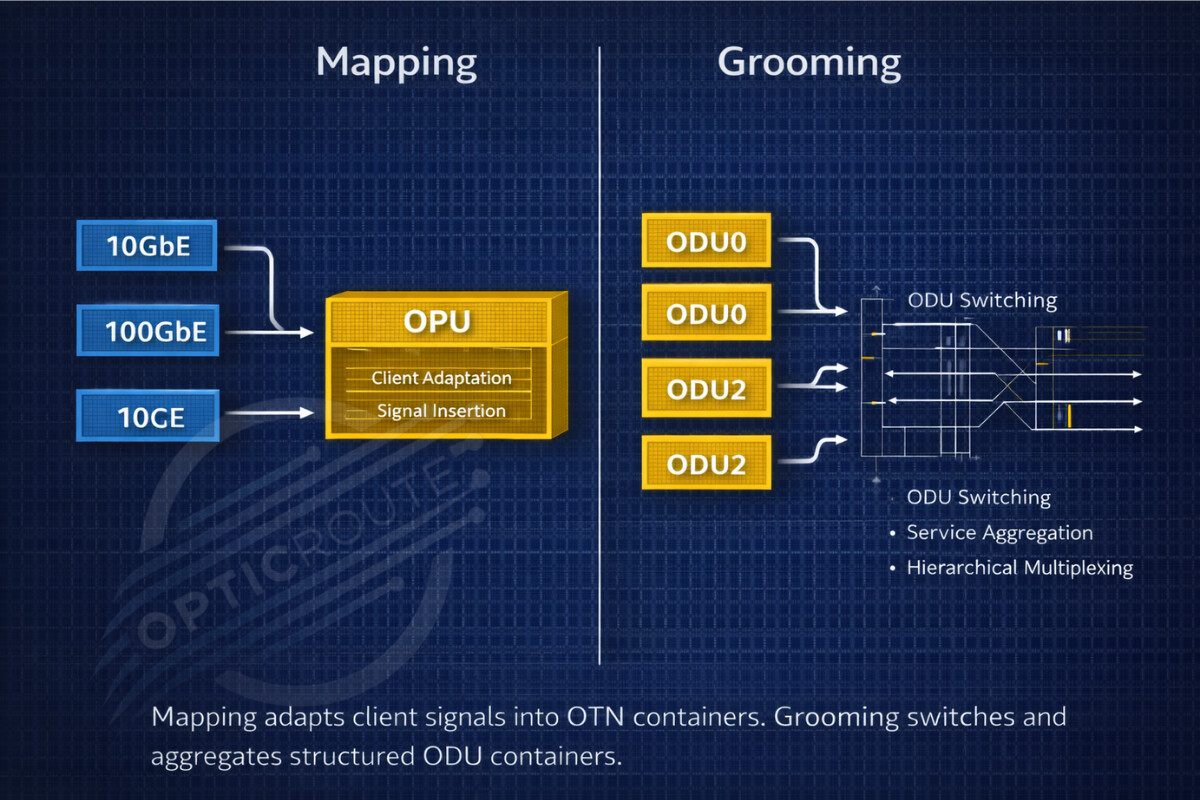
Figure 6.3
𝗪𝗵𝘆 𝗧𝗵𝗶𝘀 𝗗𝗶𝘀𝘁𝗶𝗻𝗰𝘁𝗶𝗼𝗻 𝗠𝗮𝘁𝘁𝗲𝗿𝘀
If you mislabel mapping as grooming:
You oversimplify network design. You misunderstand OTN cross connects. You confuse service adaptation with service optimization.
In large backbone deployments, that confusion leads to:
Poor capacity planning Inefficient hierarchy usage Operational complexity
Transport engineering demands precision.
𝗠𝗮𝗽𝗽𝗶𝗻𝗴 is about structure. 𝗚𝗿𝗼𝗼𝗺𝗶𝗻𝗴 is about scale.
Both are essential. But they solve different problems.
Figure 6.4
End to end flow showing client mapping at ingress and grooming in core network.
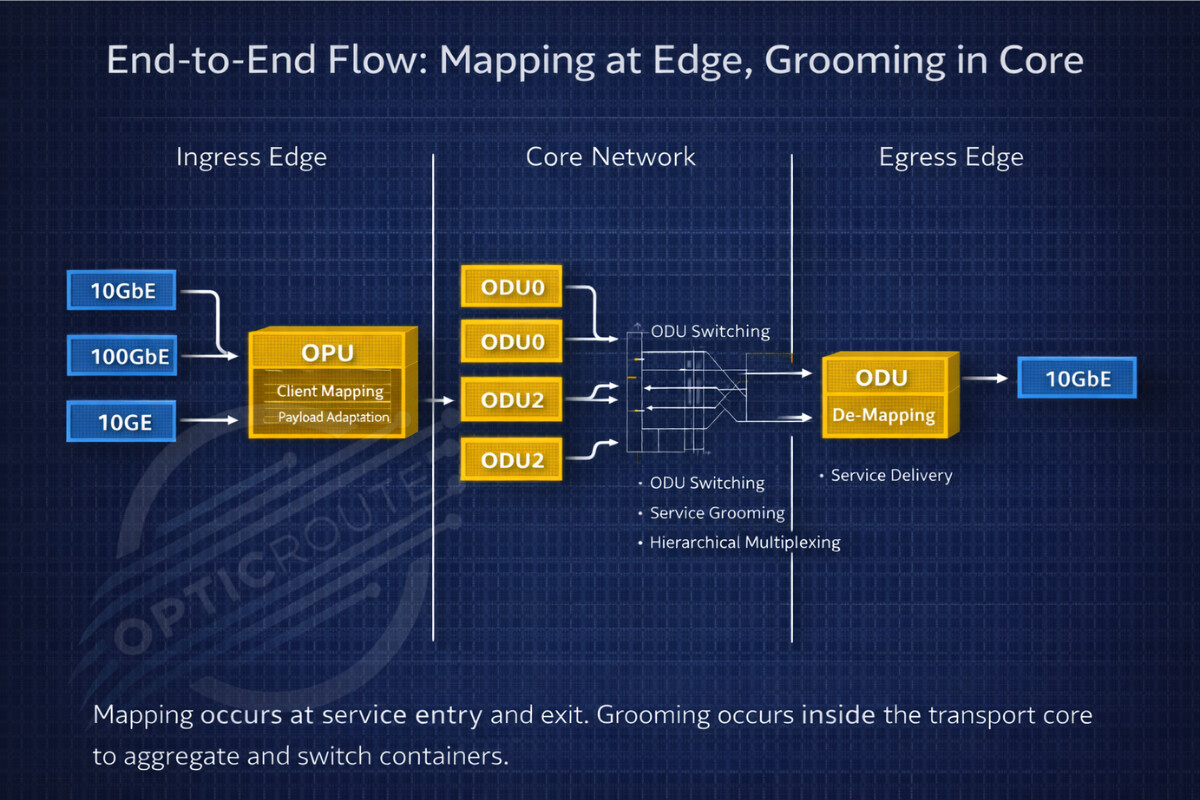
Figure 6.4