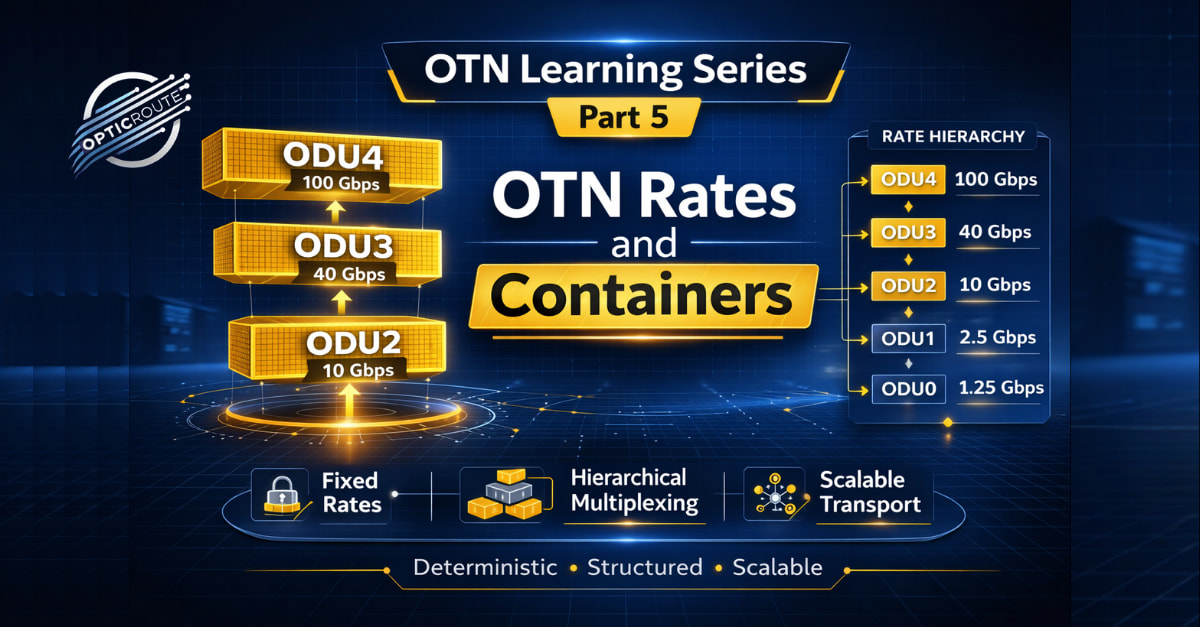
Most engineers first encounter OTN rates as a table of numbers.
ODU0
ODU1
ODU2
ODU3
ODU4
It feels like memorization.
It is not.
𝗢𝗧𝗡 𝗿𝗮𝘁𝗲𝘀 𝗮𝗿𝗲 𝗮𝗯𝗼𝘂𝘁 𝘀𝘁𝗿𝘂𝗰𝘁𝘂𝗿𝗲.
Once you understand the structure, the numbers make sense.
𝗧𝗵𝗲 𝗕𝗮𝘀𝗶𝗰 𝗜𝗱𝗲𝗮
OTN defines fixed-rate containers called 𝗢𝗗𝗨𝗸.
Each ODUk represents a specific payload capacity.
Think of them as standardized transport boxes.
Here are the core ones you will see in modern networks:
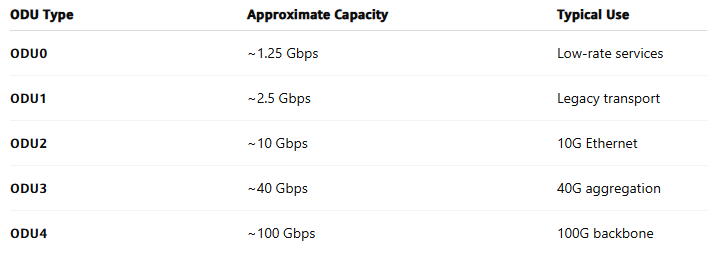
These are fixed containers.
They do not float. They do not burst. They are deterministic.
𝗢𝗗𝗨𝗸 𝗖𝗼𝗻𝘁𝗮𝗶𝗻𝗲𝗿 𝗛𝗶𝗲𝗿𝗮𝗿𝗰𝗵𝘆
ODUk containers are scalable building blocks.
Higher containers can carry multiple lower containers through multiplexing.
Example:
• Multiple 𝗢𝗗𝗨𝟬 can fit into 𝗢𝗗𝗨𝟮
• Multiple 𝗢𝗗𝗨𝟮 can be mapped into 𝗢𝗗𝗨𝟰
This is structured aggregation, not statistical sharing.
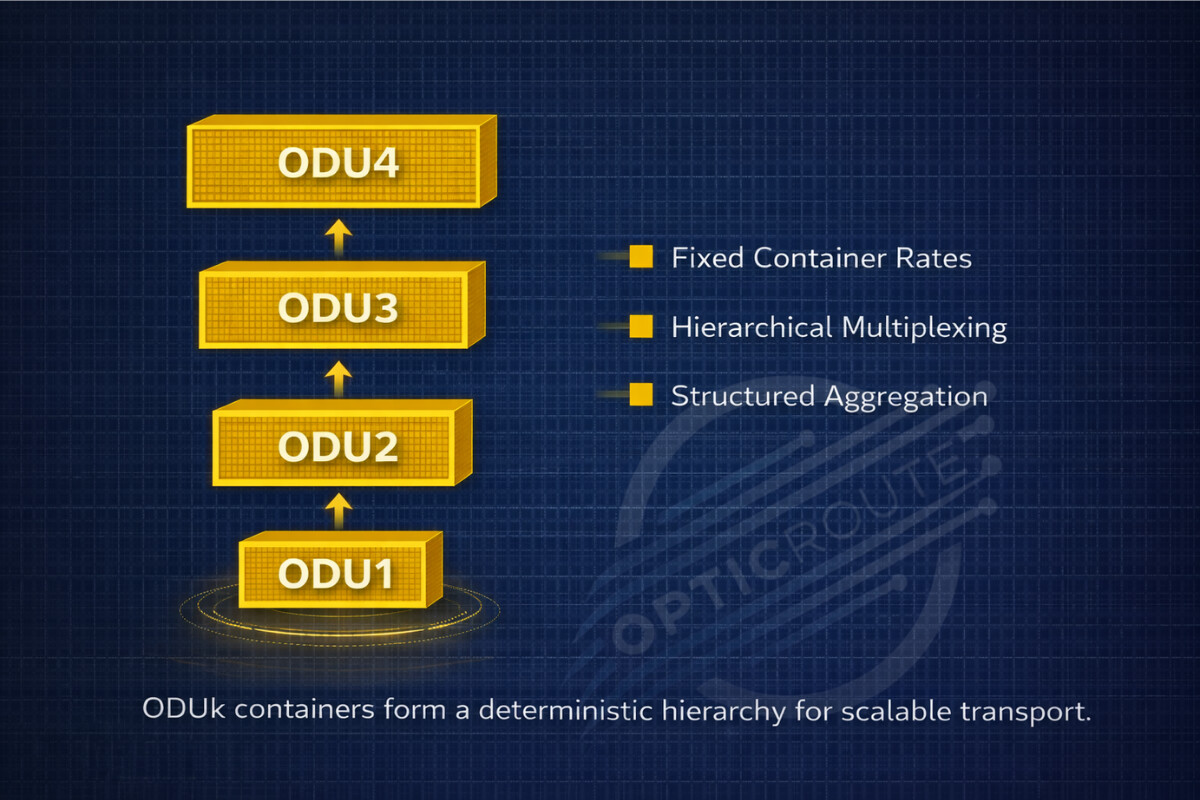
Figure 5.1: ODUk Container Hierarchy
𝗙𝗹𝗲𝘅𝗶𝗯𝗹𝗲 𝗚𝗿𝗶𝗱 𝗮𝗻𝗱 𝗢𝗗𝗨𝗳𝗹𝗲𝘅
Modern OTN goes further with 𝗢𝗗𝗨𝗳𝗹𝗲𝘅.
ODUflex allows bandwidth to be allocated in smaller time-slot increments.
Instead of being locked to rigid 10G or 100G blocks, you can create:
• 25G services
• 75G services
• Custom bandwidth profiles
But here is the important distinction:
Even with ODUflex, bandwidth is still explicitly assigned.
It is not shared dynamically like Ethernet.
𝗢𝗗𝗨𝗳𝗹𝗲𝘅 𝗕𝗮𝗻𝗱𝘄𝗶𝗱𝘁𝗵 𝗔𝗹𝗹𝗼𝗰𝗮𝘁𝗶𝗼𝗻
ODUflex slices time slots inside a higher-rate container.
Each slice is controlled.
Each slice is monitored.
Each slice is deterministic.

Figure 5.2: ODUFlex Bandwidth Allocation
𝗥𝗮𝘁𝗲𝘀 𝗮𝗿𝗲 𝗡𝗼𝘁 𝗔𝗯𝗼𝘂𝘁 𝗦𝗽𝗲𝗲𝗱
This is where many engineers misunderstand OTN.
OTN rates are not primarily about speed.
They are about:
• 𝗦𝘁𝗿𝘂𝗰𝘁𝘂𝗿𝗲
• 𝗦𝗰𝗮𝗹𝗮𝗯𝗶𝗹𝗶𝘁𝘆
• 𝗠𝘂𝗹𝘁𝗶𝗽𝗹𝗲𝘅𝗶𝗻𝗴 𝗯𝗼𝘂𝗻𝗱𝗮𝗿𝗶𝗲𝘀
• 𝗦𝗲𝗿𝘃𝗶𝗰𝗲 𝗶𝗱𝗲𝗻𝘁𝗶𝘁𝘆
When you design a backbone, you are not asking:
How fast is this link?
You are asking:
How are services structured inside this link?
That question leads you to the correct ODU level.
𝗙𝗶𝗻𝗮𝗹 𝗠𝗲𝗻𝘁𝗮𝗹 𝗠𝗼𝗱𝗲𝗹
𝗢𝗗𝗨𝗸 𝗮𝗿𝗲 𝗳𝗶𝘅𝗲𝗱 𝗰𝗼𝗻𝘁𝗮𝗶𝗻𝗲𝗿𝘀. 𝗢𝗗𝗨𝗳𝗹𝗲𝘅 𝗶𝘀 𝗰𝗼𝗻𝘁𝗿𝗼𝗹𝗹𝗲𝗱 𝗳𝗹𝗲𝘅𝗶𝗯𝗶𝗹𝗶𝘁𝘆.
Both operate under deterministic transport rules.
That is the difference between:
𝗧𝗿𝗮𝗻𝘀𝗽𝗼𝗿𝘁 𝗲𝗻𝗴𝗶𝗻𝗲𝗲𝗿𝗶𝗻𝗴
and
𝗧𝗿𝗮𝗳𝗳𝗶𝗰 𝗲𝗻𝗴𝗶𝗻𝗲𝗲𝗿𝗶𝗻𝗴
In 𝗣𝗮𝗿𝘁 𝟲, we will go deeper into 𝗢𝗧𝗡 𝗺𝘂𝗹𝘁𝗶𝗽𝗹𝗲𝘅𝗶𝗻𝗴 and time-slot architecture, where the real design decisions happen.