In the previous parts, we clarified:
• 𝗪𝗵𝘆 𝗢𝗧𝗡 𝗲𝘅𝗶𝘀𝘁𝘀
• 𝗪𝗵𝗮𝘁 𝗢𝗧𝗡 𝗿𝗲𝗮𝗹𝗹𝘆 𝗶𝘀
• 𝗛𝗼𝘄 𝗶𝘁 𝗱𝗶𝗳𝗳𝗲𝗿𝘀 𝗳𝗿𝗼𝗺 𝗘𝘁𝗵𝗲𝗿𝗻𝗲𝘁
Now we open the box.
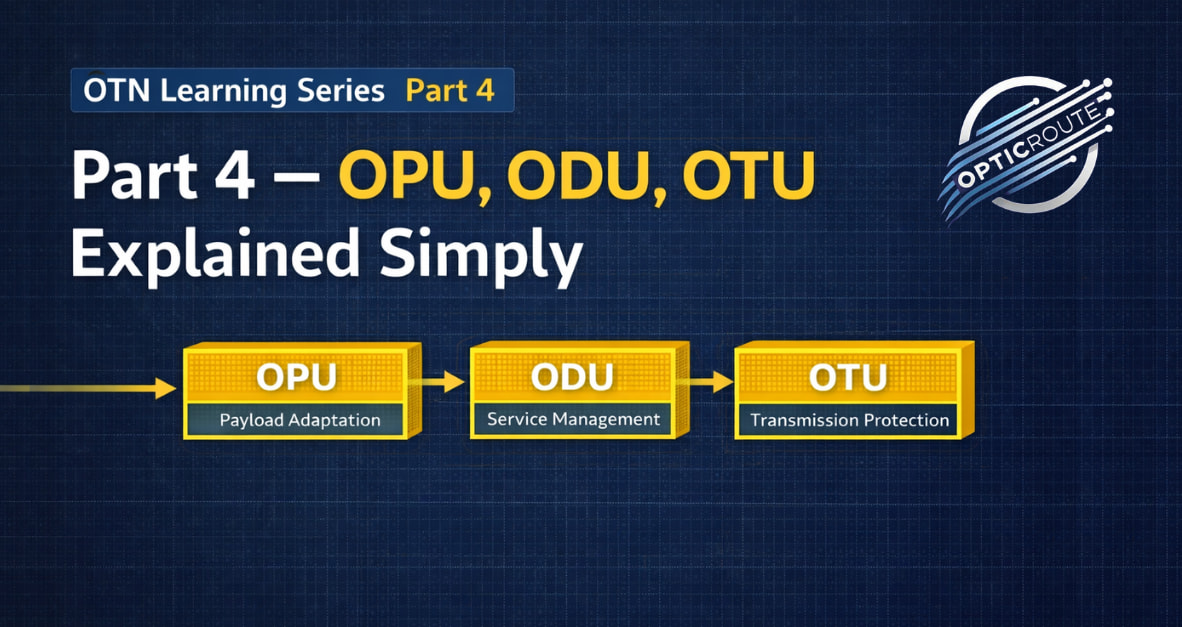
𝗢𝗧𝗡 𝗶𝘀 𝗻𝗼𝘁 𝗮 𝘀𝗶𝗻𝗴𝗹𝗲 𝗹𝗮𝘆𝗲𝗿. It is a structured system with three distinct roles:
𝗢𝗣𝗨 𝗢𝗗𝗨 𝗢𝗧𝗨
Understanding these three correctly changes how you design transport networks.
𝗢𝗣𝗨 — 𝗣𝗮𝘆𝗹𝗼𝗮𝗱 𝗔𝗱𝗮𝗽𝘁𝗮𝘁𝗶𝗼𝗻
𝗢𝗣𝗨 stands for Optical Payload Unit.
Its job is simple.
It takes a client signal and adapts it into an OTN container.
Think of OPU as:
• The interface translator
• The rate aligner
• The payload wrapper
It does not manage services. It does not enforce protection.
It simply prepares the signal for transport.

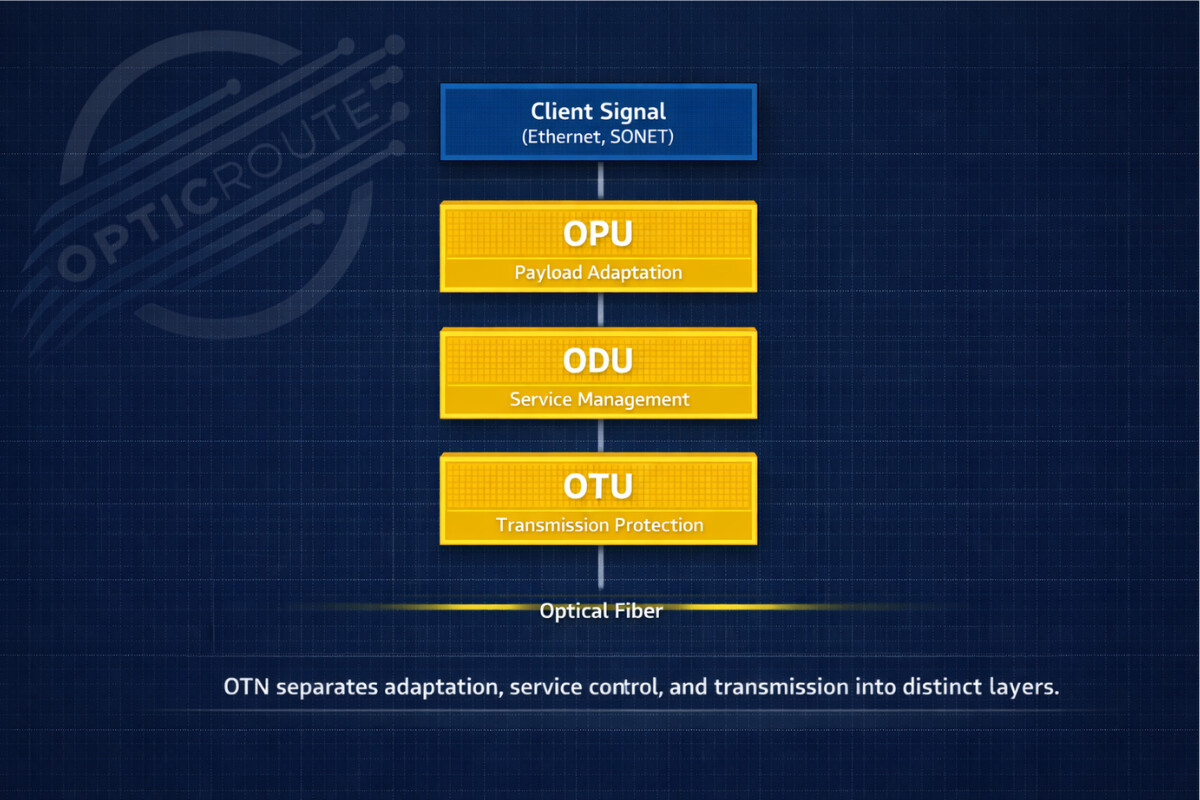
Figure 4.1
Figure 4.1: OPU adapts client signals into structured OTN payload containers.
If you inject:
• 10GbE
• 100GbE
• SONET
OPU aligns and maps it into a usable structure inside OTN.
Nothing more. Nothing less.
𝗢𝗗𝗨 — 𝗦𝗲𝗿𝘃𝗶𝗰𝗲 𝗖𝗼𝗻𝘁𝗮𝗶𝗻𝗲𝗿
𝗢𝗗𝗨 stands for Optical Data Unit.
This is where transport engineering actually happens.
𝗢𝗗𝗨 𝗶𝘀 𝘁𝗵𝗲 𝘀𝗲𝗿𝘃𝗶𝗰𝗲 𝗹𝗮𝘆𝗲𝗿.
At the ODU level, you get:
• 𝗚𝗿𝗼𝗼𝗺𝗶𝗻𝗴
• 𝗠𝗼𝗻𝗶𝘁𝗼𝗿𝗶𝗻𝗴
• 𝗣𝗿𝗼𝘁𝗲𝗰𝘁𝗶𝗼𝗻
• 𝗙𝗮𝘂𝗹𝘁 𝗜𝘀𝗼𝗹𝗮𝘁𝗶𝗼𝗻
When people say OTN provides determinism, they are usually talking about the ODU layer.

Figure 4.2
Figure 4.2: ODU is where services are switched, monitored, and protected.
This is where:
• 10 x 10G becomes 1 x 100G
• Failure is localized
• SLA boundaries are enforced
If you remember one thing from this article, remember this:
𝗦𝗲𝗿𝘃𝗶𝗰𝗲 𝗲𝗻𝗴𝗶𝗻𝗲𝗲𝗿𝗶𝗻𝗴 𝗵𝗮𝗽𝗽𝗲𝗻𝘀 𝗮𝘁 𝗢𝗗𝗨.
𝗢𝗧𝗨 — 𝗧𝗿𝗮𝗻𝘀𝗺𝗶𝘀𝘀𝗶𝗼𝗻 𝗟𝗮𝘆𝗲𝗿
𝗢𝗧𝗨 stands for Optical Transport Unit.
This is the physical transmission wrapper.
OTU handles:
• 𝗙𝗘𝗖
• 𝗧𝗿𝗮𝗻𝘀𝗺𝗶𝘀𝘀𝗶𝗼𝗻 𝗳𝗿𝗮𝗺𝗶𝗻𝗴
• 𝗦𝗶𝗴𝗻𝗮𝗹 𝗶𝗻𝘁𝗲𝗴𝗿𝗶𝘁𝘆
This layer cares about:
• Bit errors
• Optical reach
• Signal quality
It does not care about SLAs.

Figure 4.3
Figure 4.3: OTU protects the signal over the fiber using FEC and framing.
Think of OTU as the shield between:
𝗦𝗲𝗿𝘃𝗶𝗰𝗲 𝗹𝗼𝗴𝗶𝗰 and 𝗢𝗽𝘁𝗶𝗰𝗮𝗹 𝗽𝗵𝘆𝘀𝗶𝗰𝘀
𝗣𝘂𝘁𝘁𝗶𝗻𝗴 𝗜𝘁 𝗧𝗼𝗴𝗲𝘁𝗵𝗲𝗿
Here is the clean mental model.
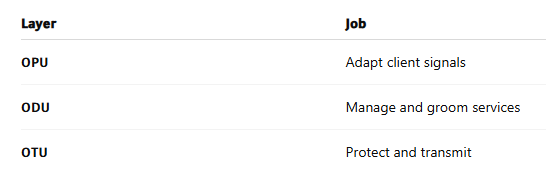
𝗢𝗣𝗨 𝗽𝗿𝗲𝗽𝗮𝗿𝗲𝘀.
𝗢𝗗𝗨 𝗺𝗮𝗻𝗮𝗴𝗲𝘀.
𝗢𝗧𝗨 𝗱𝗲𝗹𝗶𝘃𝗲𝗿𝘀.
This separation is why OTN scales cleanly in the core.
Each layer has one responsibility.
No ambiguity.
𝗧𝗵𝗲 𝗞𝗲𝘆 𝗧𝗮𝗸𝗲𝗮𝘄𝗮𝘆
If you mix these roles mentally, your designs will feel unstable.
If you separate them correctly, OTN becomes very simple.
𝗢𝗣𝗨 𝗶𝘀 𝗮𝗱𝗮𝗽𝘁𝗮𝘁𝗶𝗼𝗻.
𝗢𝗗𝗨 𝗶𝘀 𝘀𝗲𝗿𝘃𝗶𝗰𝗲 𝗰𝗼𝗻𝘁𝗿𝗼𝗹.
𝗢𝗧𝗨 𝗶𝘀 𝗽𝗵𝘆𝘀𝗶𝗰𝗮𝗹 𝗱𝗲𝗹𝗶𝘃𝗲𝗿𝘆.
That is the architecture.
In 𝗣𝗮𝗿𝘁 𝟱, we go deeper into 𝗢𝗗𝗨 𝗴𝗿𝗼𝗼𝗺𝗶𝗻𝗴 and multiplexing and explain how multiple services are efficiently combined without losing determinism.