𝗪𝗵𝘆 𝗢𝗦𝗡𝗥 𝗠𝗮𝗿𝗴𝗶𝗻 𝗗𝗲𝗰𝗶𝗱𝗲𝘀 𝗬𝗼𝘂𝗿 𝗡𝗲𝘁𝘄𝗼𝗿𝗸’𝘀 𝗙𝘂𝘁𝘂𝗿𝗲
The Hidden Constraint Behind Modulation Capacity and Long Term Reliability
OSNR is not just a measurement.
It is the single factor that determines whether your network can upgrade or collapse.
From constellation diagrams to diagnostic dashboards the message is consistent, your 𝗢𝗦𝗡𝗥 𝗺𝗮𝗿𝗴𝗶𝗻 is the true limit of modulation and capacity.
Higher order modulation tighter channel spacing 𝗘𝗗𝗙𝗔 𝗮𝗴𝗶𝗻𝗴 connector contamination 𝗥𝗢𝗔𝗗𝗠 𝗶𝗺𝗯𝗮𝗹𝗮𝗻𝗰𝗲 and nonlinear penalties, all slowly erode your margin until stable wavelengths become fragile.
Even a 𝟬.𝟯 𝘁𝗼 𝟬.𝟱 𝗱𝗕 𝘁𝗶𝗹𝘁 is enough to push a healthy 𝟲𝟰𝗤𝗔𝗠 constellation into instability.
𝗘𝗹𝗶𝘁𝗲 𝗼𝗽𝘁𝗶𝗰𝗮𝗹 𝗲𝗻𝗴𝗶𝗻𝗲𝗲𝗿𝘀 𝗱𝗼 𝗻𝗼𝘁 𝘁𝗿𝗲𝗮𝘁 𝗢𝗦𝗡𝗥 𝗮𝘀 𝗮 𝘀𝗶𝗻𝗴𝗹𝗲 𝗿𝗲𝗮𝗱𝗶𝗻𝗴.
They
• track margin drift
• monitor 𝗤 𝗳𝗮𝗰𝘁𝗼𝗿 across seasons
• analyze splice loss distribution
• re baseline after every field activity
Because future capacity is determined by discipline today.
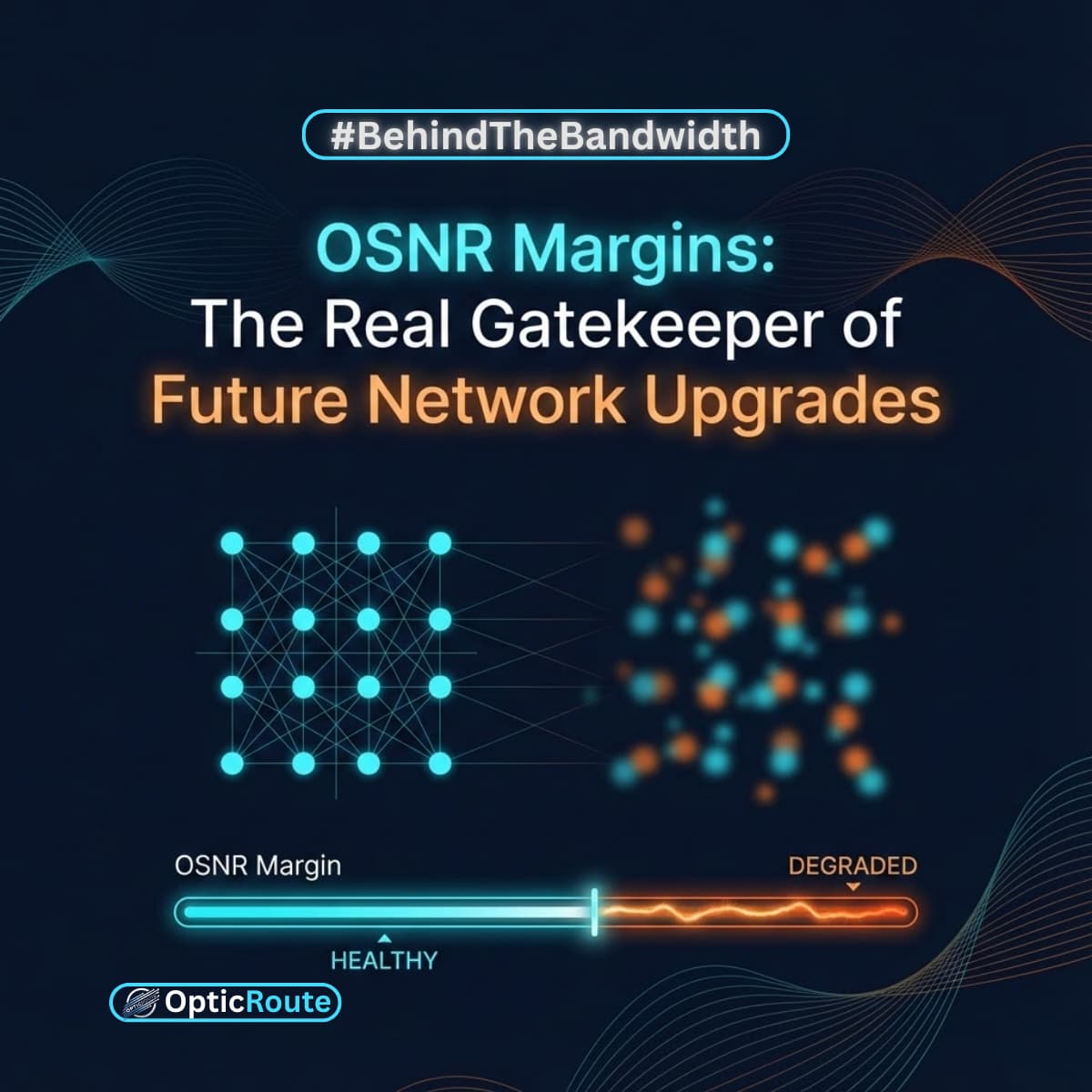
OSNR Margins: The Real Gatekeeper of Future Network Upgrades
OSNR margin is the real gatekeeper of network evolution. A clean constellation today doesn’t guarantee upgrade-ready capacity tomorrow. Even small drops in margin push coherent signals from “healthy” into “degraded,” long before hard alarms appear. Protect your margin if you want your network to scale.
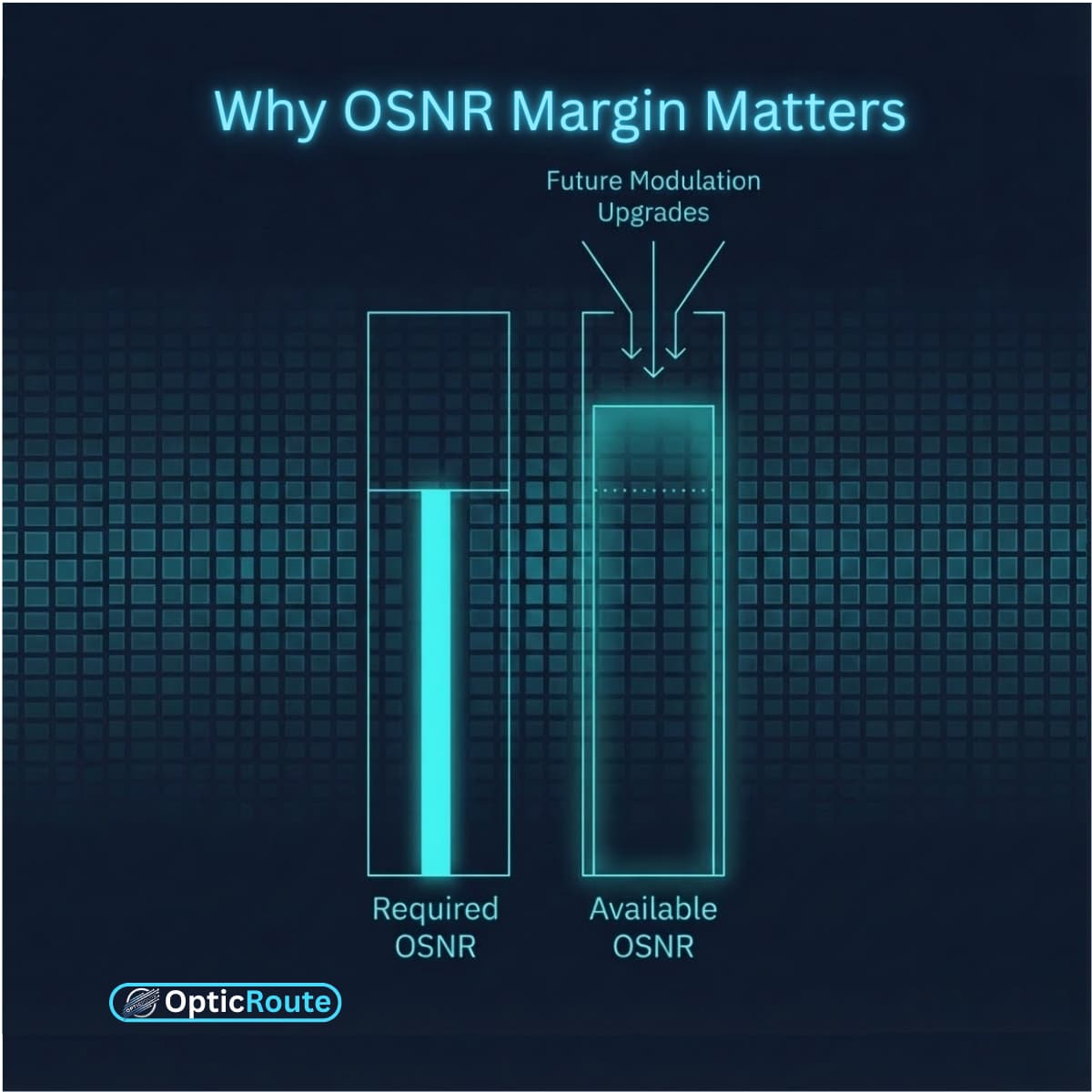
Why OSNR Margin Matters
Future upgrades depend on how much OSNR headroom your network still has.
Higher-order QAM and higher baud rates demand more OSNR. If the available margin is thin, upgrades fail before they even leave the planning sheet. OSNR margin is your network’s insurance for future capacity.
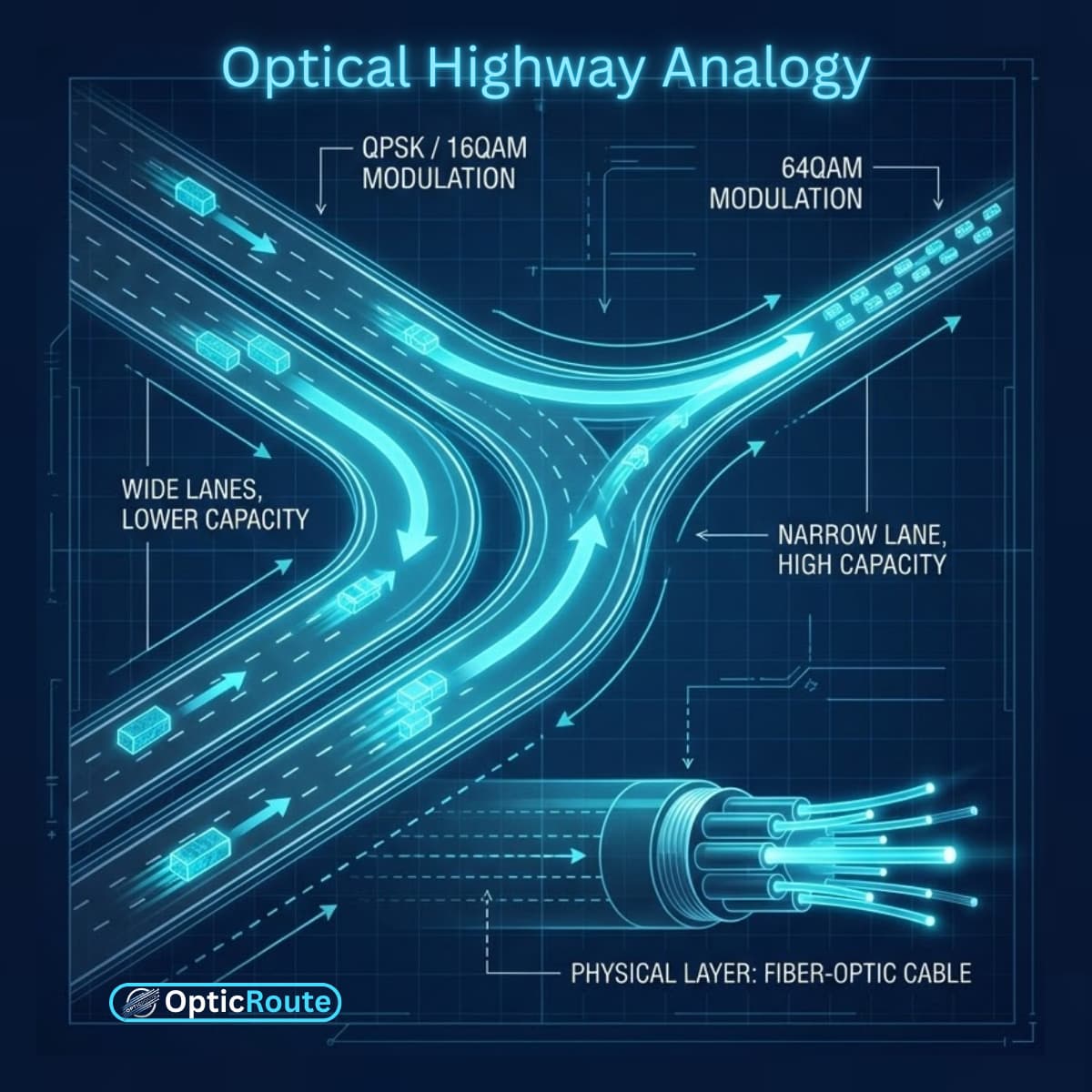
Optical Highway Analogy
Think of QPSK and 16QAM like wide, low-capacity lanes, forgiving and easy to drive on.
64QAM is the narrow, high-capacity express lane that only works when the road is perfectly clean.
The physical layer (your fiber) decides whether these lanes operate smoothly or collapse under noise.
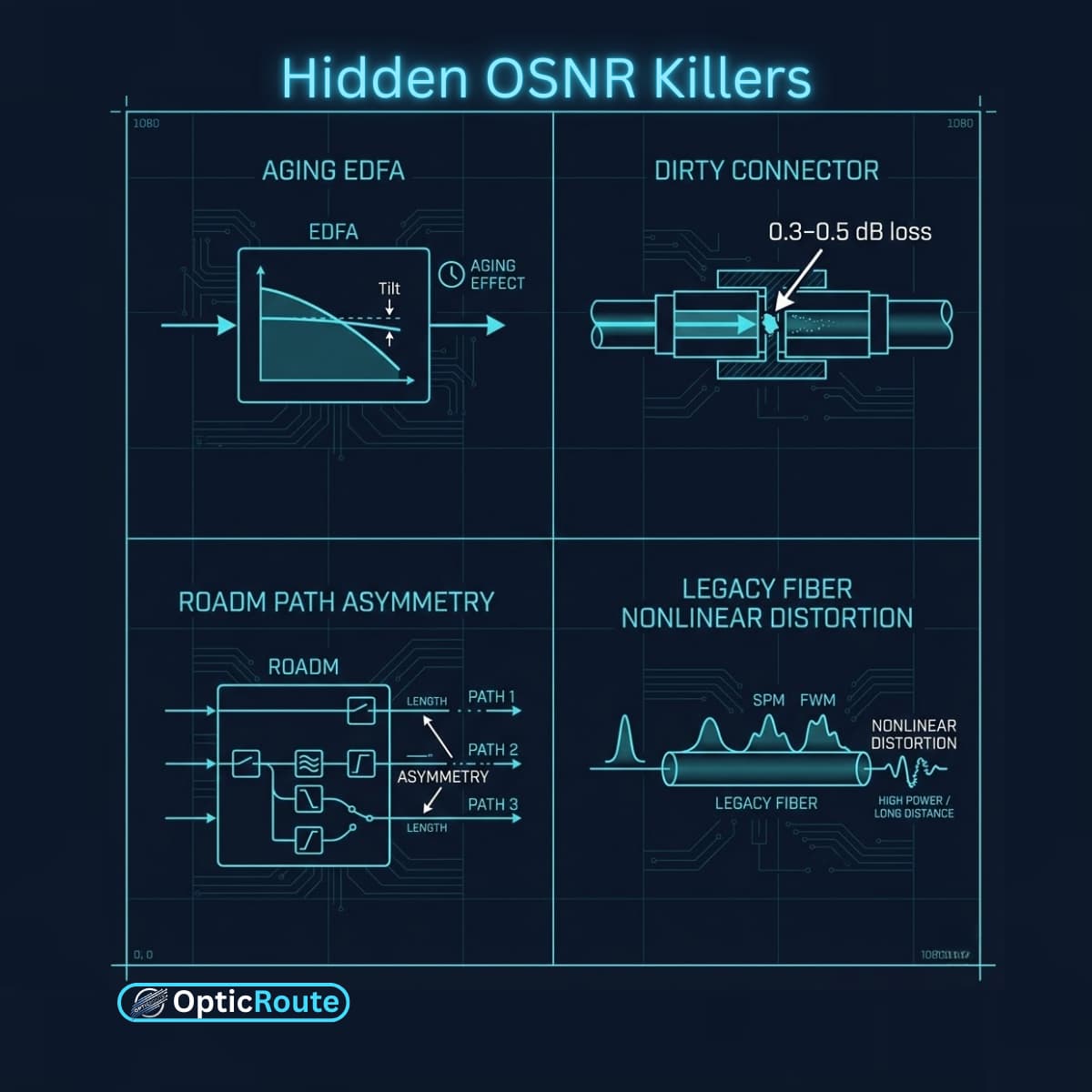
Hidden OSNR Killers
Your OSNR margin is constantly under attack:
• Aging EDFAs introducing tilt
• Dirty connectors adding 0.3–0.5 dB loss
• ROADM path asymmetry degrading equalization
• Legacy fibers creating nonlinear distortion
These silent degraders chip away at margin until high-speed wavelengths fail.
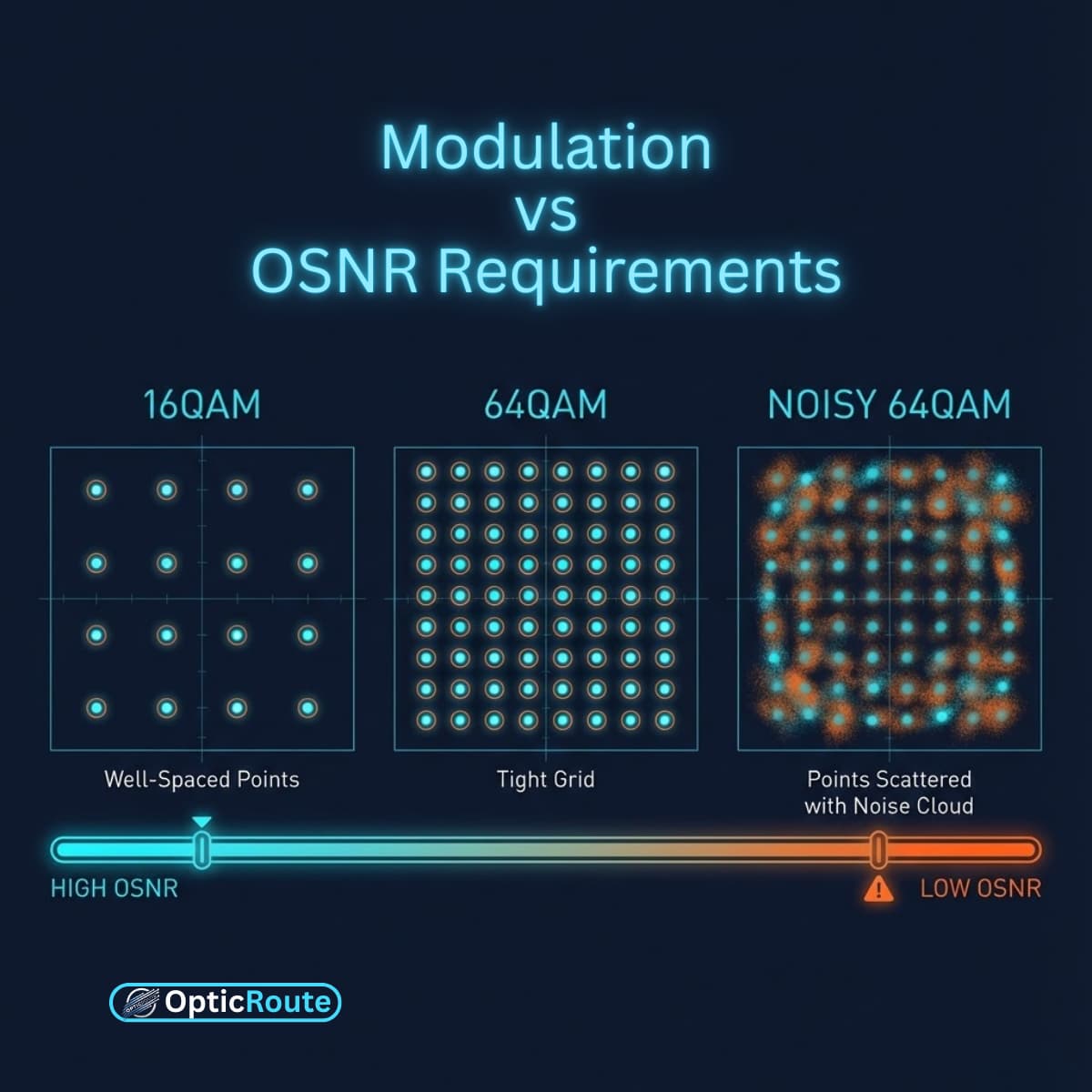
Modulation vs OSNR Requirements
16QAM can tolerate some noise, 64QAM cannot.
As modulation density increases, constellation spacing tightens, and the required OSNR skyrockets.
Once noise clouds overlap the points, even perfect DSP can’t recover the signal.
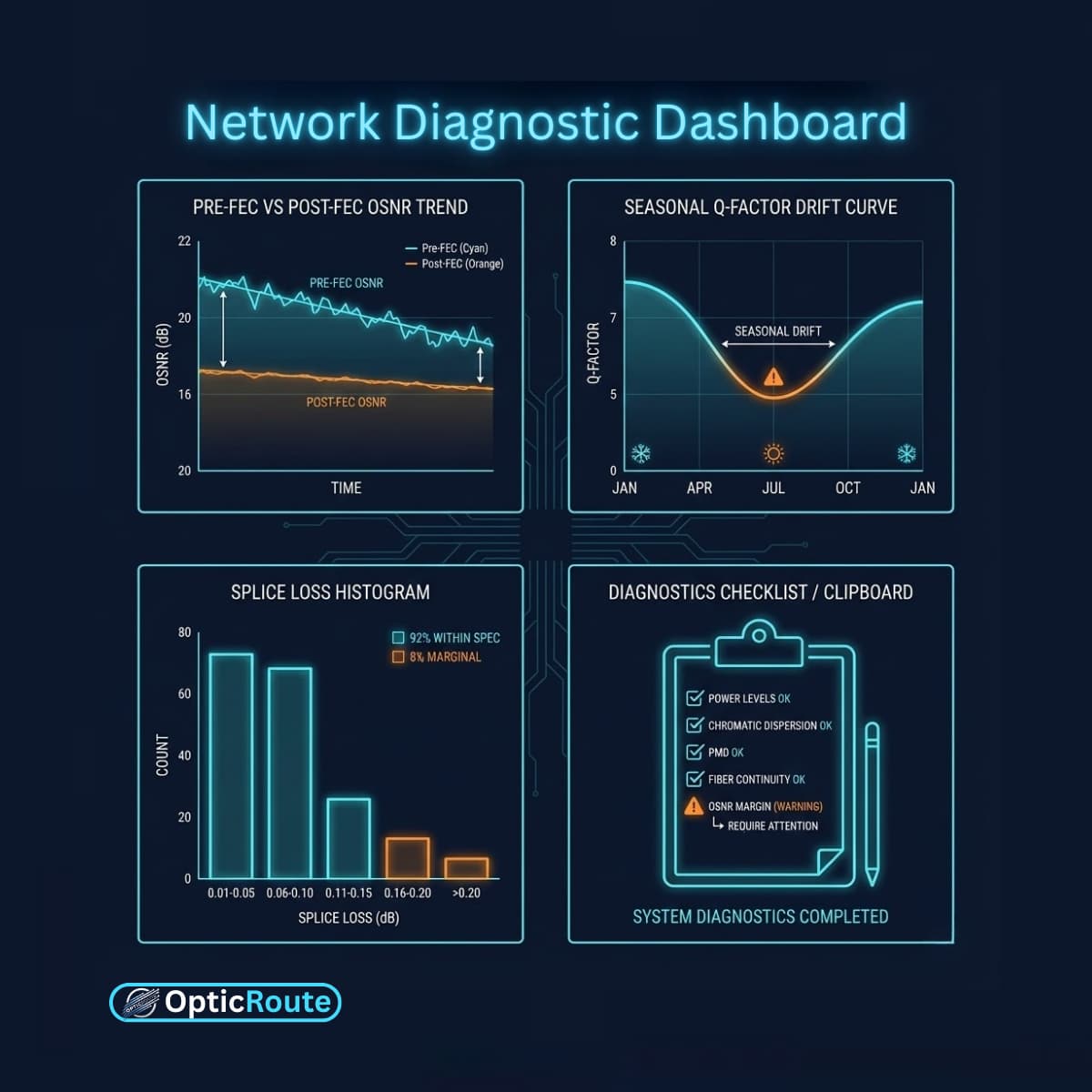
Network Diagnostic Dashboard
Engineers who protect OSNR don’t just measure once, they monitor trends:
• Pre-FEC and post-FEC OSNR drift
• Seasonal Q-factor movement
• Splice-loss distribution
• A complete diagnostics checklist
Healthy networks show stability. Failing ones reveal margin decay long before outages begin.
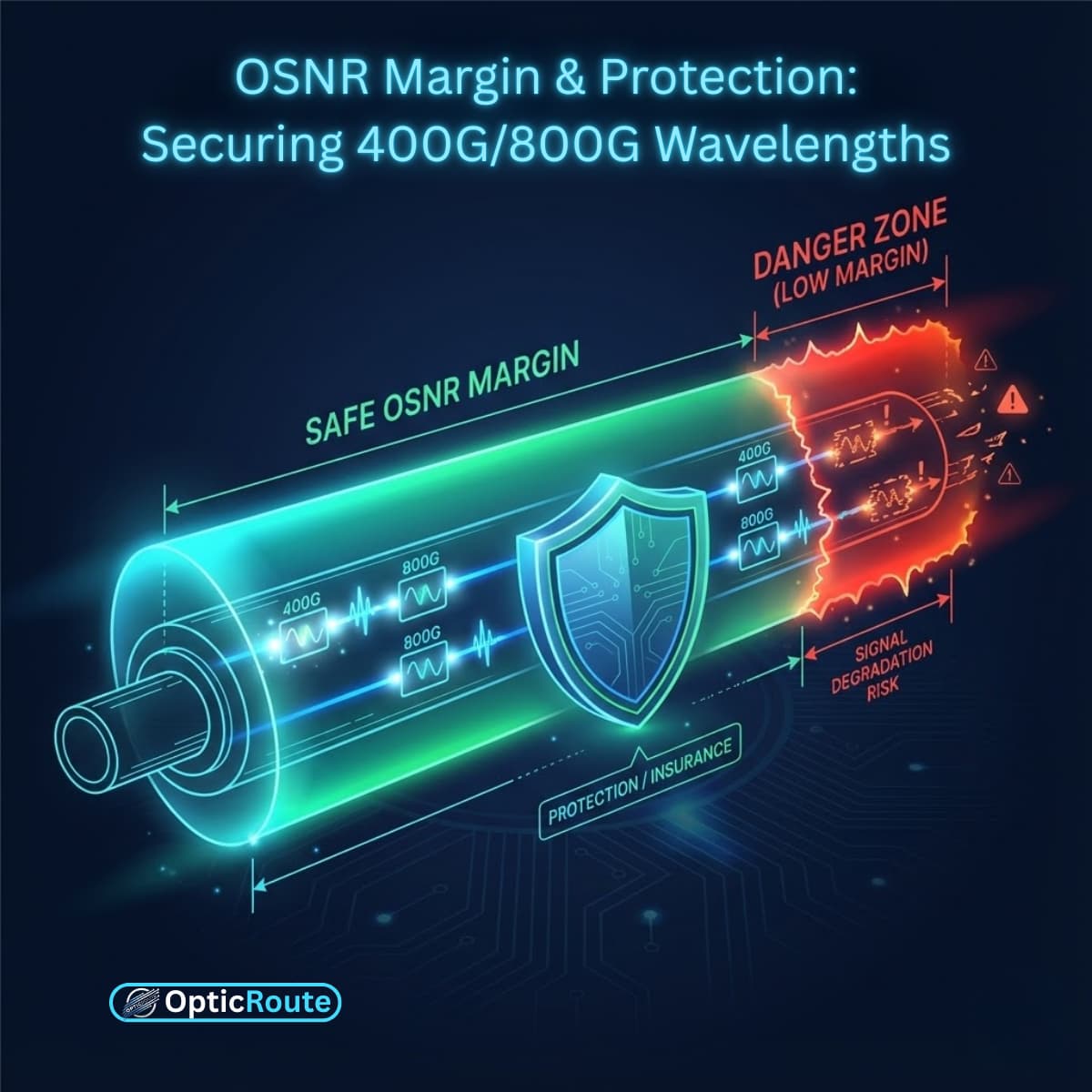
OSNR Margin & Protection for 400G/800G
400G and 800G signals only survive inside a protected OSNR envelope.
Once the margin slips into the “danger zone,” nonlinear noise and spectral interference destroy high-baud signals quickly. OSNR is not just a metric, it’s the shield that keeps next-generation wavelengths alive.
Master DWDM Fundamentals
If you’re serious about mastering DWDM, OSNR, modulation, and coherent design, this eBook is your best starting point.
Download the free preview or get the complete guide to learn DWDM the practical way.