Whats the major difference between 4G & 5G protocol stack?
1 Like
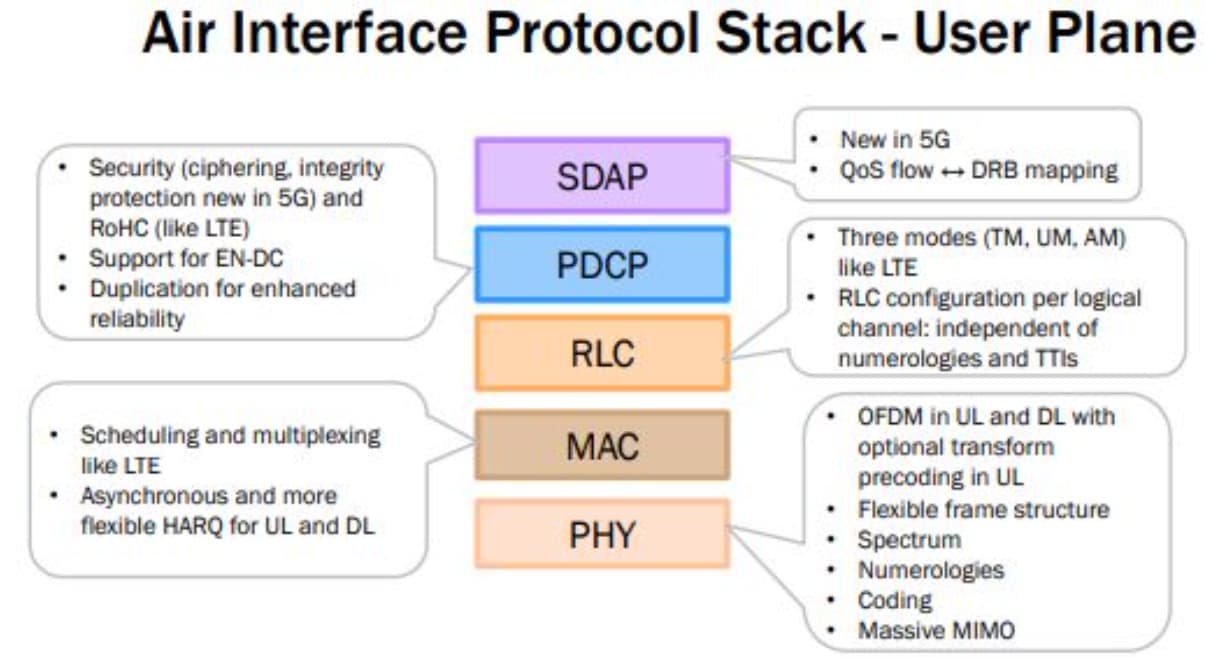
The 5G protocol stack is similar to the 4G protocol stack, but there are some key differences.
The 5G protocol stack has two main layers:
-
The control plane (C-plane):: The C-plane is responsible for managing the network, such as setting up connections and routing data.
-
The user plane (U-plane): The U-plane is responsible for transferring data between devices.
-
The 5G C-plane is similar to the 4G C-plane, but it has some new features, such as:
-
Network slicing: Network slicing allows operators to create dedicated networks for different applications or services. This can be used to improve the performance of critical applications, such as self-driving cars or virtual reality.
-
Massive MIMO: Massive MIMO uses multiple antennas to transmit and receive data from multiple devices simultaneously. This can improve the capacity and coverage of the network.
-
Beamforming: Beamforming uses directional antennas to focus the signal on the intended device. This can improve the performance of the network, especially in areas with poor signal reception.
-
-
The 5G U-plane is also similar to the 4G U-plane, but it has some new features, such as:
-
New data formats: 5G uses new data formats that are more efficient and can support higher data rates.
-
New security features: 5G has new security features that can protect data from unauthorized access.
-
LinkedIn: 
1 Like
The major difference between LTE (4G) and 5G NR protocol stack lies in architecture flexibility and service capability.
In 4G, the stack is built around a relatively centralized EPC core with S1/X2 interfaces and fixed radio configurations. The protocol layers (PHY, MAC, RLC, PDCP, RRC, NAS) are optimized mainly for mobile broadband.
In 5G, while the layered structure looks similar, the design is much more flexible. It supports:
-
Service-Based Architecture (5G Core)
-
Network slicing
-
Beam management
-
Ultra-low latency (URLLC)
-
Massive IoT (mMTC)
In short, 5G keeps the basic stack structure but enhances it significantly to support cloud-native architecture, higher data rates, lower latency, and diverse use cases beyond traditional broadband.
LinkedIn : 