Imagine you arrive at a huge luxury hotel where a party is going on. You want to get in, but here’s the process:
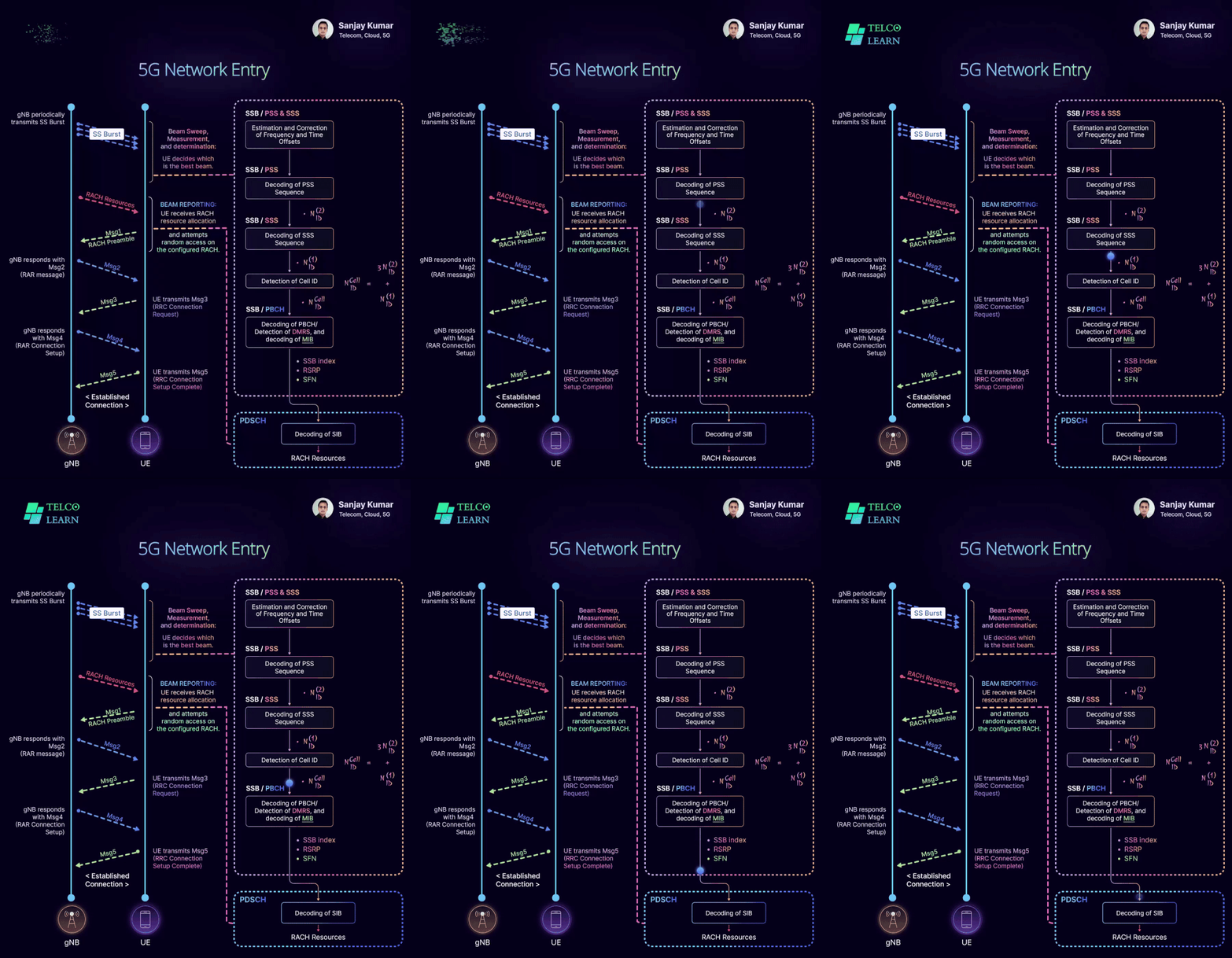
 SSB Decoding – Finding the Entrance Door
You first need to find the right door to enter.
The hotel has many flashing neon signs (beams) pointing in different directions.
You squint and decode which sign actually says “This way to the party”.
That’s basically the SSB (Synchronization Signal Block) – your phone decodes it to figure out the direction, timing, and identity of the 5G cell.
Without it? You’ll be stuck circling the hotel, asking Google Maps for help  .
.
 RACH – Knocking at the Door
Okay, you found the right entrance. But you can’t just walk in like you own the place.
You politely knock (send a preamble) – that’s the Random Access Channel (RACH) step.
The bouncer (gNodeB) responds, “Yes, I heard you. Come in, but here’s your guest badge (timing advance, temporary ID).”
You reply, “Thanks! I’m really here and serious about joining.”
Finally, the bouncer says, “Alright, you’re officially on the guest list.” 
That’s how your phone officially joins the 5G network – decode the SSB to find the door, then perform RACH to knock and get admitted.
 In short:
SSB Decoding = Spotting the door.
RACH = Knocking + convincing the bouncer to let you in.
Without these steps, your phone is basically the awkward guy standing outside the party, waving at people through the glass. 
LinkedIn: 