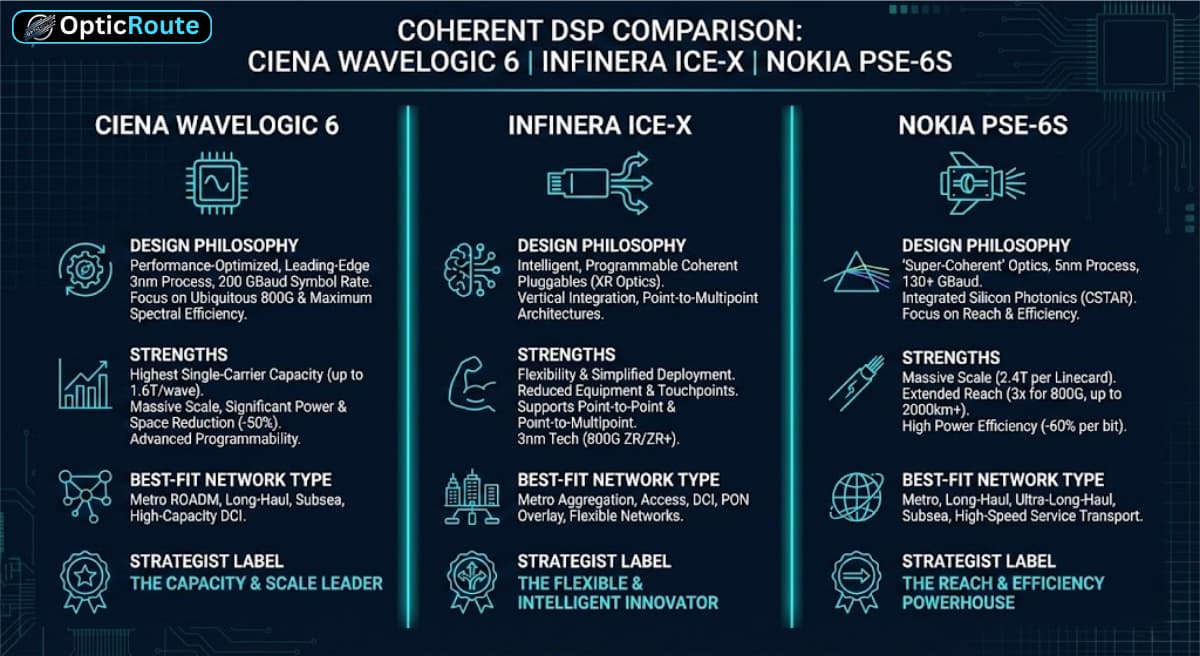
𝗩𝗲𝗻𝗱𝗼𝗿 𝗗𝗦𝗣 𝗖𝗼𝗺𝗽𝗮𝗿𝗶𝘀𝗼𝗻
WL6 vs ICE-X vs PSE-6s
At 100G and below, fiber quality dominated performance.
At 400G and beyond, 𝗗𝗦𝗣 𝗯𝗲𝗵𝗮𝘃𝗶𝗼𝗿 𝗱𝗲𝗰𝗶𝗱𝗲𝘀 𝘄𝗵𝗼 𝘀𝘂𝗿𝘃𝗶𝘃𝗲𝘀 𝗺𝗮𝗿𝗴𝗶𝗻𝗮𝗹 𝗹𝗶𝗻𝗸𝘀.
This is where vendor differences quietly matter even when datasheets look similar.
Let’s talk reality.
 Ciena WaveLogic 6 (WL6)
Strength: 𝗦𝘁𝗮𝗯𝗶𝗹𝗶𝘁𝘆 𝗼𝗻 𝗶𝗺𝗽𝗲𝗿𝗳𝗲𝗰𝘁 𝗳𝗶𝗯𝗲𝗿
WL6 is engineered for real networks, not pristine labs.
Key characteristics:
• Strong tolerance to OSNR variation
• Conservative constellation stability
• Excellent survivability through ROADM chains
• Predictable behavior on legacy G.652 and G.655
• Designed with long-haul and subsea realities in mind
WL6 prioritizes survivability over headline efficiency.
That is why it performs consistently on APAC routes with mixed fiber quality.
Infinera ICE-X
Strength: 𝗖𝗮𝗽𝗮𝗰𝗶𝘁𝘆 𝘄𝗶𝘁𝗵 𝗳𝗹𝗲𝘅𝗶𝗯𝗶𝗹𝗶𝘁𝘆
ICE-X balances reach and spectral efficiency.
Key characteristics:
• Flexible baud and modulation profiles
• Good spectral utilization
• Strong metro and regional performance
• Scales well on modern fiber and controlled environments
ICE-X rewards good optical hygiene.
It shines when the fiber plant is known and engineered,
but is less forgiving of sloppy amplification and tilt.
Nokia PSE-6s
Strength: 𝗣𝗼𝘄𝗲𝗿 𝗮𝗻𝗱 𝗹𝗼𝗻𝗴-𝗵𝗮𝘂𝗹 𝗿𝗲𝗮𝗰𝗵
PSE-6s is built for high-power coherent transport.
Key characteristics:
• Strong launch power handling
• Solid long-haul performance
• Robust DSP and FEC integration
• Effective on disciplined backbone spans
PSE-6s performs best where amplification strategy is deliberate.
It benefits from careful power management and well-designed spans.
𝗧𝗵𝗲 𝗛𝗮𝗿𝗱 𝗧𝗿𝘂𝘁𝗵 𝗘𝗻𝗴𝗶𝗻𝗲𝗲𝗿𝘀 𝗔𝘃𝗼𝗶𝗱
𝗡𝗼 𝗗𝗦𝗣 𝘃𝗶𝗼𝗹𝗮𝘁𝗲𝘀 𝗽𝗵𝘆𝘀𝗶𝗰𝘀.
𝗕𝘂𝘁 𝘀𝗼𝗺𝗲 𝗗𝗦𝗣𝘀 𝘁𝗼𝗹𝗲𝗿𝗮𝘁𝗲 𝗮𝗯𝘂𝘀𝗲 𝗯𝗲𝘁𝘁𝗲𝗿 𝘁𝗵𝗮𝗻 𝗼𝘁𝗵𝗲𝗿𝘀.
On marginal links:
• One DSP flaps
• Another survives
• A third forces modulation downshift
Same fiber. Same OSNR reading. Different outcomes.
That difference is 𝗗𝗦𝗣 + 𝗙𝗘𝗖 𝗯𝗲𝗵𝗮𝘃𝗶𝗼𝗿, not marketing.
𝗧𝗮𝗸𝗲𝗮𝘄𝗮𝘆
DSP selection is not about:
✘ Max Gbps
✘ Lab OSNR numbers
✘ Datasheet reach
It is about:
 Tolerance to OSNR drift
Stability under nonlinear penalties
ROADM survivability
Behavior on aging fiber
In APAC networks, forgiveness beats aggression.
𝗙𝗶𝗻𝗮𝗹 𝗧𝗵𝗼𝘂𝗴𝗵𝘁
If you do not factor DSP behavior into vendor selection,
you are gambling your network on assumptions not engineering.
And physics always collects.