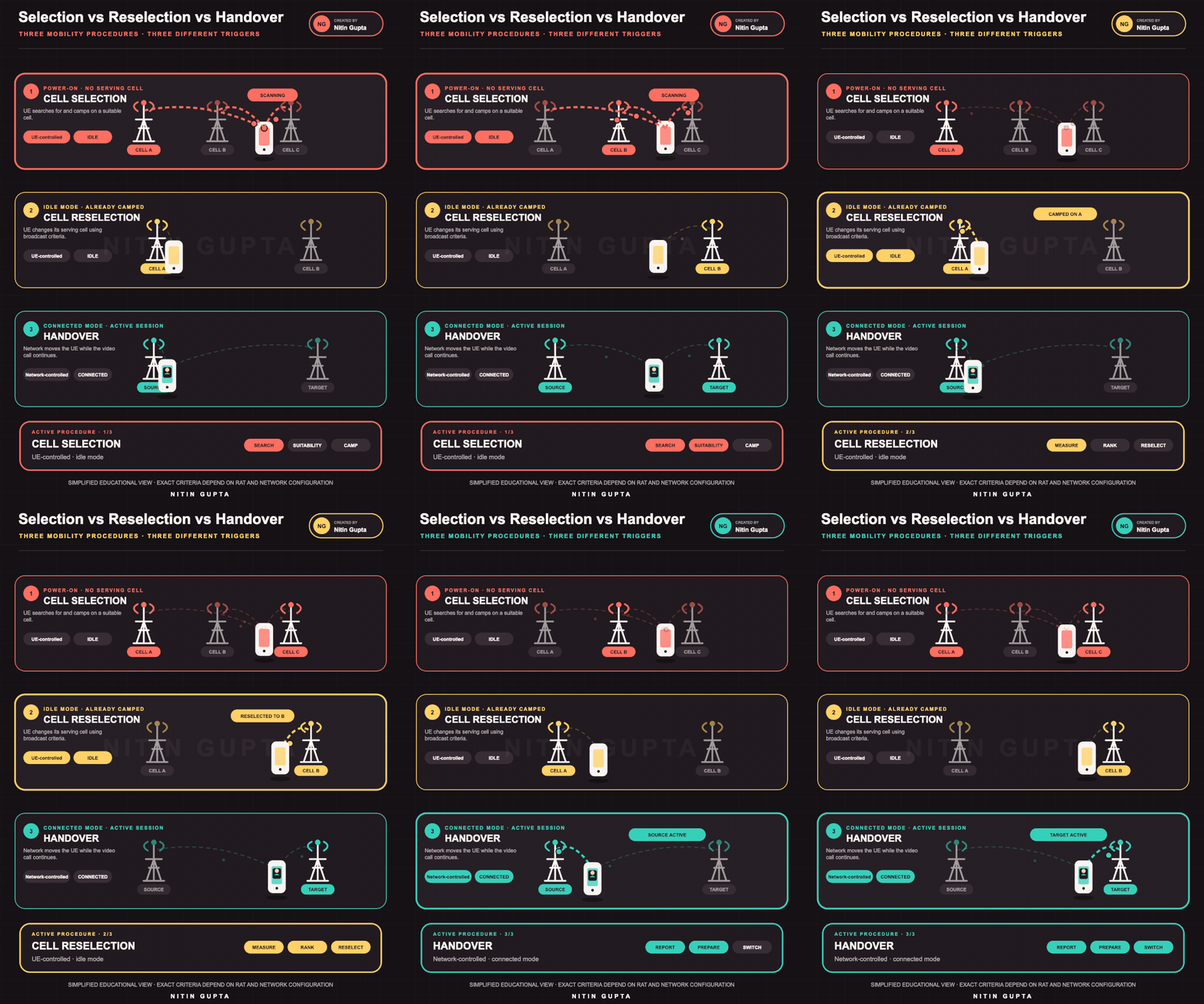
They may look similar because the serving cell can change, but they occur under different conditions and are controlled differently.
⠀
① CELL SELECTION
⠀
When does it happen?
⠀
• When the device is switched on
⠀
• After leaving airplane mode
⠀
• When no suitable serving cell is available
⠀
What happens?
⠀
• The UE searches supported frequency bands
⠀
• It detects available cells
⠀
• It reads essential system information
⠀
• It checks whether a cell is suitable
⠀
• It camps on the selected cell
⠀
Who controls it?
⠀
• The UE
⠀
Typical state:
⠀
• Idle mode
⠀
② CELL RESELECTION
⠀
When does it happen?
⠀
• The UE is already camped on a cell
⠀
• The UE is in idle or inactive operation
⠀
• A more suitable cell or frequency becomes available
⠀
What happens?
⠀
• The UE measures the serving and neighbouring cells
⠀
• It applies broadcast priorities, thresholds and ranking criteria
⠀
• It evaluates whether the reselection conditions remain satisfied
⠀
• It camps on the new cell
⠀
Who controls it?
⠀
• The UE, using parameters broadcast by the network
⠀
Typical state:
⠀
• Idle or inactive mode
⠀
③ HANDOVER
⠀
When does it happen?
⠀
• The UE is connected
⠀
• An active call or data session is in progress
⠀
• The serving cell is weakening or another cell is more appropriate
⠀
What happens?
⠀
• The UE performs configured measurements
⠀
• It sends measurement reports
⠀
• The network evaluates the serving and target cells
⠀
• The target cell is prepared
⠀
• The network commands the UE to move
⠀
• The data path is updated
⠀
Who controls it?
⠀
• The network
⠀
Typical state:
⠀
• Connected mode
⠀
THE SIMPLE DIFFERENCE
⠀
Cell Selection:
Find a suitable cell when no serving cell exists.
⠀
Cell Reselection:
Change the camped cell while the UE is not actively connected.
⠀
Handover:
Move an active connection to another cell with service continuity.
⠀
KEY TAKEAWAY
⠀
Selection and reselection are primarily UE-driven procedures.
⠀
Handover is a network-controlled mobility procedure supported by UE measurements.
⠀
The exact criteria, messages and behaviour depend on the radio technology, UE state and network configuration.
Linkedin: 