Two antennas can have the same gain, same frequency and even the same size yet fail to connect. Why? Because polarization decides whether their fields actually align. A vertical signal doesn’t magically talk to a horizontal one and even a tilt of a few degrees can make or break a link.
-
What Polarization Really Means?
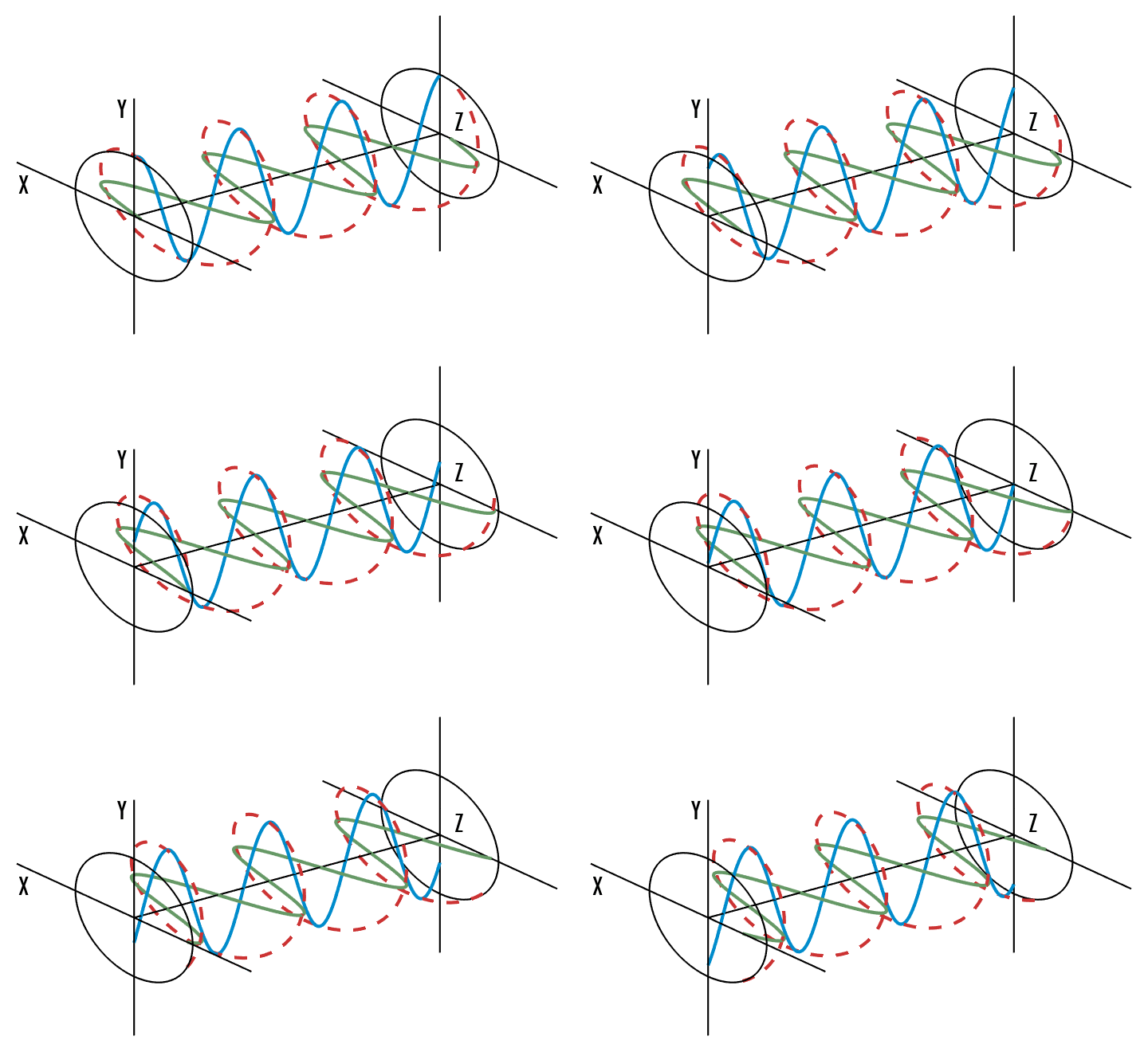
Polarization defines the orientation of the electric field vector in space. In simple terms, is the field oscillating up and down (vertical), side to side (horizontal) or rotating (circular)? Perfect alignment between transmitter and receiver polarization maximizes signal transfer while misalignment leads to polarization mismatch loss. -
Why Tilt Isn’t Just Cosmetic?
Tilting an antenna doesn’t just change its look, it changes how its E-field interacts with others. A base station tilted at 45° polarization often improves mobile coverage because handsets are held at random angles. This compromise balances losses, ensuring communication works better across real-world orientations instead of failing at strict vertical-horizontal mismatches. -
The Cost of Getting It Wrong:
Polarization mismatch loss can be dramatic. A vertical antenna trying to receive a horizontal signal suffers nearly 20 dB loss, that’s like turning a strong signal into a whisper. Even smaller tilt misalignments can reduce link margin, shorten range or create dead zones. -
Critical Formulas:
a). Polarization mismatch loss:
→ Lₚ = −10 log₁₀(cos²θ)
b). Cross-polar discrimination (XPD):
→ XPD = 10 log₁₀(P_co / P_cross)
c). Received power with polarization alignment:
→ Pᵣ = Pₜ × Gₜ × Gᵣ × |cosθ|² / (4πR/λ)²
d). Circular polarization axial ratio (AR):
→ AR = (E_max / E_min) -
Real-World Failures:
- A drone’s telemetry link dropped mid-flight because the onboard patch (vertical) didn’t align with the ground Yagi (horizontal).
- A 5G small cell designed with fixed vertical polarization underperformed in dense urban trials, handheld devices tilted randomly, cutting real coverage.
- An IoT gateway using linear polarization struggled with rotating sensors until circular polarization was adopted, stabilizing the link.
- A Wi-Fi router mounted sideways created uneven coverage, leaving whole rooms with weak signal simply due to polarization mismatch.
Polarization is invisible but decisive, it’s not just about power, frequency or gain. Aligning polarization or planning for tilt and randomness is often the difference between a strong link and total silence.
LinkedIn: 