6G AI-Native Air Interface
The telecommunications industry is preparing for its next quantum leap. While 5G transformed how we connect, 6G with AI-Native Air Interface promises to revolutionize not just connectivity, but intelligence at the network level.

 Traditional vs. AI-Native: The Paradigm Shift
Traditional Air Interface:
Fixed coding and modulation schemes
Static waveform processing
Manual receiver optimization
One-size-fits-all approach
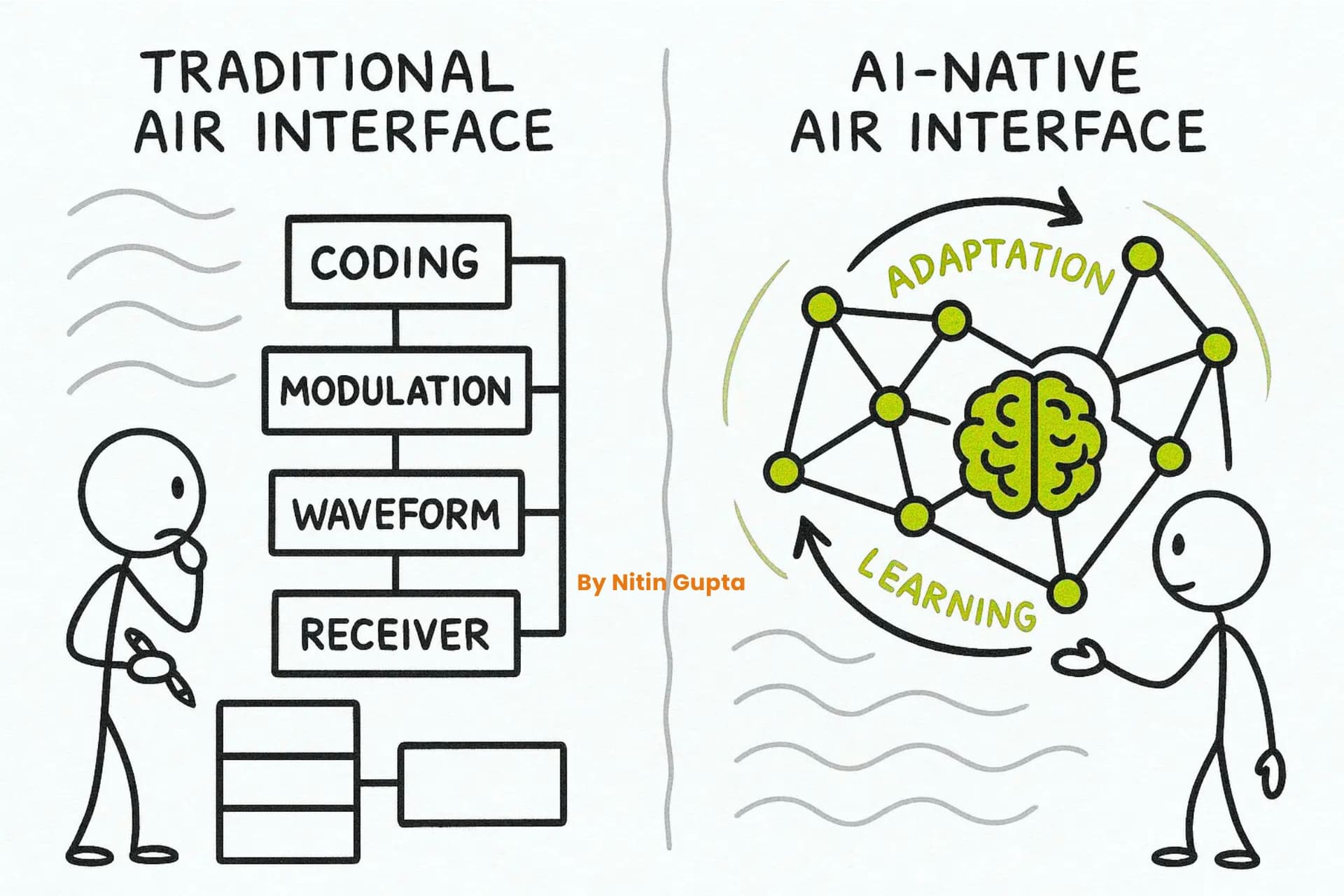
AI-Native Air Interface:
 Adaptive learning protocols
 Dynamic optimization
 Real-time network intelligence
 Context-aware communication
Key Advantages of 6G AI-Native Technology
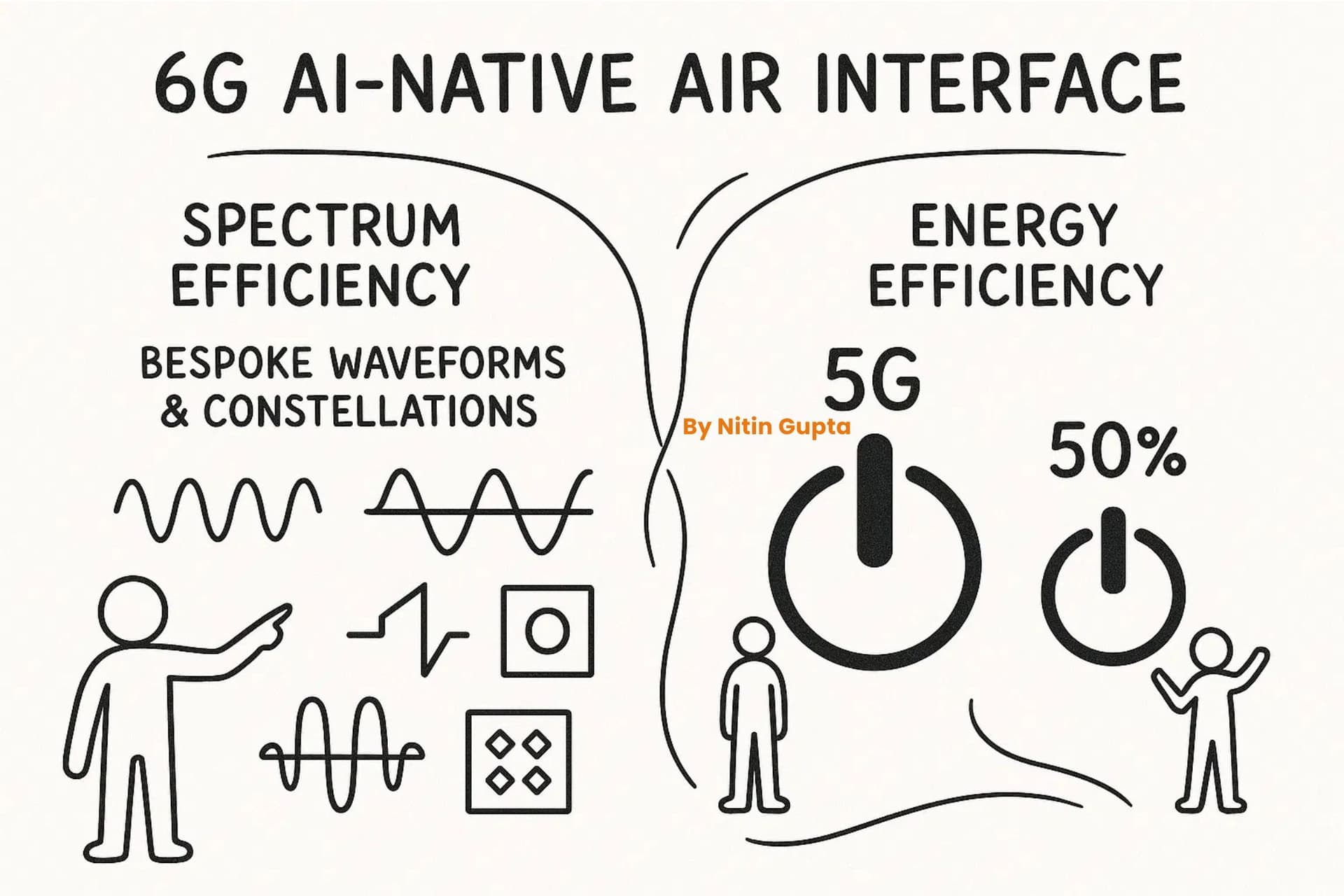
- Spectrum Efficiency
Bespoke waveforms and constellations
Intelligent spectrum allocation
Adaptive modulation schemes
-
Energy Efficiency
50% improvement over 5G
Smart power management
Sustainable connectivity solutions -
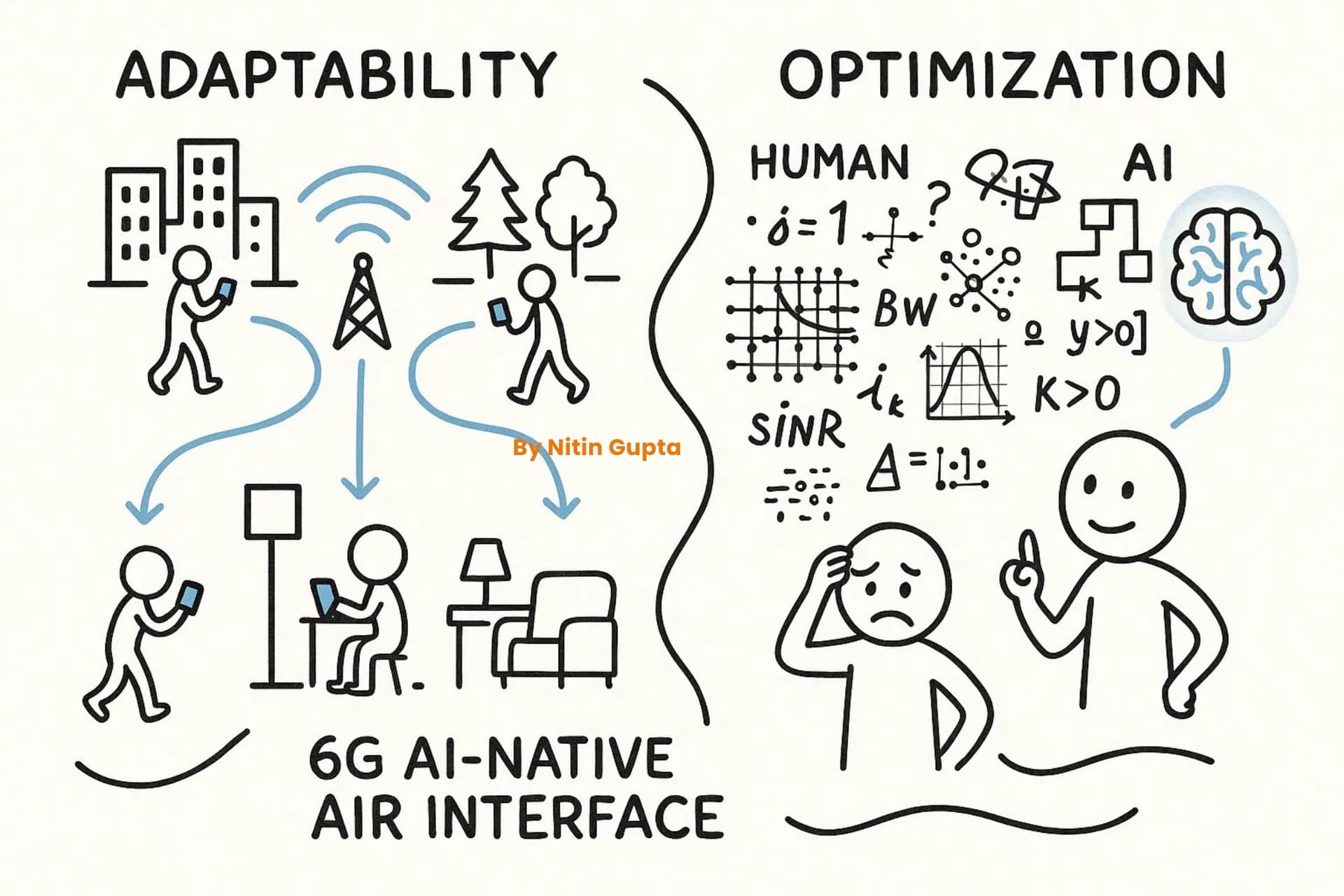
Adaptability
Real-time environment adjustment
Dynamic protocol switching
Self-optimizing networks
 Revolutionary Use Cases

 Industrial IoT Sensors
Massive machine-type communications
Ultra-reliable low latency
 AI-Powered Video Surveillance
Real-time video analytics
Edge AI processing
 Robotic Systems
Tactile internet capabilities
Human-robot collaboration
 Technical Innovation Highlights
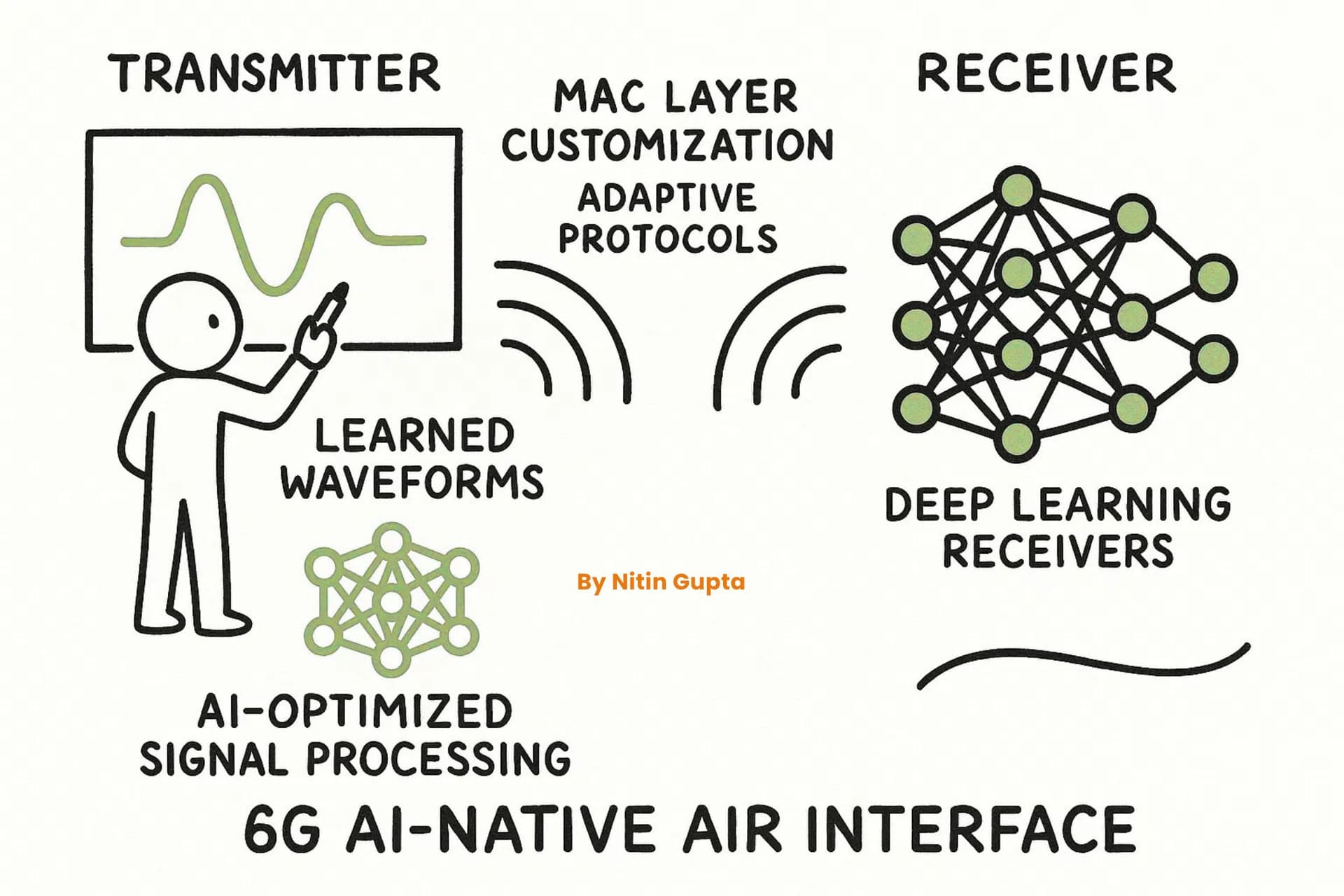
Transmitter Side:
Learned waveforms through ML
AI-optimized signal processing
Adaptive modulation schemes
Receiver Side:
Deep learning receivers
Neural network signal processing
Intelligent interference mitigation
MAC Layer:
Customizable protocols
AI-driven resource allocation
Predictive networking
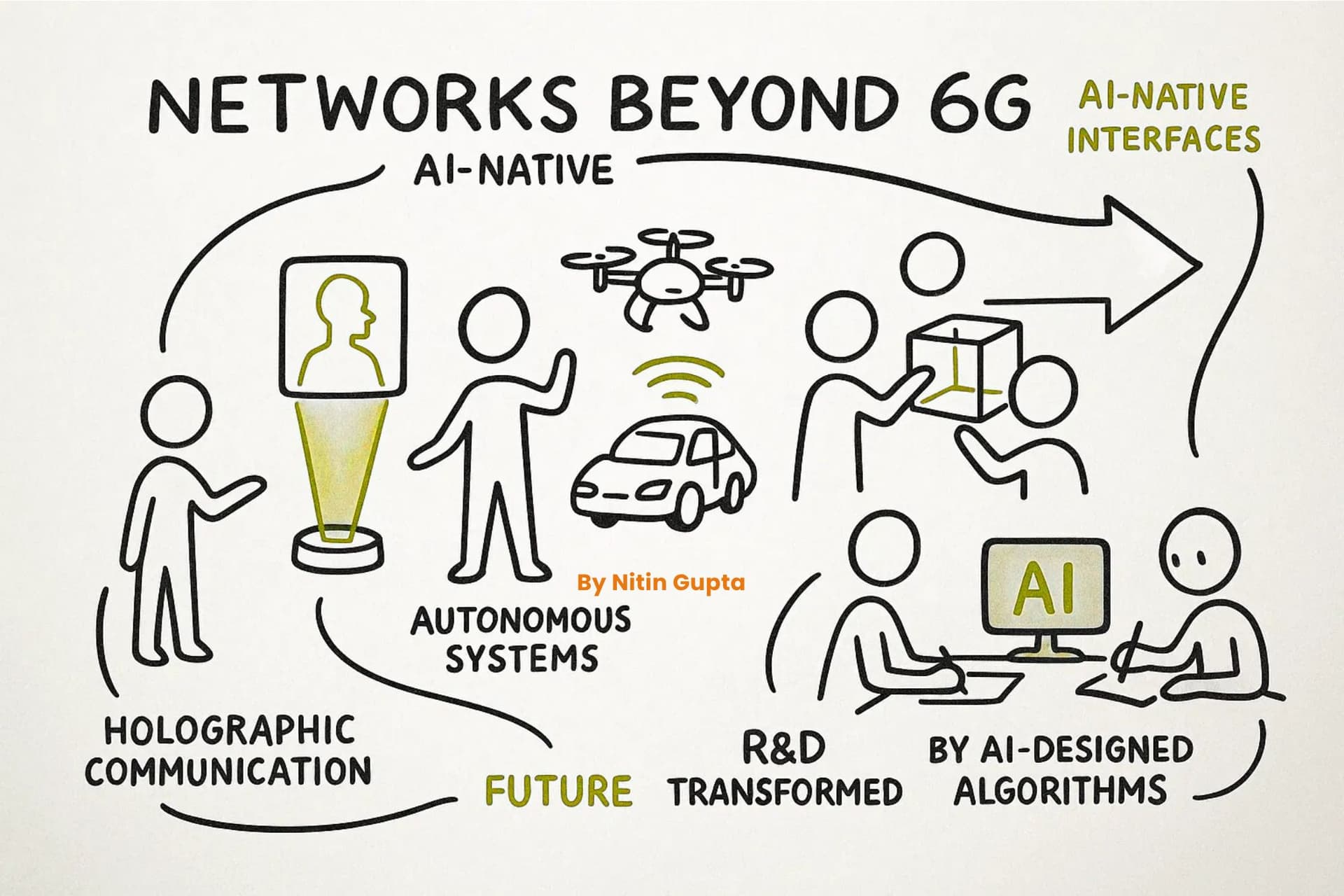
 Looking Beyond 6G
The AI-native approach sets the foundation for:
 Holographic communication
 Fully autonomous systems
 AI-designed algorithms
Research transformation
LinkedIn: 