How does 5G handle millions of users?
It’s all in the small software tweaks…
5G isn’t built on brute force.
It’s built on precision — small, smart tweaks hidden deep inside the network.
These tweaks come from soft parameters — settings that shift and adjust in real time to keep the system stable.
They help 5G:
 React to sudden traffic changes.
Balance load across cells.
Maintain quality without wasting resources.
That’s how 5G stays agile when everything else gets noisy.
Operators fine-tune these parameters constantly.
A single adjustment can turn a lagging connection into a smooth one.
Here are a few of the key ones:
 Handover control — ensures your call doesn’t drop mid-transfer.
 TTE (Time To Trigger) — decides when to switch cells for better signal.
 SRS tuning — refines uplink signal quality.
 DMRS symbols — clean up interference for clearer reception.
 ARP (Allocation and Retention Priority) — decides who gets priority when the network’s packed.
There are dozens more under the hood — each with its own story.
But if there’s one thing I’ve learned working with 5G systems, it’s this:
Everyone thinks antennas and towers make 5G powerful.
They don’t.
It’s the software tweaks — that keep the network alive.
Thanks for reading.
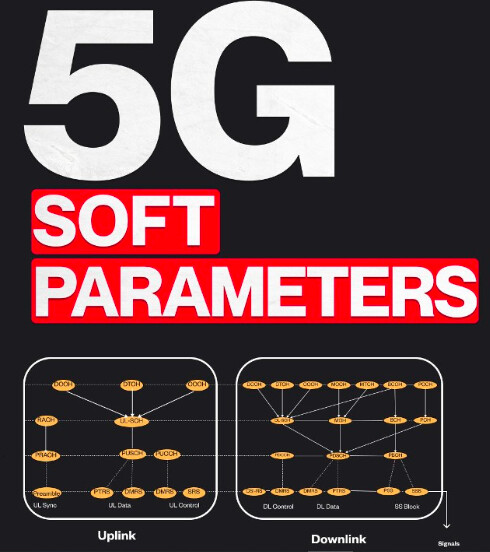
PDF: 
5G Soft Parameters (By Furqan Jameel).pdf (1.4 MB)
LinkedIn: