I find these RRC states fascinating.
It’s odd how simple ideas create huge challenges.
Yet those same challenges make 5G run smoothly.
They look tiny, but they help the whole network.
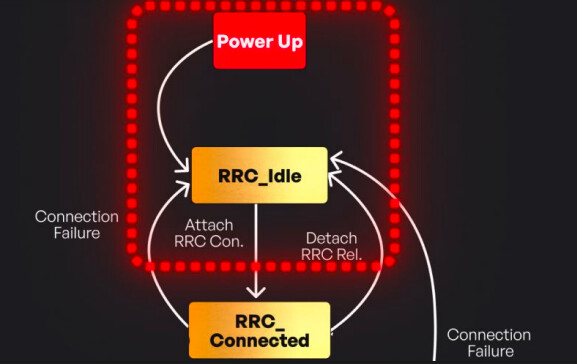
RRC has three main states:
- Idle mode keeps the UE reachable.
- Connected mode keeps data flowing.
- Inactive mode saves energy and cuts delay.
Why does this matter?
It’s how 5G stays stable when many devices join.
But here’s the challenge.
 Radio conditions change fast.
 Cities push the RAN to its limits.
 Heavy Inactive mode use can stress the system.
Yet calls connect.
And videos play fine.
Strange, right?
Without smart RRC:
 Networks would overload.
Batteries would drain fast.
Users would notice every drop.
The trade-off is more complexity.
And 5G must handle it nonstop.
Thanks for reading.
PDF: 
5G RRC States Explained (By Furqan Jameel).pdf (1.2 MB)
LinkedIn: