For RF Experts, the SgNB Addition is the critical “handshake” that moves a user from 4G-only to 5G high-speed data. If your 5G traffic is low, the bottleneck is often hidden in the signaling flow.
 3 Key Checkpoints for SgNB Addition
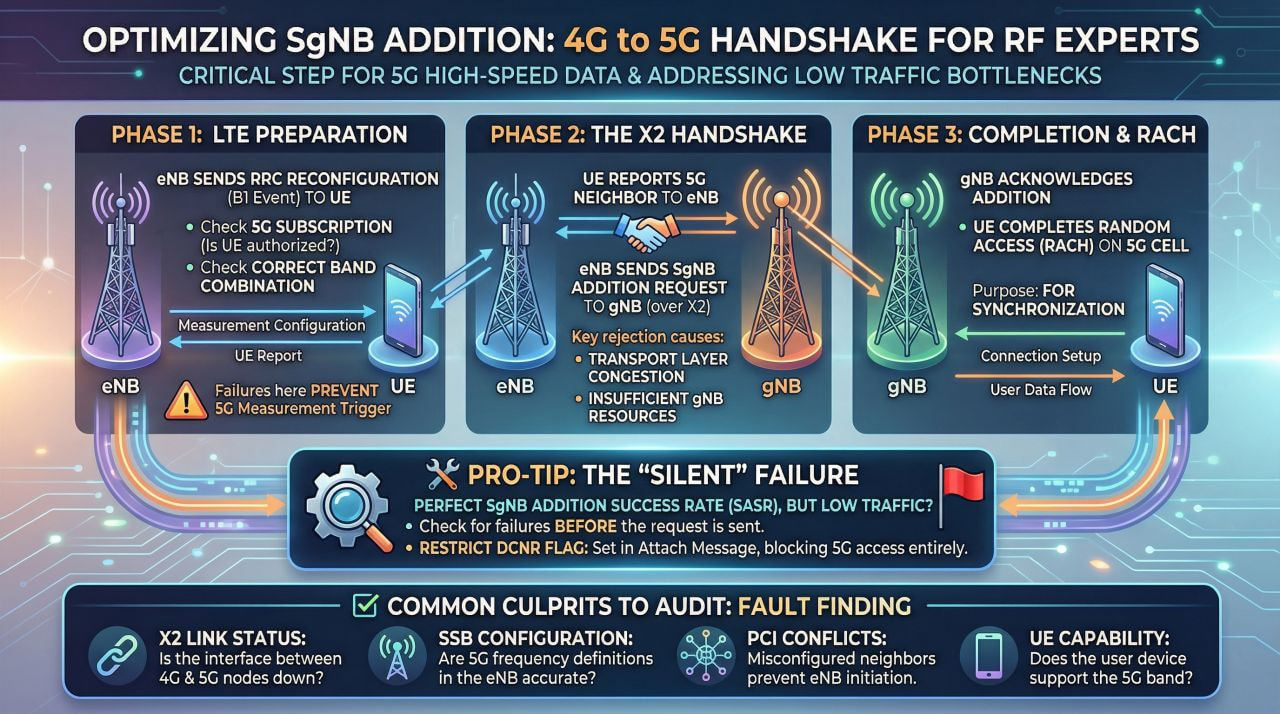
Phase 1: LTE Preparation – The eNB sends the RRC Reconfiguration (B1 event) to the UE. If the UE is not subscribed to 5G or lacks the correct band combination, the eNB will never trigger the 5G measurement.
Phase 2: The X2 Handshake – Once the UE reports a 5G neighbor, the eNB sends an SgNB Addition Request to the gNB. Rejections here typically stem from transport layer congestion or insufficient gNB resources.
Phase 3: Completion & RACH – After the gNB acknowledges the addition, the UE must complete Random Access (RACH) on the 5G cell to synchronize.
 Pro-Tip: The “Silent” Failure
If your SgNB Addition Success Rate (SASR) looks perfect but traffic is still low, check for failures before the request is even sent. If the Restrict DCNR flag is set in the Attach message, the network will block 5G access entirely.
Common Culprits to Audit:
X2 Link Status: Is the interface between 4G and 5G nodes down?
SSB Configuration: Are the 5G frequency definitions in the eNB accurate?
PCI Conflicts: Misconfiguration neighbors will prevent the eNB from initiating the addition.
LinkedIn: 