5G Network Slicing is one of the biggest differences between “normal connectivity” and programmable 5G.
In 4G, the network was mostly built like one large shared pipe.
In 5G, that shared infrastructure can be divided into dedicated virtual networks for different service needs.
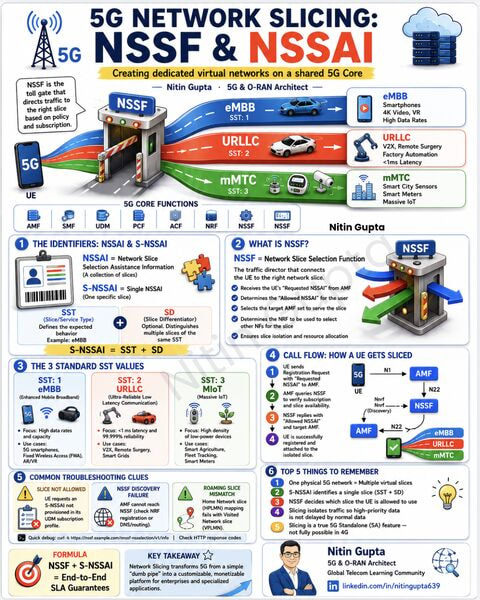
That is where NSSAI, S-NSSAI and NSSF become important.
NSSAI means:
Network Slice Selection Assistance Information
It represents a collection of slices that the UE may request or be allowed to use.
S-NSSAI means:
Single NSSAI
It identifies one specific network slice.
A simple way to remember it:
S-NSSAI = SST + SD
SST = Slice / Service Type
SD = Slice Differentiator
The common SST values are:
SST 1: eMBB
High data rates, smartphones, AR/VR, fixed wireless access
SST 2: URLLC
Ultra-low latency use cases like robotics, smart grids, V2X and remote control
SST 3: mMTC
Massive IoT, smart meters, sensors and low-power devices
NSSF means:
Network Slice Selection Function
Think of NSSF as the traffic director for network slicing.
It helps decide:
Which slice the UE is allowed to use
Which AMF should serve the UE
Which slice resources should be selected
How slice isolation and selection should happen
This is very important in 5G SA because slicing is not only a marketing term.
It affects registration, AMF selection, subscription, policy, QoS and service behavior.
Common slicing issues engineers should know:
Slice not allowed
Requested S-NSSAI not provisioned
NSSF discovery failure
NRF / DNS / routing issue
Roaming slice mismatch
Allowed NSSAI not returned correctly
Quick memory:
NSSAI = list of slice choices
S-NSSAI = one slice identity
NSSF = slice selection brain
5G slicing turns one physical network into multiple logical networks.
That is what makes 5G useful for enterprise, industry, IoT, private networks and SLA-based services.
What should I explain next: QoS Flow, 5QI or PCF?
LinkedIn: 