Ever wondered how your call stays connected while you’re speeding on a highway?

The answer: Handover — the seamless transfer of your connection from one cell to another.
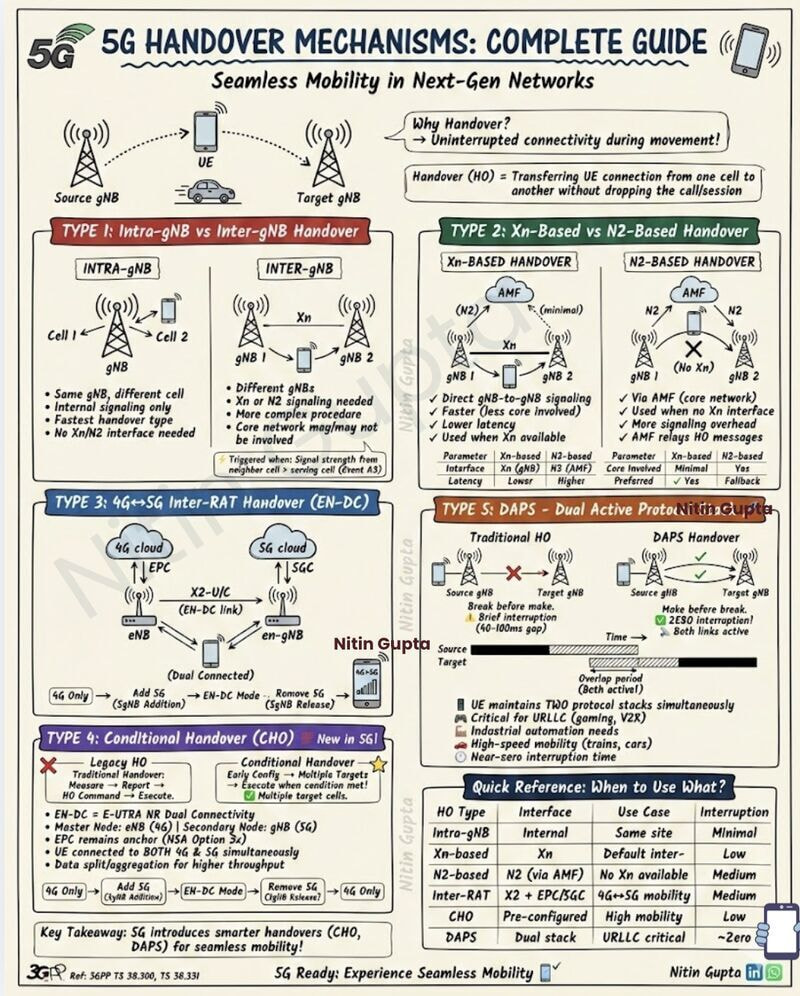
But 5G takes handover to a whole new level. Here’s what you need to know:
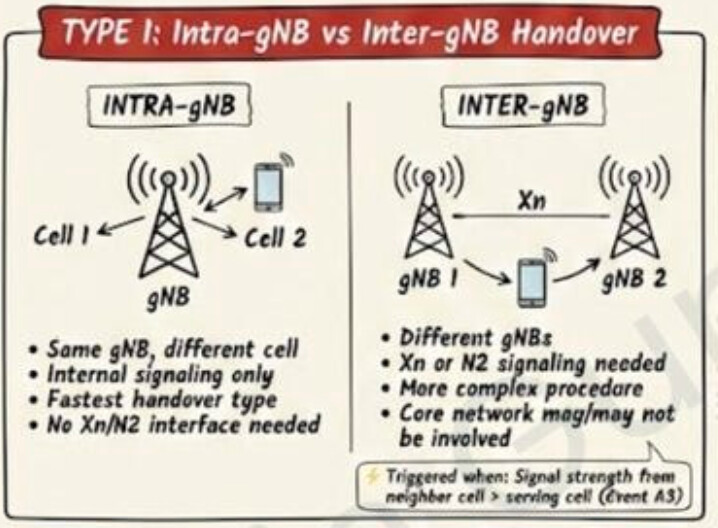
- TYPE 1: Intra-gNB vs Inter-gNB → Same site, different cell? Intra-gNB (fastest!) → Moving between sites? Inter-gNB kicks in
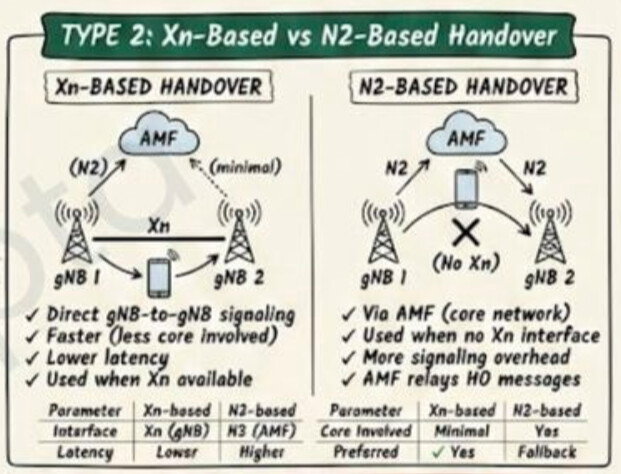
- TYPE 2: Xn-Based vs N2-Based → Xn = Direct gNB-to-gNB (lower latency) → N2 = Via AMF when Xn isn’t available
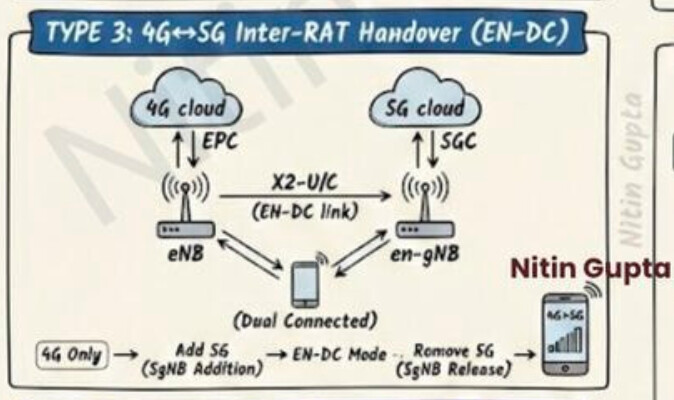
- TYPE 3: 4G↔5G Inter-RAT (EN-DC) → Your phone connected to BOTH 4G & 5G simultaneously → Best of both worlds for NSA deployments
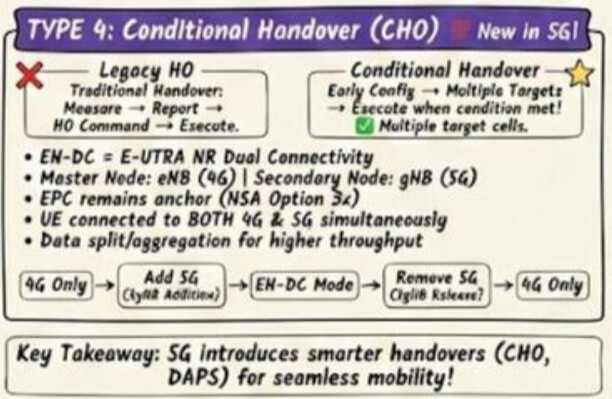
- TYPE 4: Conditional Handover (CHO)
 → Game-changer in 5G! → Multiple target cells pre-configured → UE decides when to execute → Drastically reduces handover failures
- TYPE 5: DAPS Handover
 → “Make before break” approach → ZERO interruption! → Both links active during transition → Critical for URLLC (gaming, V2X, industrial)
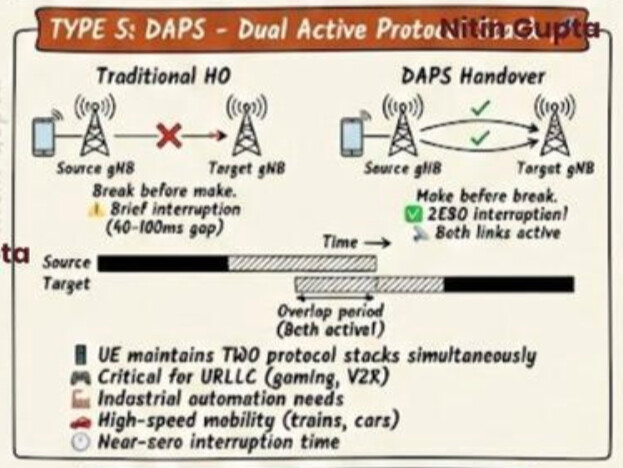
The evolution from “break before make” to “make before break” is what makes 5G mobility truly seamless.
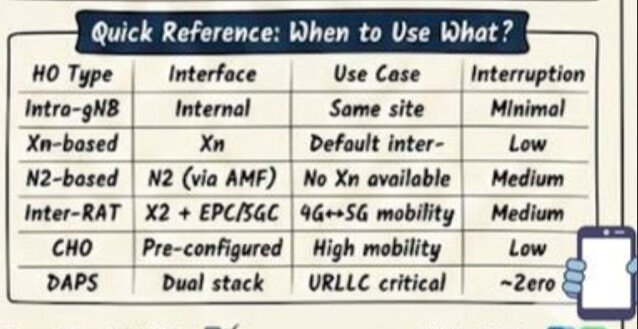
Key Takeaway: 5G isn’t just about speed — it’s about smarter mobility. CHO and DAPS ensure you stay connected even at 300+ km/h! 
 Which handover mechanism interests you most?
LinkedIn: 