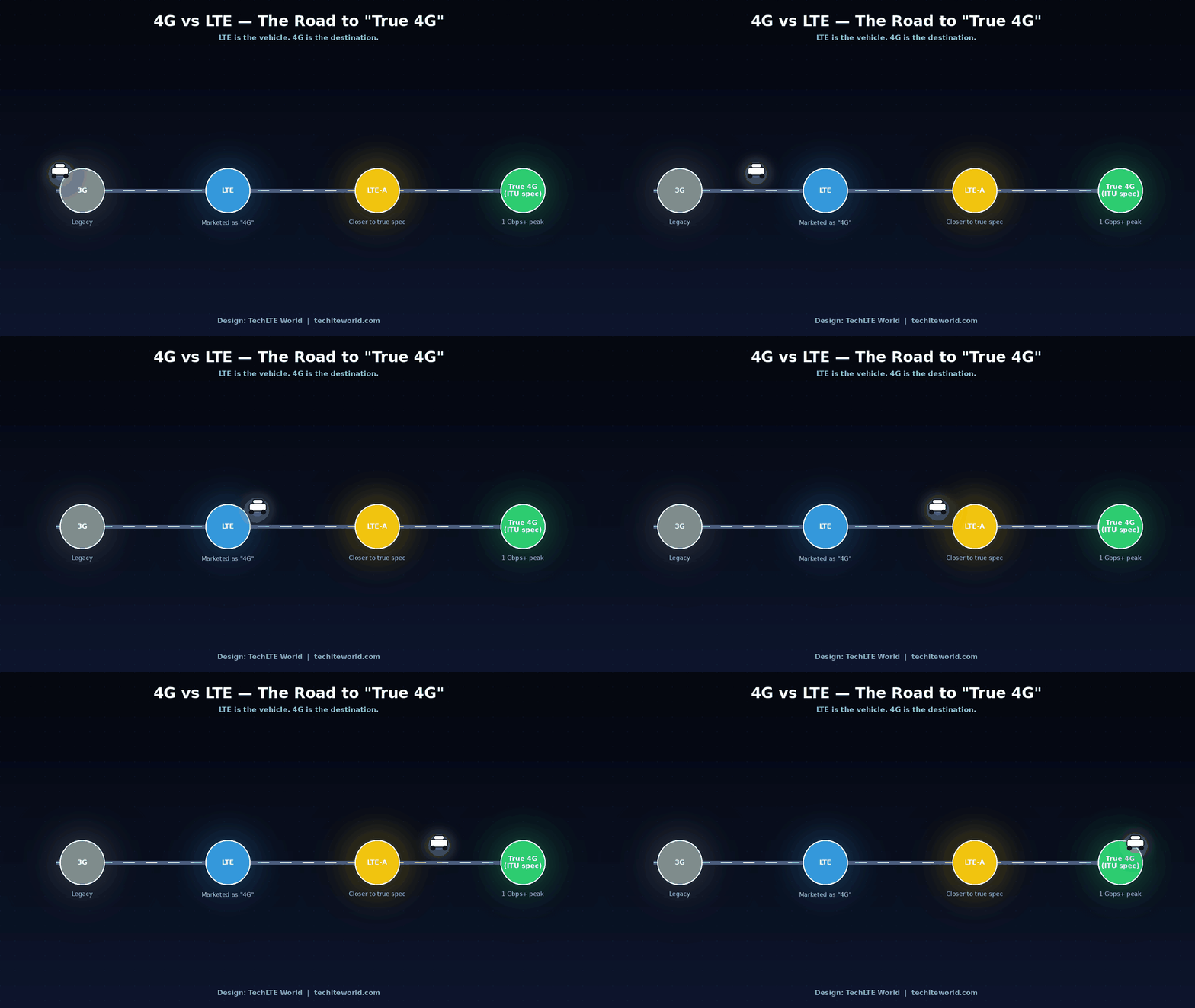
Someone says “I’m on 4G.” Someone else says “I’m on LTE.” 
Both think they’re saying the same thing. Are they?
Kind of but not exactly. And this mix-up has confused millions of users (and even a few engineers) for over a decade.
Here’s the actual story:
When 4G was first defined by the ITU, it had strict requirements peak speeds of 1 Gbps stationary, 100 Mbps mobile, among other things. Almost no real-world network could hit that when 4G rollout started.
So carriers used LTE (Long Term Evolution) a technology that was a huge leap over 3G, but technically didn’t meet the true 4G spec.
The ITU eventually gave in and said: fine, LTE can be marketed as “4G” even though technically it was closer to “3.9G.”
So what’s the real relationship?
Think of it like this: 
- 4G = the destination (a performance standard)
- LTE = the vehicle that got us closest to that destination
LTE-Advanced (LTE-A) later came along and actually met the true 4G requirements making it “real 4G.” But by then, the term “4G” was already being used loosely for regular LTE everywhere.
What it means in real life:
- If your phone shows “4G,” it’s almost always running LTE underneath.
- “4G LTE” (which you see on phones/ads) isn’t redundant it’s literally telling you both the marketing term and the actual technology.
- True ITU-compliant 4G is closer to what LTE-Advanced or LTE-A Pro delivers.
KEY TAKEAWAY
4G is a label. LTE is the technology. Almost all “4G” networks you’ve used are technically LTE the industry just borrowed the name early because the real spec wasn’t ready yet.