From $5B flops to forgotten features – these missteps rewired the future.
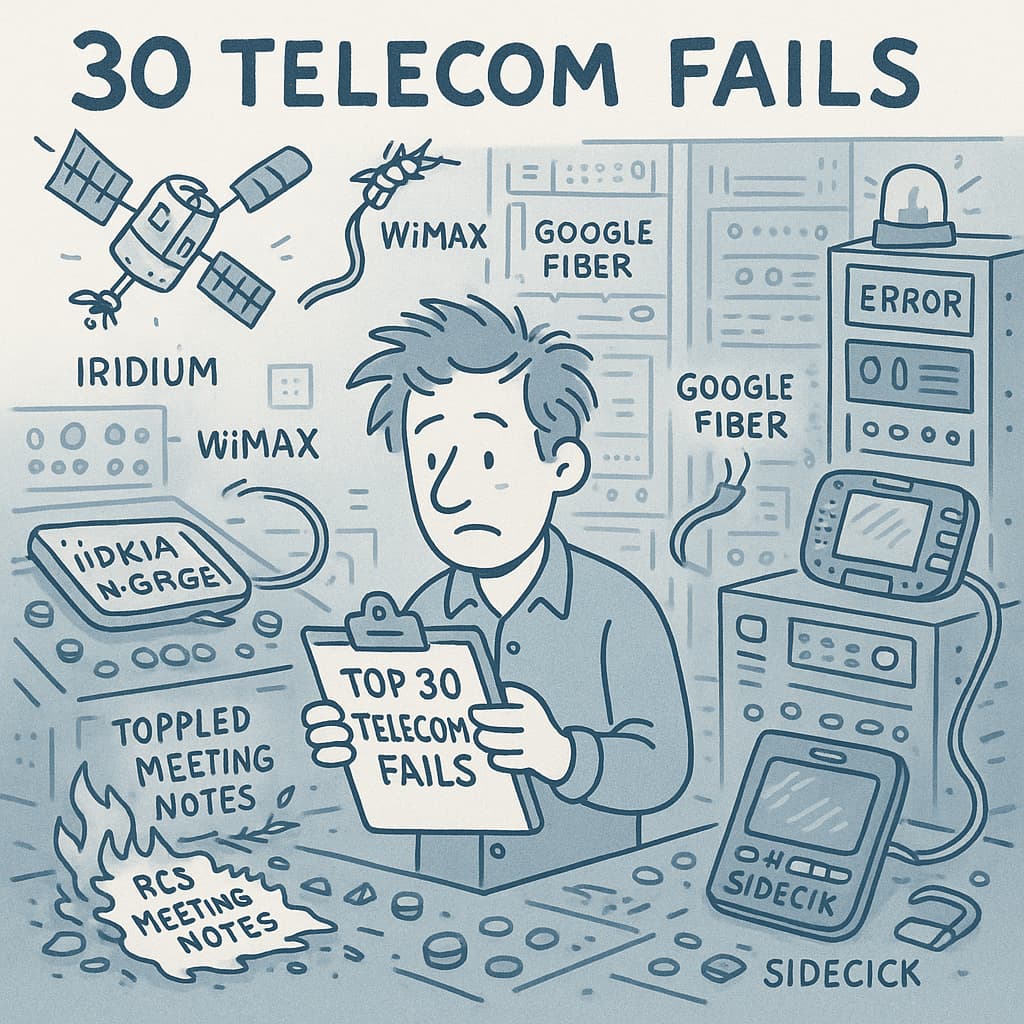
Think telecom is a string of triumphs? Here are 30 spectacular misfires that quietly rewired the industry. Save this list.
- Iridium: $5 B in LEO sats, no cheap handsets, Chapter 11 after 9 months.
- WiMAX: promised 4G first, delivered dongles nobody wanted.
- WAP portals: the “mobile web” that charged per pixel and bored users back to SMS.
- UMTS 3G auctions (UK, DE, IT): operators overpaid, cut cap-ex for a decade.
- CDPD: early mobile data at 19.2 kbps that never scaled past demos.
- Motorola ROKR E1: the iTunes phone that made Apple build its own.
- Nokia N-Gage: game console-phone too clunky for gamers or callers.
- Sprint WiMAX pivot: burned billions, then paid again for LTE.
- British Telecom Cellnet One-2-One rebrand spree: confused more customers than it gained.
- MetroPCS CDMA LTE overlay: dual handsets, double headaches.
- Google Fiber: gigabit hype stalled by poles, permits, and cap-ex realities.
- T-Mobile Sidekick data outage 2009: cloud sync lost millions of contacts overnight.
- BlackBerry PlayBook: tablet without email from the email phone company.
- AT&T Digital One Rate: flat fees that broke roaming economics overnight.
- RCS “SMS killer”: fifteen years of meetings, still waiting for universal support.
- Qualcomm FLO TV: mobile TV service nobody streamed.
- LightSquared: LTE in satellite band colliding with GPS, grounded by regulators.
- Nortel Metro Ethernet: brilliant tech, fatal accounting scandal.
- Ericsson AXE meltdown 2000: software bug silenced 28 M UK subscribers.
- France’s Itineris Bi-Bop: city-only cordless phones killed by GSM.
- Decca Navigator vs. GPS: bet on Loran-C, lost global timing war.
- HP-Palm webOS: elegant multitasking crushed by sluggish hardware.
- AOL Time Warner cable ambitions: culture clash, no broadband synergy.
- Alcatel-Lucent LightRadio cubes: carrier interest fizzled after hype wave.
- Turkcell early 4.5G launch: marketing pushed speed tests, network buckled at load.
- Telefonica Firefox OS phones: $25 smartphones failed to spark developer love.
- Comcast DOCSIS 3.0 speed tiers: advertised 100 Mbps, delivered burst-only thrills.
- BT Openreach fiber targets: political promises unmet, copper lived on.
- Satellite “phone booths” on cruise ships: $20/min calls nobody dialed.
- WeWork-Sprint small-cell deal: densification plan evaporated with both brands’ cash.
Which flop belongs at #31? Drop it below and tag a friend who survived one of these.
LinkedIn: 