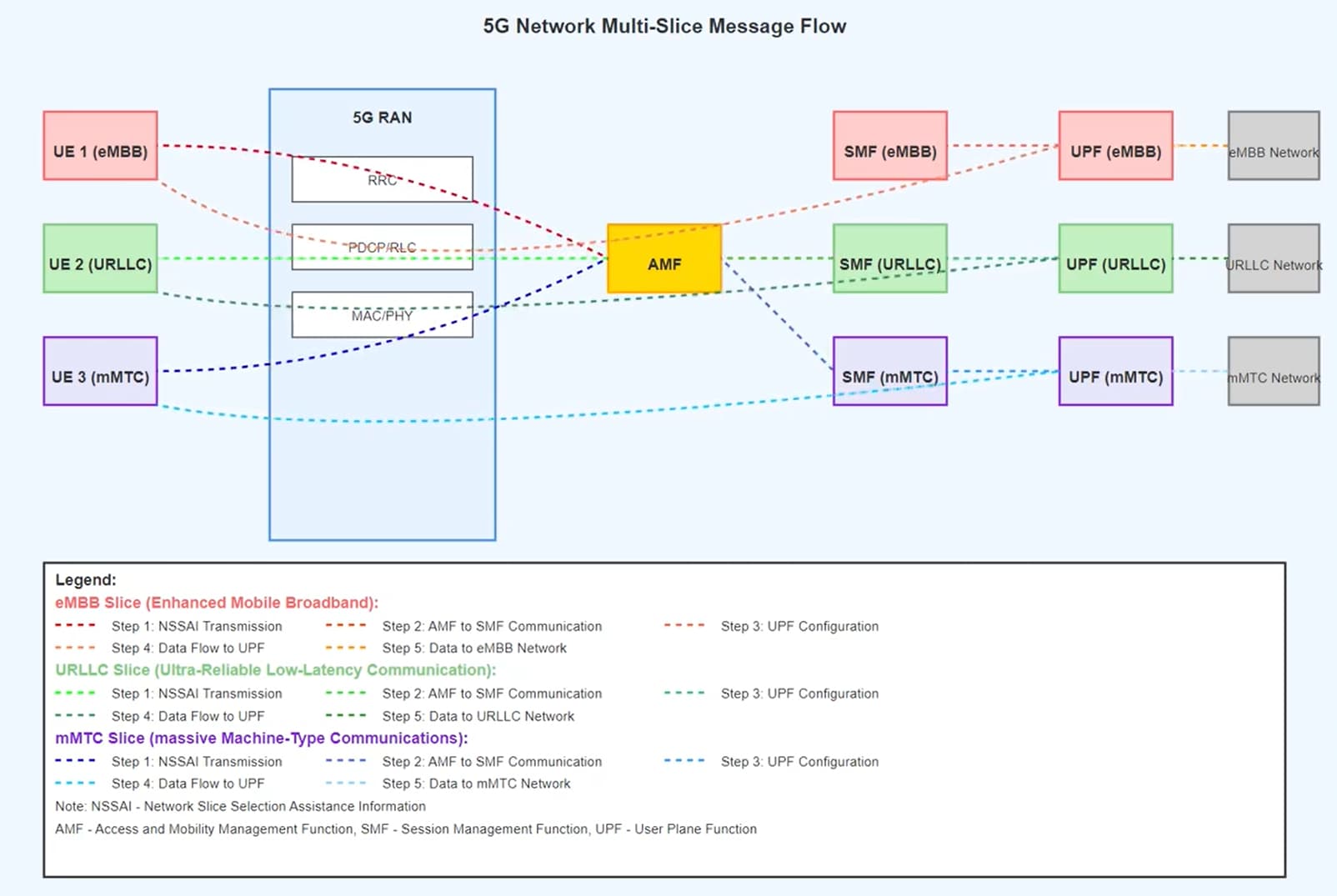
Network slicing is a technology primarily used in 5G networks that allows operators to create multiple virtual networks (or “slices”) on a single physical infrastructure.
Each network slice can be customized and optimized to serve specific use cases, offering different levels of performance, security, and functionality.
This approach is particularly valuable in meeting the diverse requirements of different industries, applications, and users.
How Network Slicing Helps Users:
-
Customized Services: Network slicing enables service providers to offer tailored network services to different users or applications. For instance, autonomous vehicles may need ultra-reliable low-latency communication, while a video streaming service might prioritize high bandwidth. Network slices can be created to meet these specific needs.
-
Improved Performance: By dedicating resources to specific slices, users can experience better network performance, such as reduced latency, faster data speeds, and higher reliability. Critical applications, such as healthcare or emergency services, can benefit from guaranteed network resources even during high traffic periods.
-
Greater Efficiency: Operators can run multiple services on the same infrastructure without interference between them. This means lower operational costs, which can ultimately be passed on to users in the form of better service at lower costs.
-
Enhanced Security: Network slices can be isolated from one another, improving security. For example, a slice dedicated to financial services can have enhanced encryption and security protocols, minimizing the risk of breaches.
-
Support for Multiple Applications: Network slicing allows for better coexistence of different types of applications and services on a single network. Whether it’s IoT devices, smart cities, or mission-critical applications, each can run on a slice that matches its specific needs.
LinkedIn: 