Hi all,
I’ve been looking at how we should interpret classical LTE KPIs (RSRP, RSRQ, SINR) when a UE is connected to a Direct-to-Cell LEO satellite.
The key point is simple:
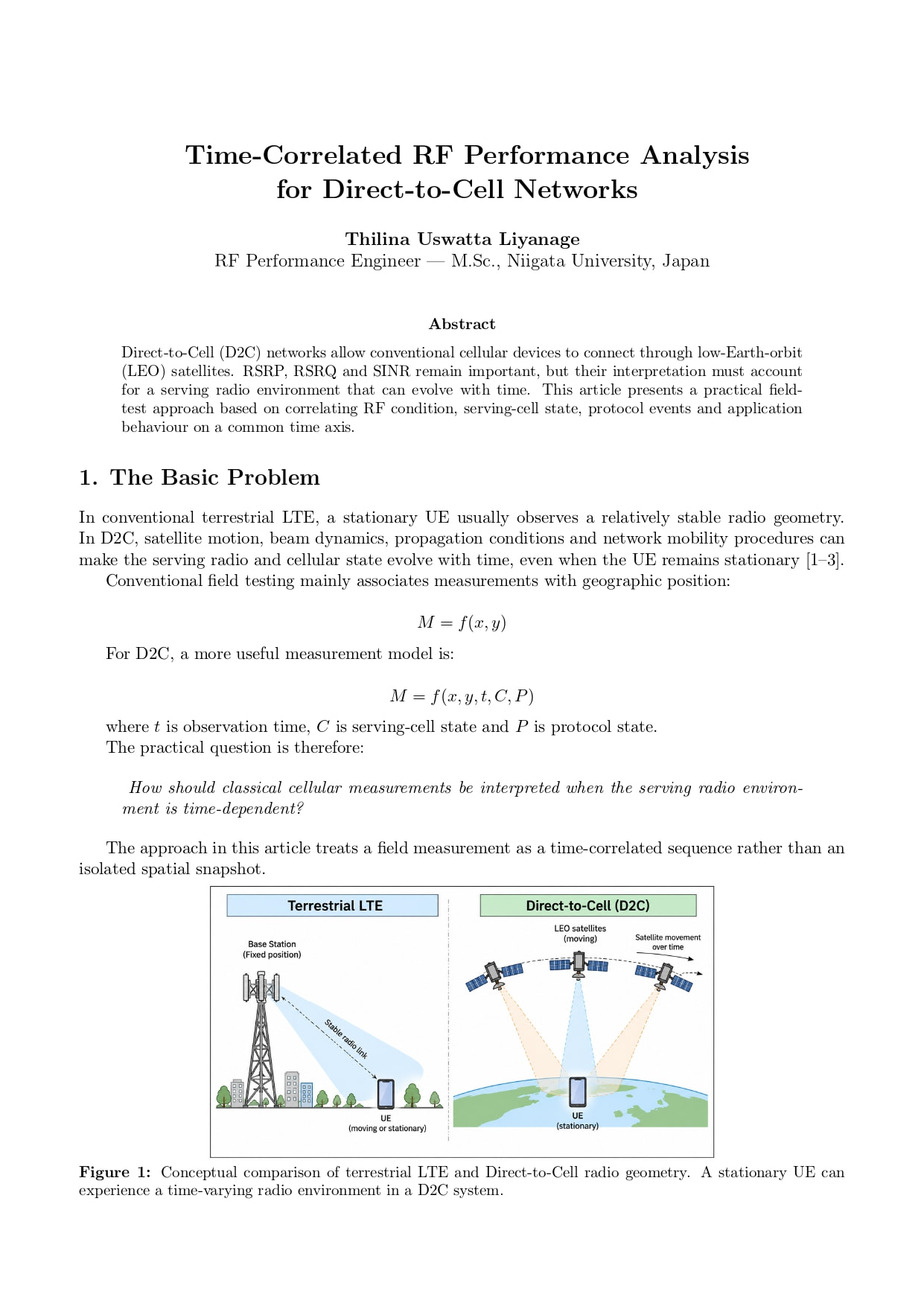
A stationary UE does not mean a stationary radio condition.
Because the satellite (the “cell”) is moving, RF condition, serving-cell state (PCI/TAC), and protocol state can all change with time even if the phone never moves.
I put together a short practical note on this topic. Sharing the full content as images below (4 pages).
Main points covered:
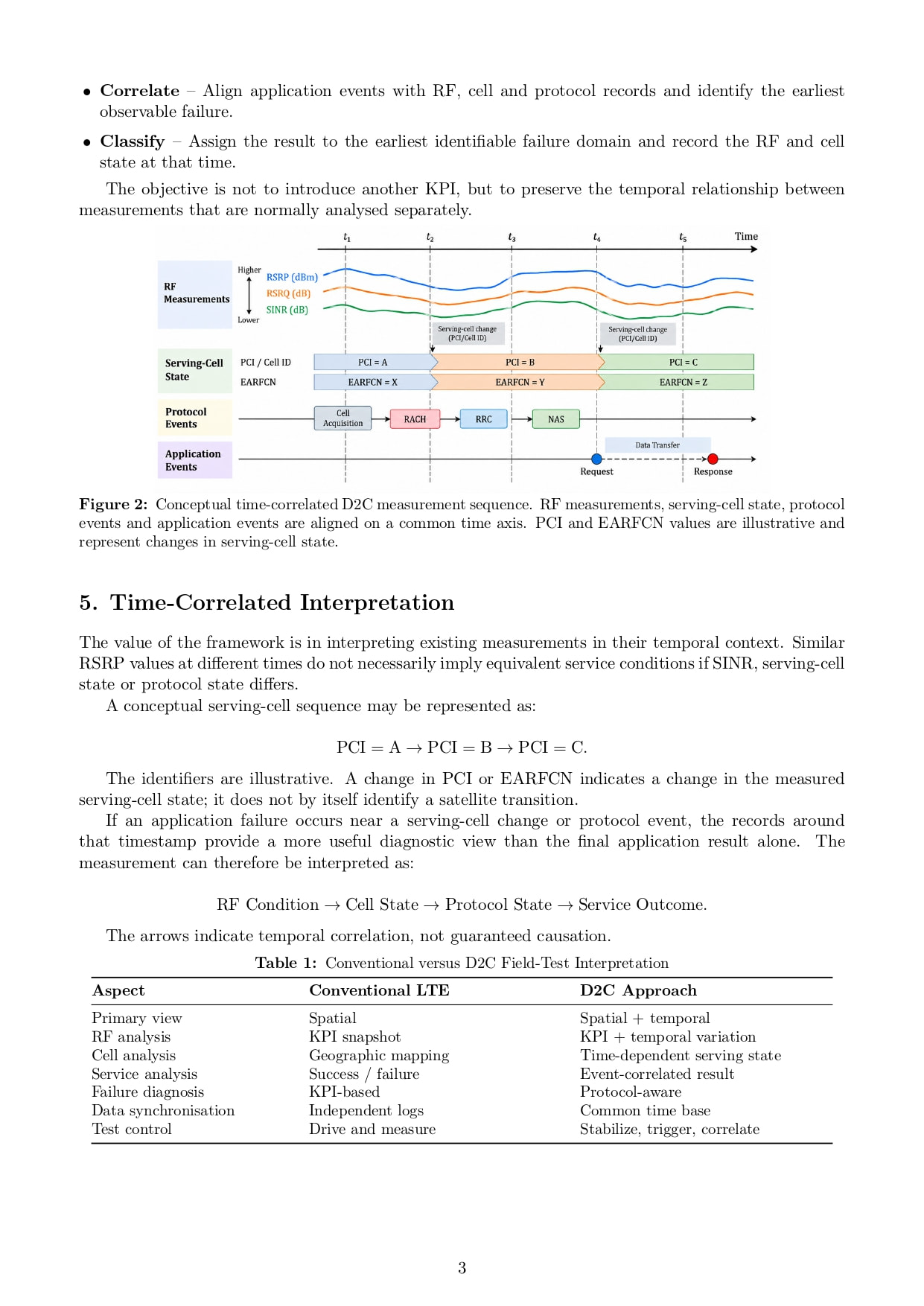
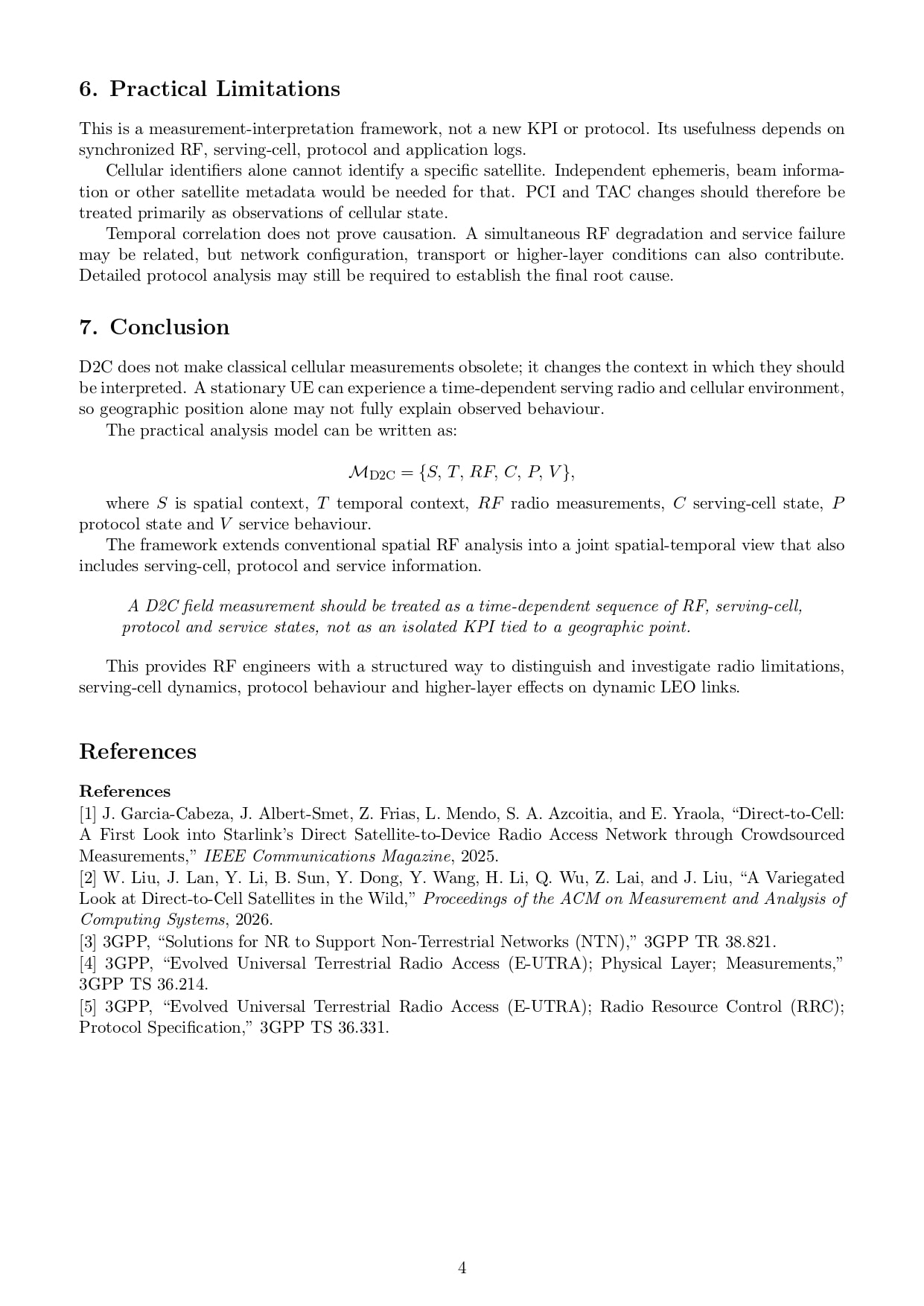
• Why D2C measurements need a time-correlated view (RF + cell state + protocol + application)
• Protocol-aware failure classification (Cell Acquisition → RACH → RRC → NAS → User Plane → Application)
• A practical 5-stage field procedure: Stabilize → Observe & Log → Trigger → Correlate → Classify
• How to interpret PCI/EARFCN changes and RF variation together
Happy to hear feedback from any

one already testing Starlink Direct-to-Cell or similar systems.