Mastering the OSI Model – The Blueprint of Networking
In the world of networking, understanding the OSI (Open Systems Interconnection) Model is like learning the grammar of a new language — it forms the foundation for everything we build, troubleshoot, and innovate.
The OSI Model organizes communication into 7 logical layers, each serving a distinct purpose:
-
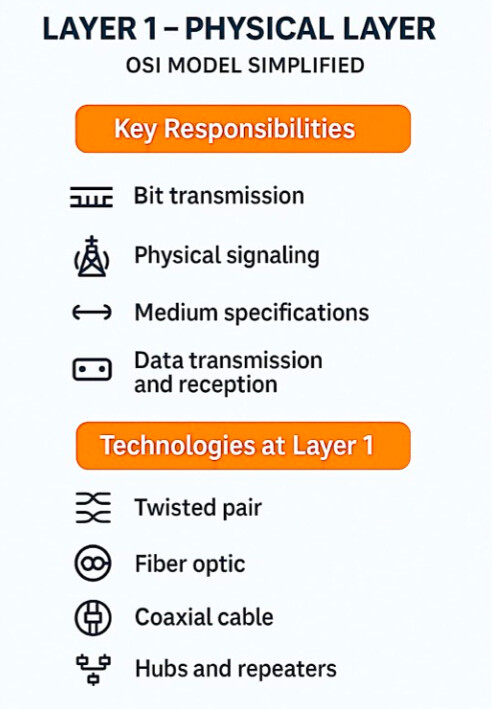
Physical Layer — Transmission of raw bits over a medium
-
Data Link Layer — Reliable node-to-node communication and MAC addressing
-
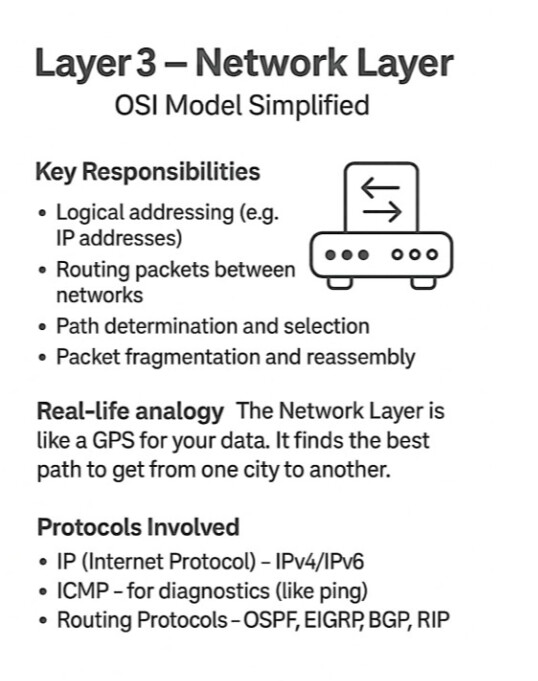
Network Layer — Logical addressing and routing (IP)
-
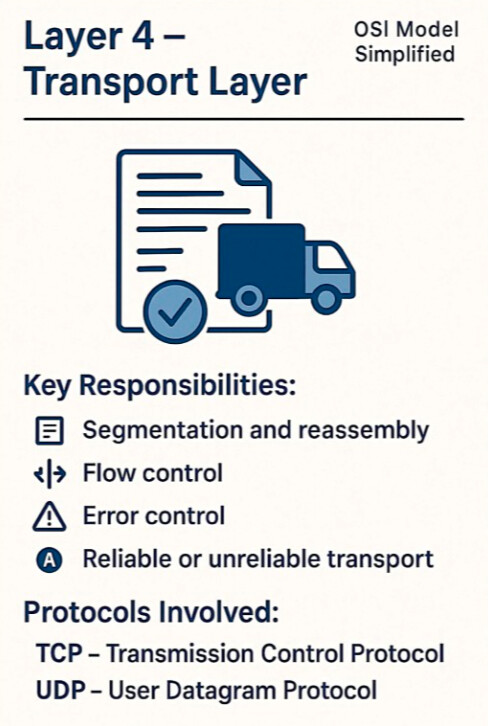
Transport Layer — Reliable delivery with TCP/UDP
-
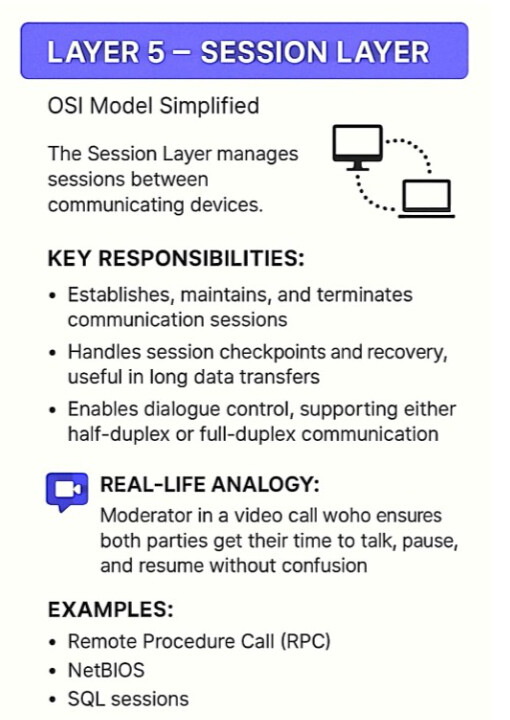
Session Layer — Managing sessions and connections
-
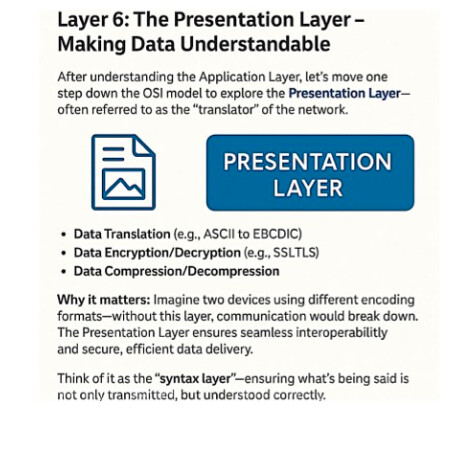
Presentation Layer — Data translation, encryption, and compression
-
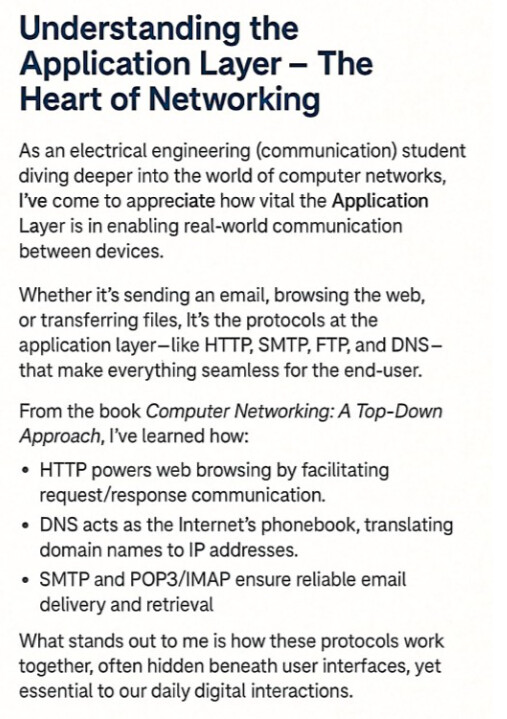
Application Layer — Interface for user applications and network services
Why does it matter?
Because every cable connected, every packet routed, and every application accessed follows this invisible ladder.
Knowing the OSI layers allows network engineers to diagnose, design, and optimize systems with clarity and precision.
Real-world impact:
Faster troubleshooting (“Is it a Layer 1 or Layer 3 issue?”)
Better network design
Smoother collaboration between teams (developers, engineers, cybersecurity)
To make it even easier to understand and remember, you can continue reading details for each Layer.
Mastering the OSI model is not just about memorization — it’s about thinking in layers, isolating problems, and building resilient networks.
If you could master just one OSI layer first, which one would you choose?
Layer 1
Layer 2
!Layer 2|338x500](upload://tMhUnwJmuIXsJQS9UVobqKNrv8l.jpeg)
Layer 3
Layer 4
Layer 5
Layer 6
Layer 7
LinkedIn: 